
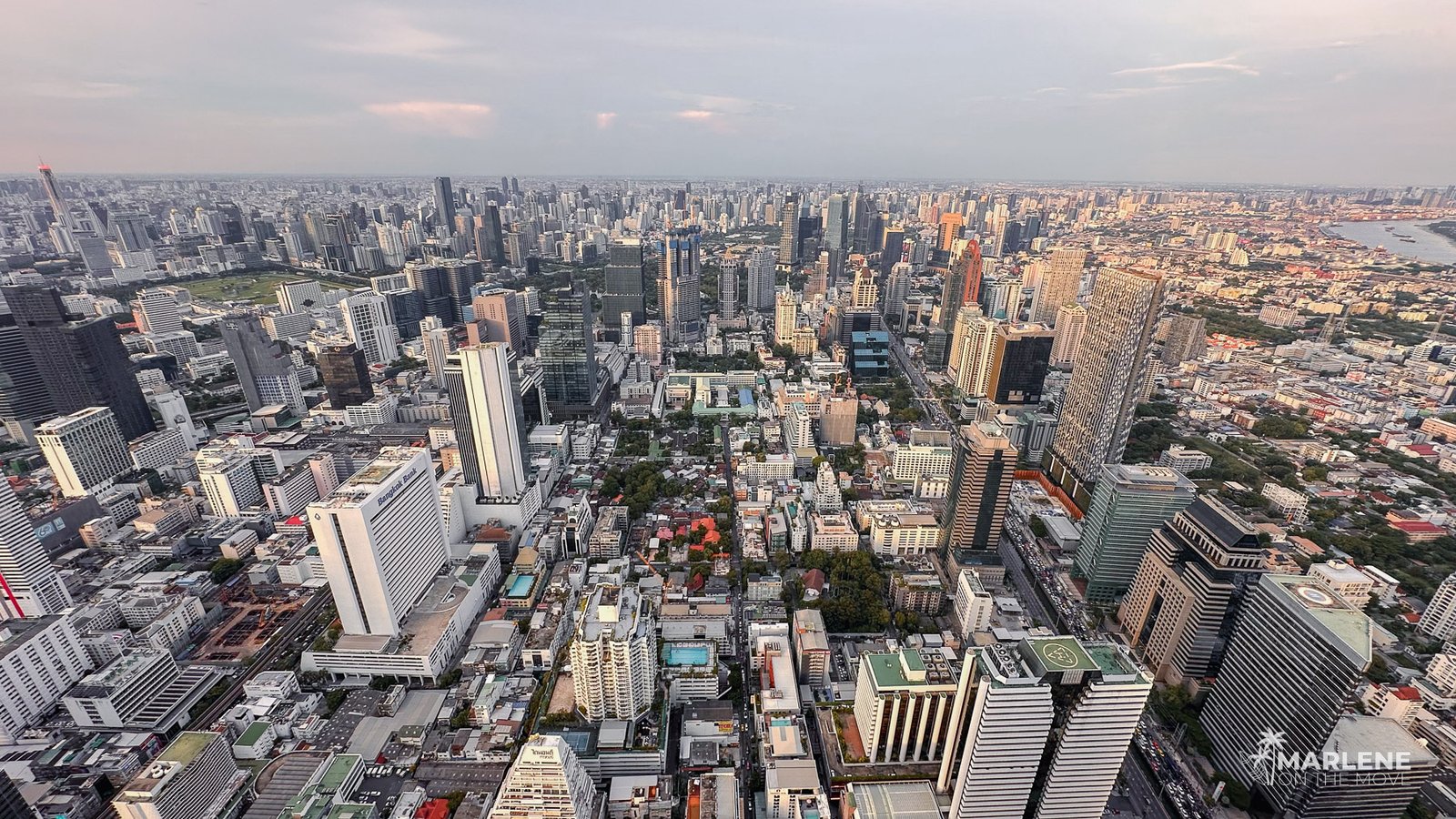
Some cities don’t reveal themselves straight away. Bangkok is one of them. At first glance, it’s noise, heat, constant movement. But if you give it a full day, the city begins to speak to you, first in whispers, then in excess.
I’ve been travelling and writing about it for over ten years. Bangkok was one of those cities I kept postponing, only to find I couldn’t stop thinking about it after I finally went. I’m more of a beach person than a city lover, and Thailand’s capital intimidated me. The images of imposing skyscrapers, the frenetic flow of people and cars, the cloud of pollution that so often makes headlines.
What I found instead was a fascinating, curious, and deeply compelling Bangkok. A city that left me wanting to return, because even from a distance, I could sense everything it still had to offer.
I know there are itineraries that try to include countless attractions, and yes, Bangkok has plenty of them. But this is the route I followed. A very specific one, perhaps, yet the one that made me fall for the city.
If this is your first trip to Bangkok and you aren’t sure where to begin, here’s a one-day itinerary to guide you.
Morning: Bangkok Awakens
Start early. Bangkok rises with the sun, and the first hours of the day reveal a gentler version of the city.
You have probably heard of Khao San Road, the street made famous by travellers from all over the world and its wild nights of music and partying. That side of it still exists, and if you have time, it’s worth seeing after dark. But before 9 am, it’s nothing like the chaotic image you see online.
The ground is still being washed, food stalls are slowly setting up, there’s the smell of detergent mixed with garlic frying, and the dominant sounds aren’t loud music but brooms sweeping and conversations in Thai.
Walk without rushing. Turn into the side streets, where small cafés, neighbourhood shops, and people on their way to work begin to appear. This is where Bangkok starts to feel livable.
Just a few minutes away, about a 15-minute walk from Khao San Road, and hidden from the classic tourist route, step into Wat Ratchabophit. To find it easily, use Google Maps. The temple is located along Fueang Nakhon Road. If you ask locals or look for signs while walking, look for directions leading away from noisy streets into quieter paths. The contrast is immediate. Traffic stays outside, and inside there’s silence, cool air, and an almost European attention to architectural detail that forces you to slow down.
I felt the contrast on my skin, from the humid heat of the street to the shade of the temple, and in my ears, from pandemonium to the far-off sound of footsteps and bells. This is not a monumental temple, but it is a place of pause, one of those spots that rarely make it into “Bangkok’s top 10” lists and, for that very reason, stays with you longer.
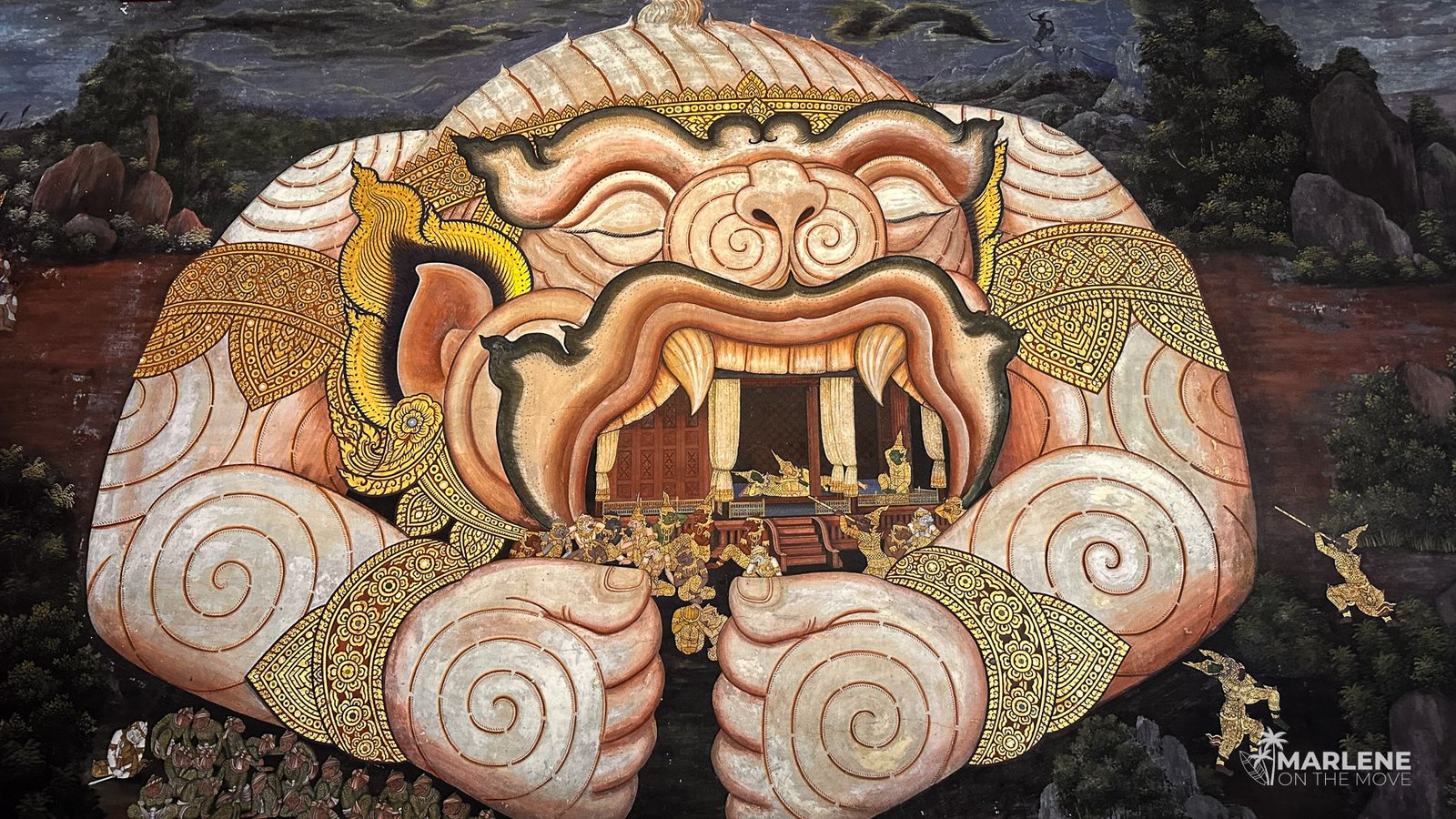
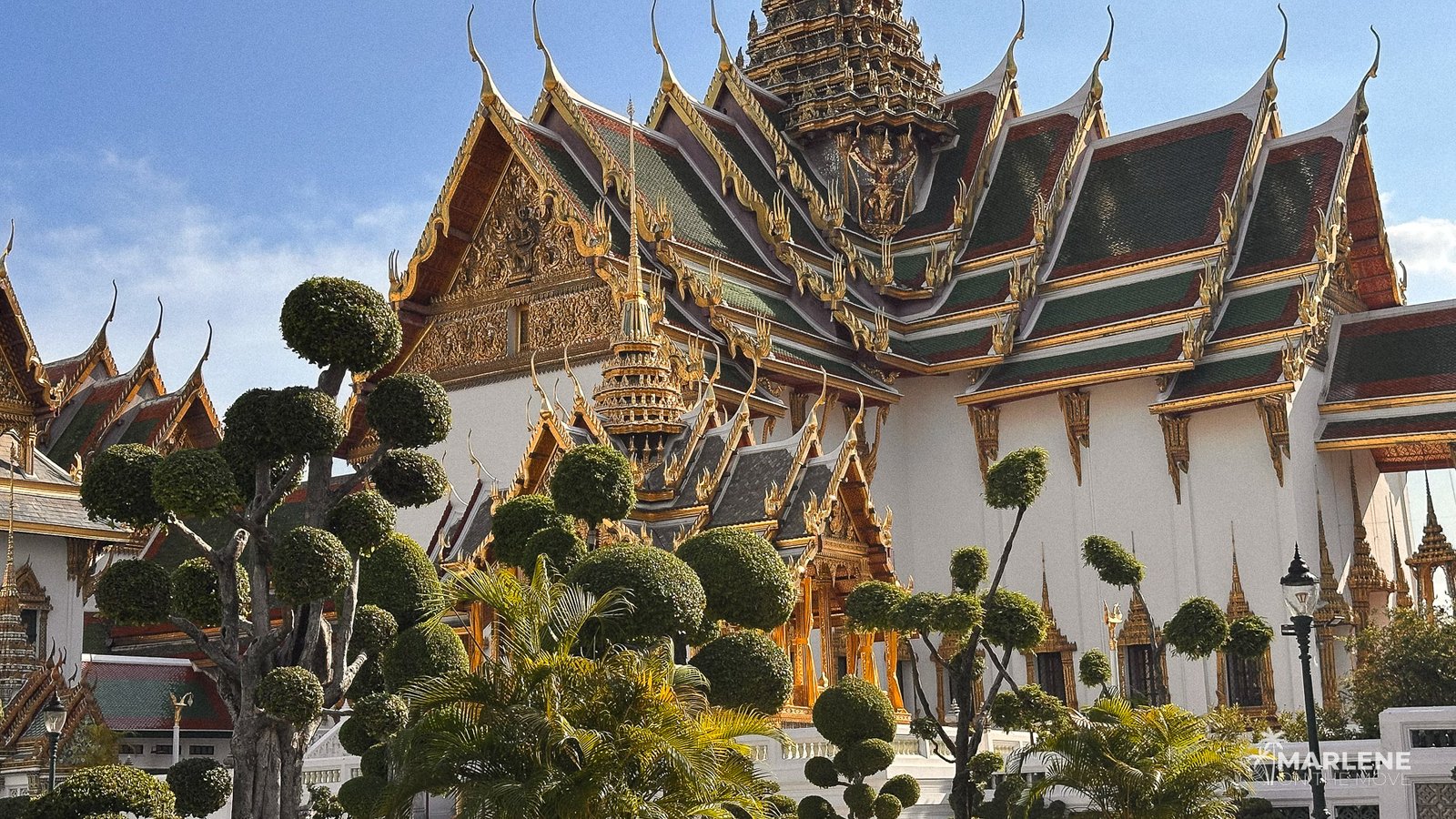
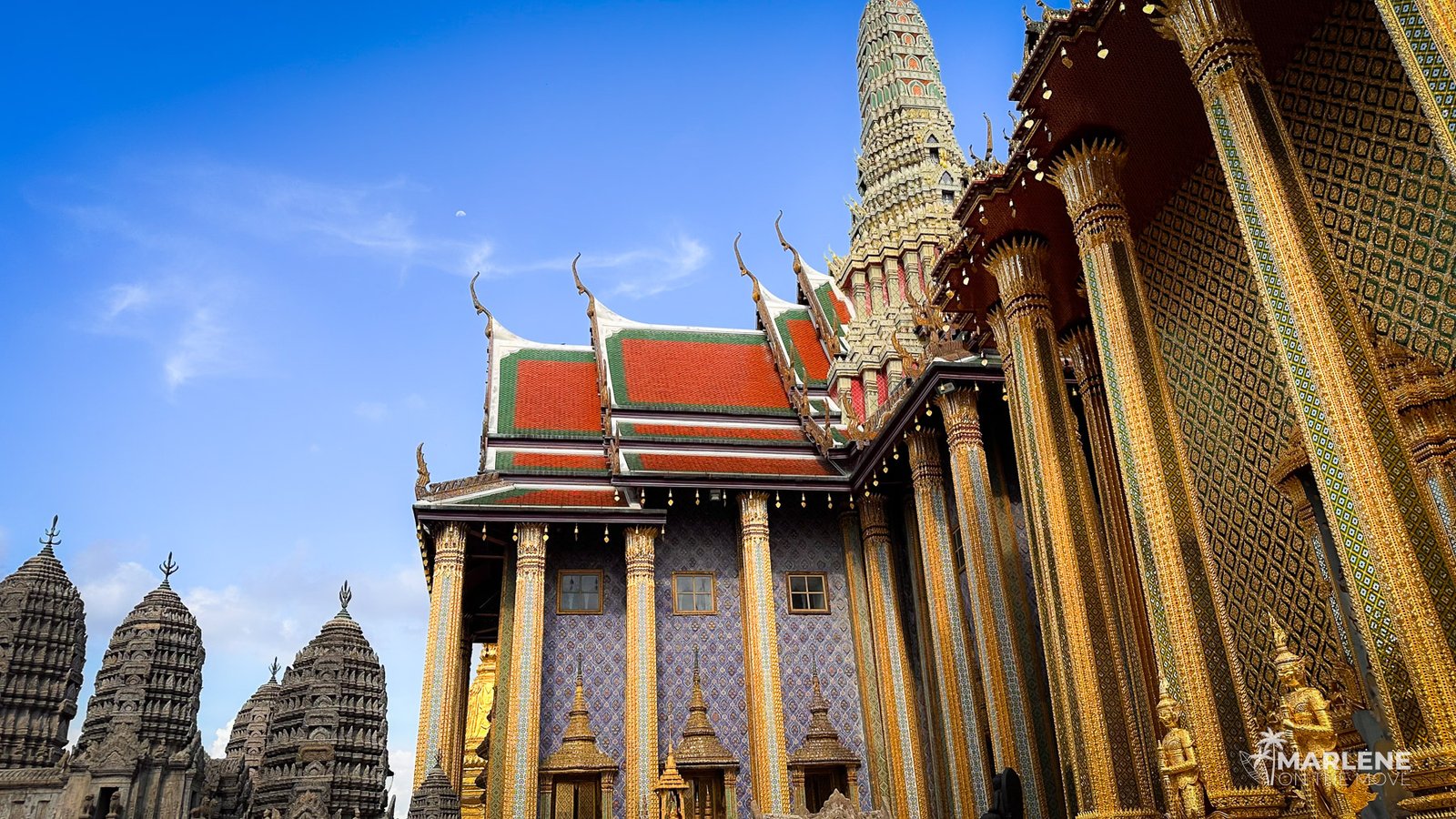
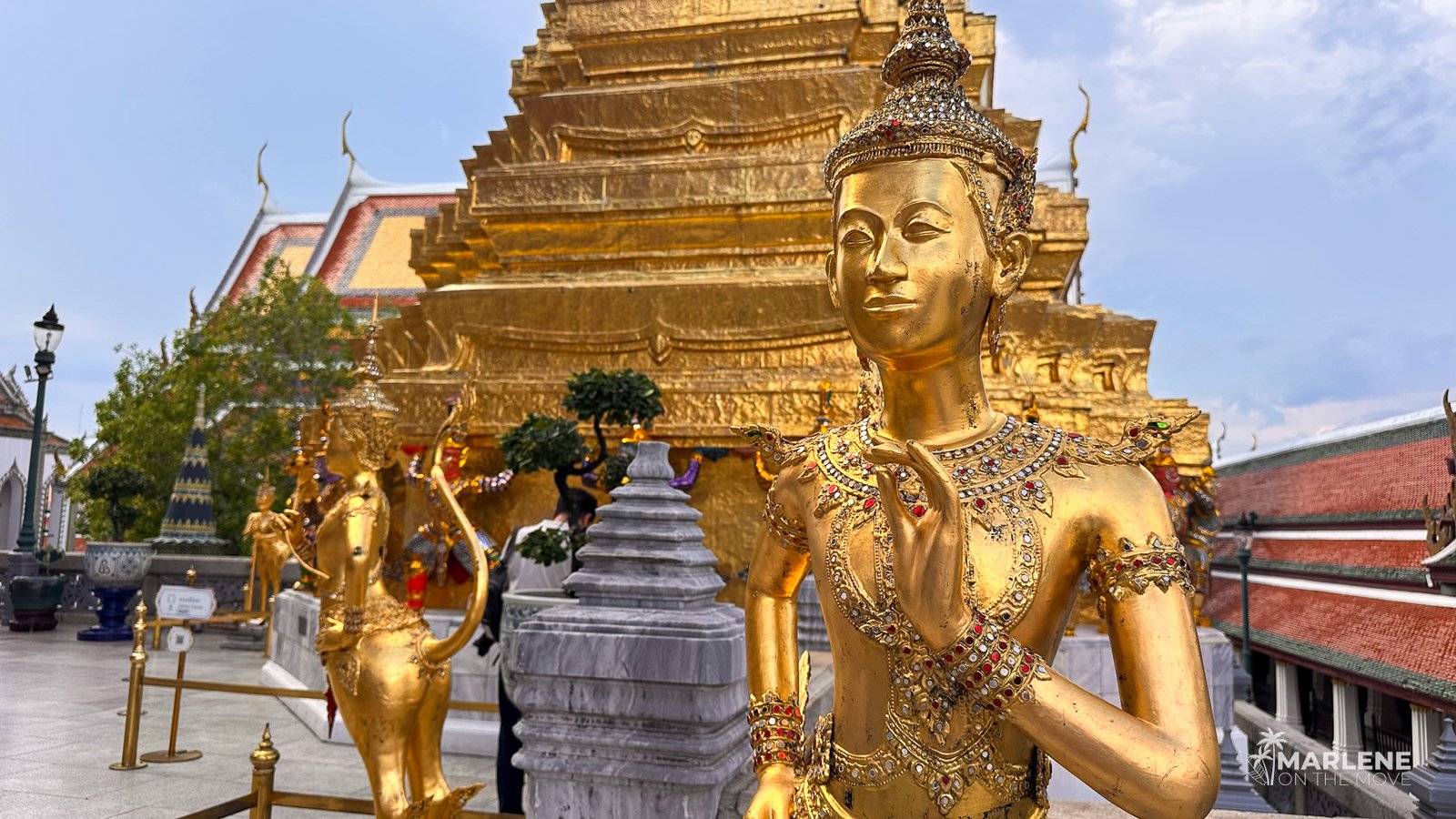
The next stop is the Grand Palace. Here, Bangkok wants to impress. Gold reflects the sun almost aggressively, heat rises from the ground, and there’s a constant din of voices, guides, and footsteps. It can be overwhelming at times, but it’s still worth it. Some details only reveal themselves up close: tiny mosaics, story-filled murals, guardians that seem to watch over everything. The trick isn’t to rush and to accept that this is a place to absorb more than to photograph. Remember that a modest dress code is required, meaning you must cover your shoulders and knees. To avoid the long lines, it’s a good idea to purchase your tickets in advance.
Afternoon: Between Water and Flowers
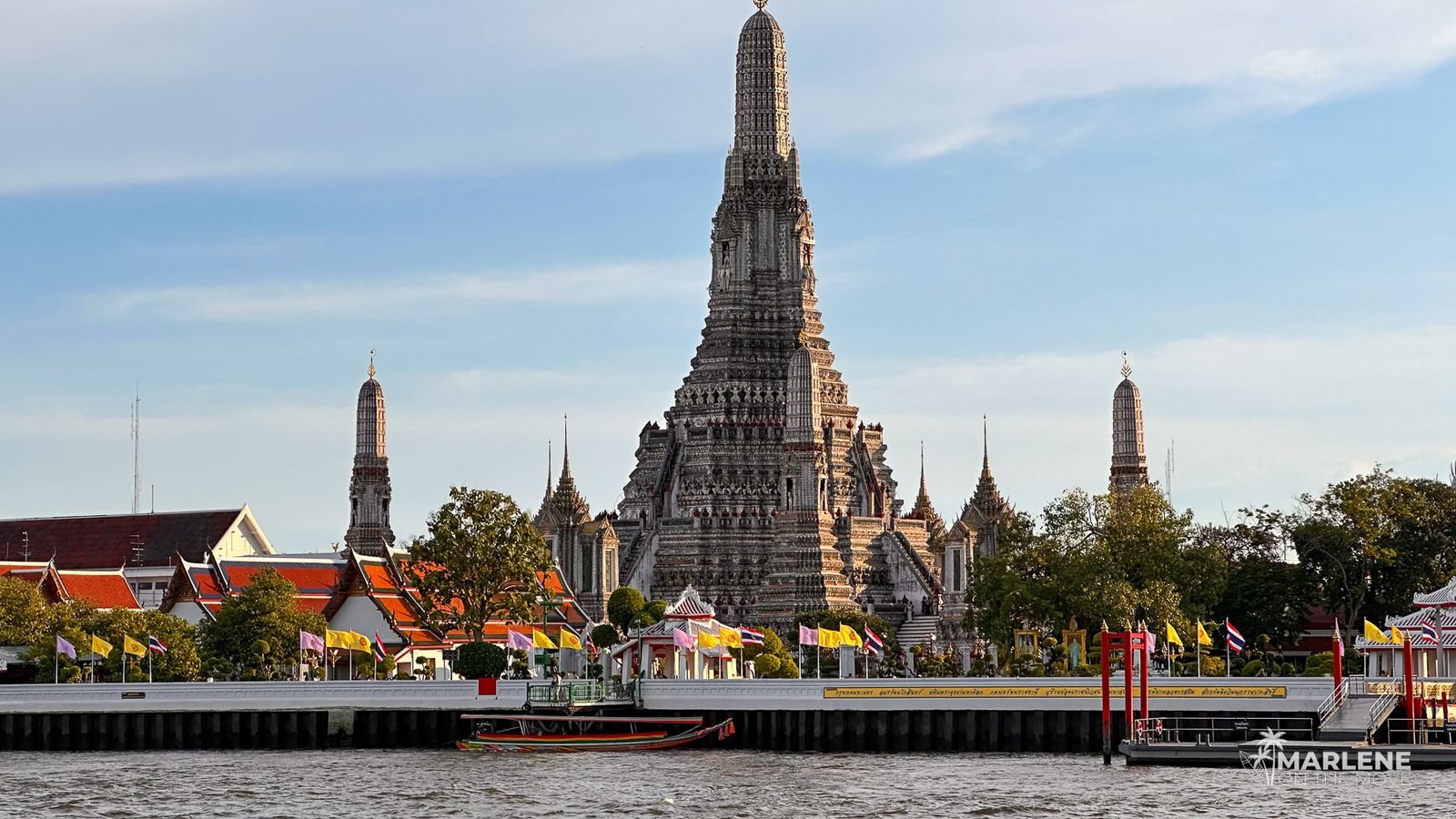
After hours of walking, clothes clinging to your skin, your body asks for water in every possible sense and for a change of pace. Swap the asphalt for the river. The Chao Phraya isn’t just a scenic backdrop, but a living artery of the city, and the best way to experience it is by boat.
You feel the vibration of the boat motor beneath your feet, the breeze eases the heat, and the city moves past like a cinema reel, with temples, modern buildings, and wooden houses along the water’s edge. It’s in this movement that Bangkok begins to make sense, a city built in layers, growing without erasing its past.
Get off near Pak Khlong Talat, the flower market. Jasmine, roses, fresh green leaves. Piles of flowers stacked high, fast hands weaving garlands, and a nearly hypnotic rhythm created by scissors and conversation. Even in the middle of the afternoon, when the market is not at its most intense, you can feel that this is a functional, not touristic place, and that gives it a quiet beauty.
As you wander through the stalls, pause to smell a jasmine garland, feeling the floral notes transport you to the heart of Bangkok’s tradition. Try your hand at haggling, even if it’s just for a small bouquet, to experience the lively exchange that defines the market’s essence. You’ll likely stay longer than planned, simply because your body naturally slows down.
Let’s be honest. Visiting Bangkok in just one day is tiring. So take a strategic break. A café with air conditioning, cold water, and a few minutes without visual or sensory overload. In Bangkok, knowing when to stop is just as important as knowing where to go.

Night: Bangkok by Nightfall
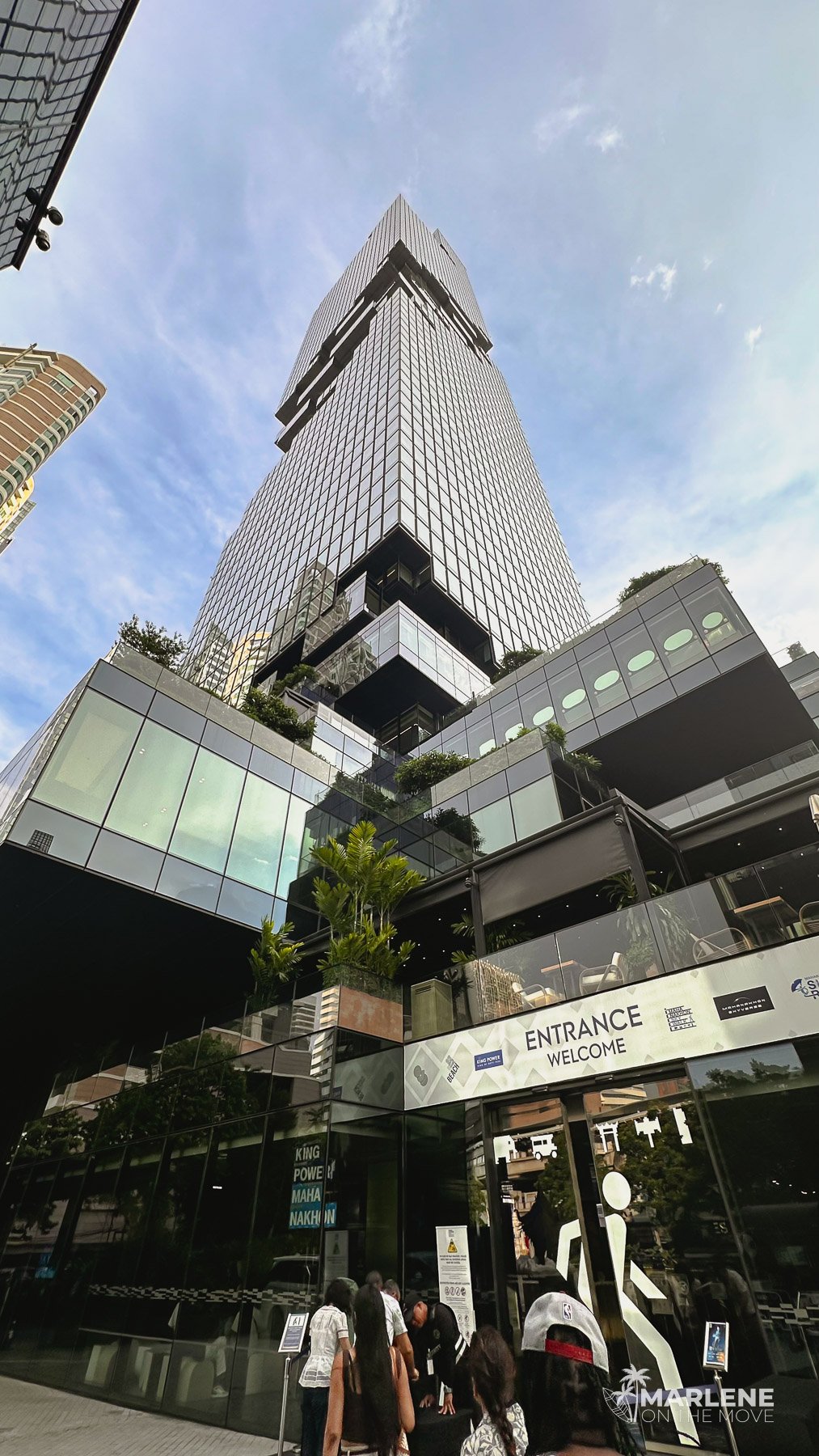
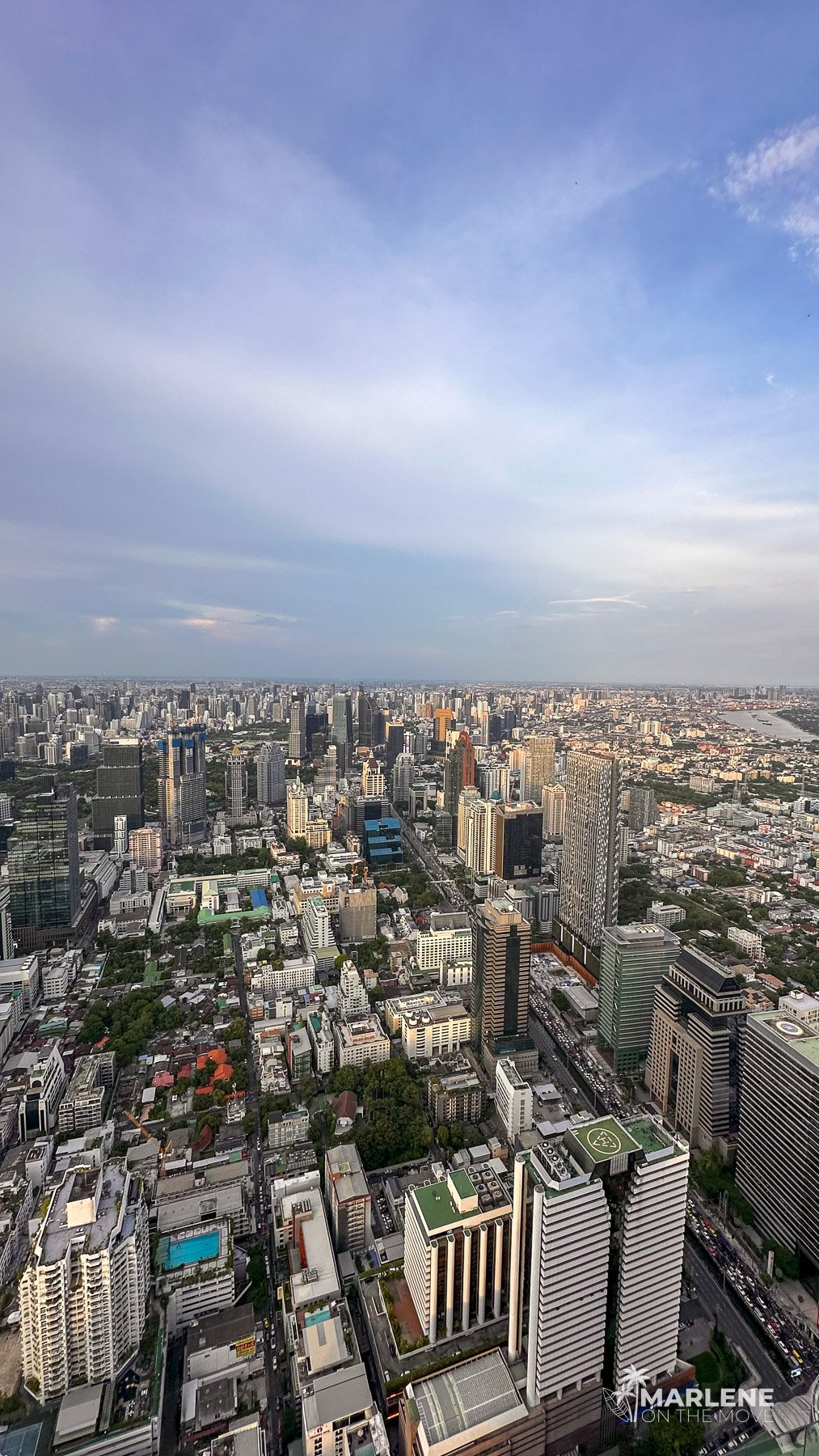
By late afternoon, head up to the Mahanakhon as the light turns golden. The elevator shoots upward, and you only really register the speed and height when you watch the numbers racing on the digital panel in front of you. Suddenly, Bangkok is at your feet.
Up there, the noise disappears. You see avenues brimming with endless streams of cars, rooftops dotted with pools and sky bars, and the river winding its way through the city.
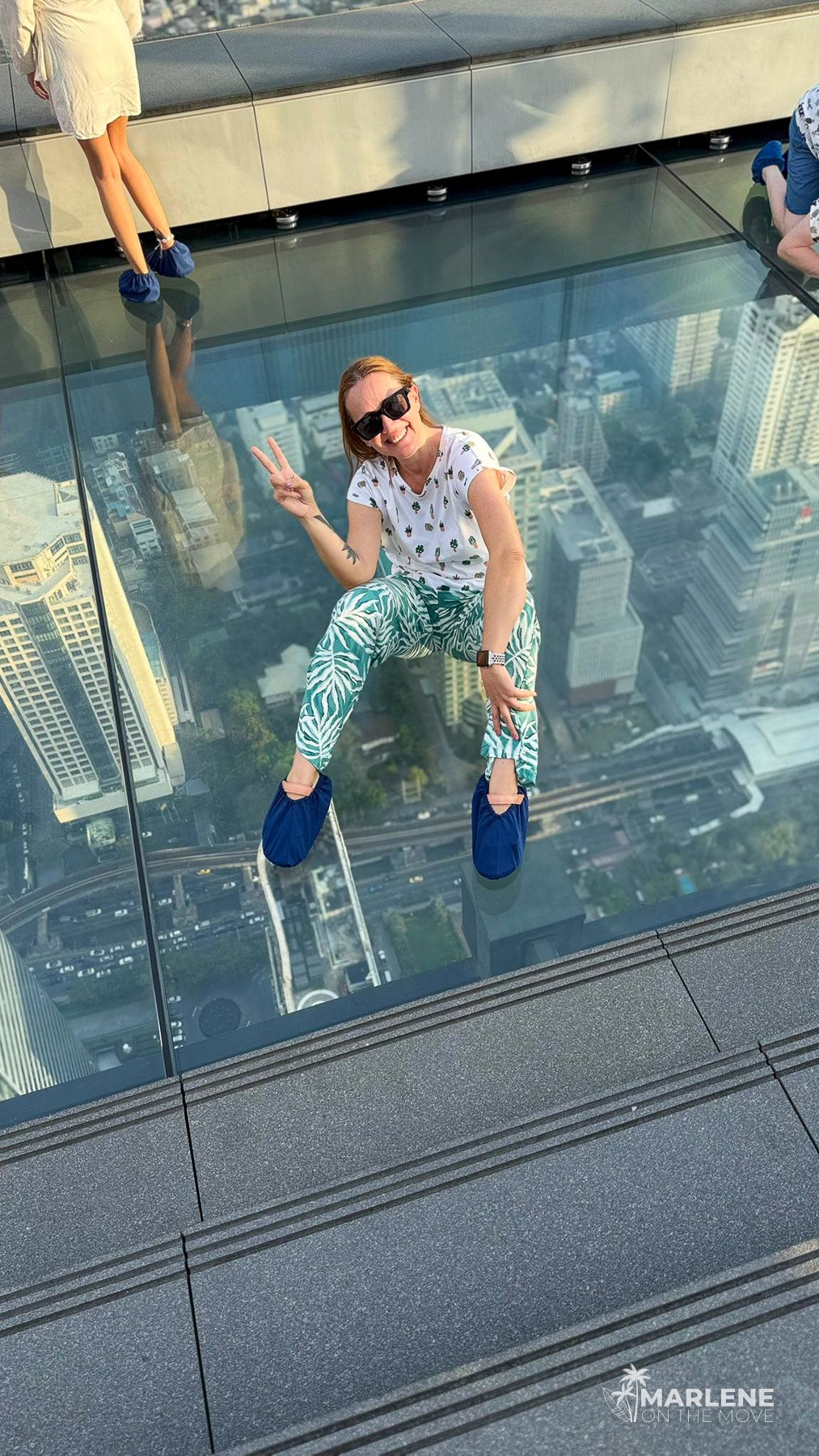
I admit I experienced a slight tingle in my stomach when walking onto the glass floor of the SkyWalk. Used to transparent viewpoints like those I visit in Madeira Island, this one still manages to test even those who are not afraid of heights.
At the same time, there’s a weird calm, disrupted only by the music from the speakers and the soft conversations of those who chose this spot to watch a unique sunset. Here, at 314 metres above ground, in Bangkok’s tallest skyscraper, the city stops being chaos and becomes inspiration.
When you come back down, night has already fallen. Head straight to Chinatown. There is no smooth shift here. There are neon lights, lots of them, smoke, voices, metal clanging, woks working without pause. The smell is intense: hot oil, spices, simmering broth. You don’t choose a restaurant, but a stall, then another, then one more.
Chinatown is lively and generally safe, but it’s wise to stay on the main streets and keep an eye on your belongings to ensure a smooth experience. For a more immersive experience, try using a bit of Thai when ordering. A simple phrase like ‘ao nii’ (I’ll have this) can enhance your interaction with vendors and deepen your cultural connection.
Try noodles like pad thai or something grilled, such as satay, and finish with a sweet like mango sticky rice. The ground is sticky, tables are shared, and somehow everything works. Thailand is famous for its street food, and here it appears in full force. A food tour might be a good option to try all the city’s different tastes.
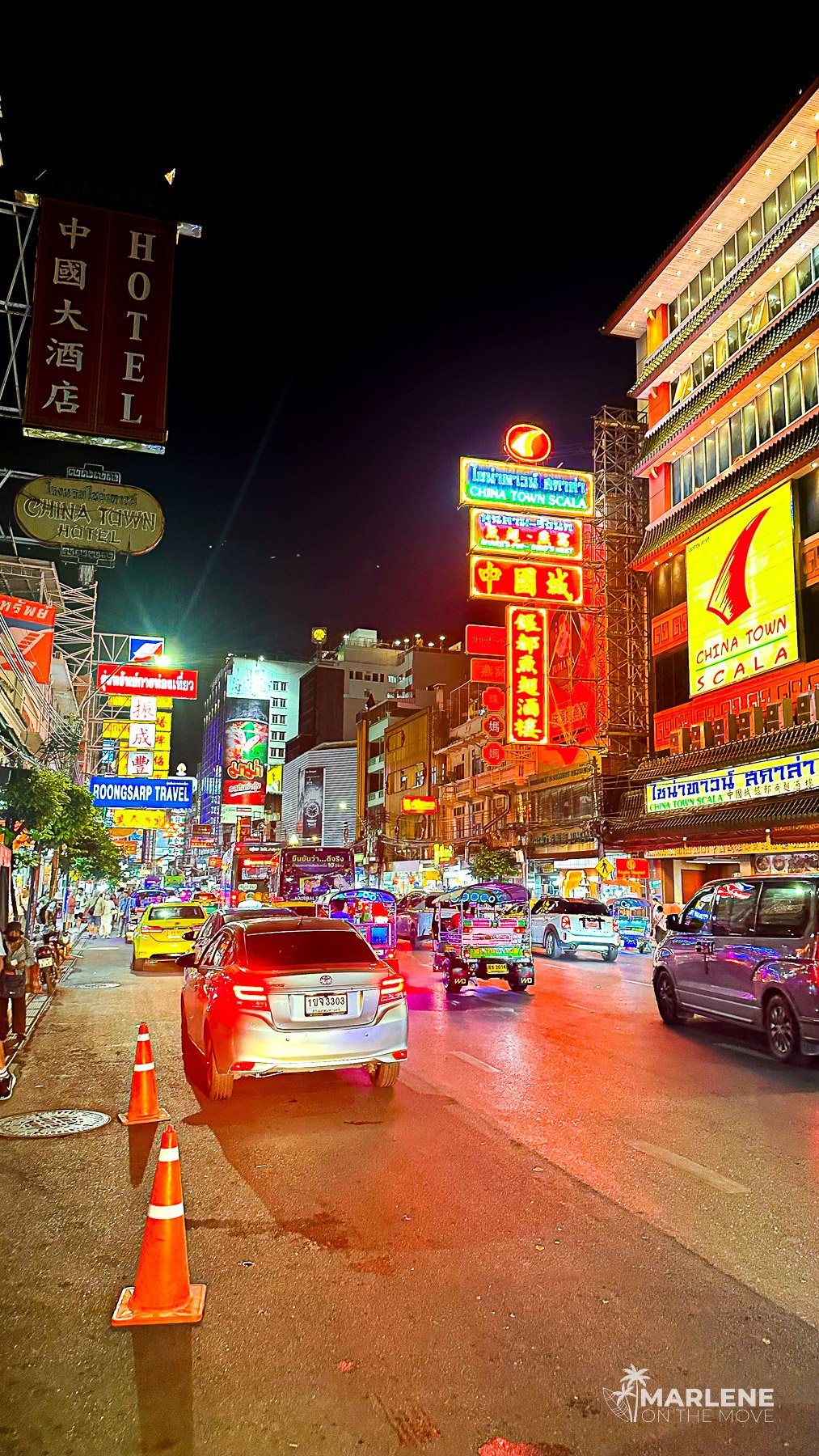
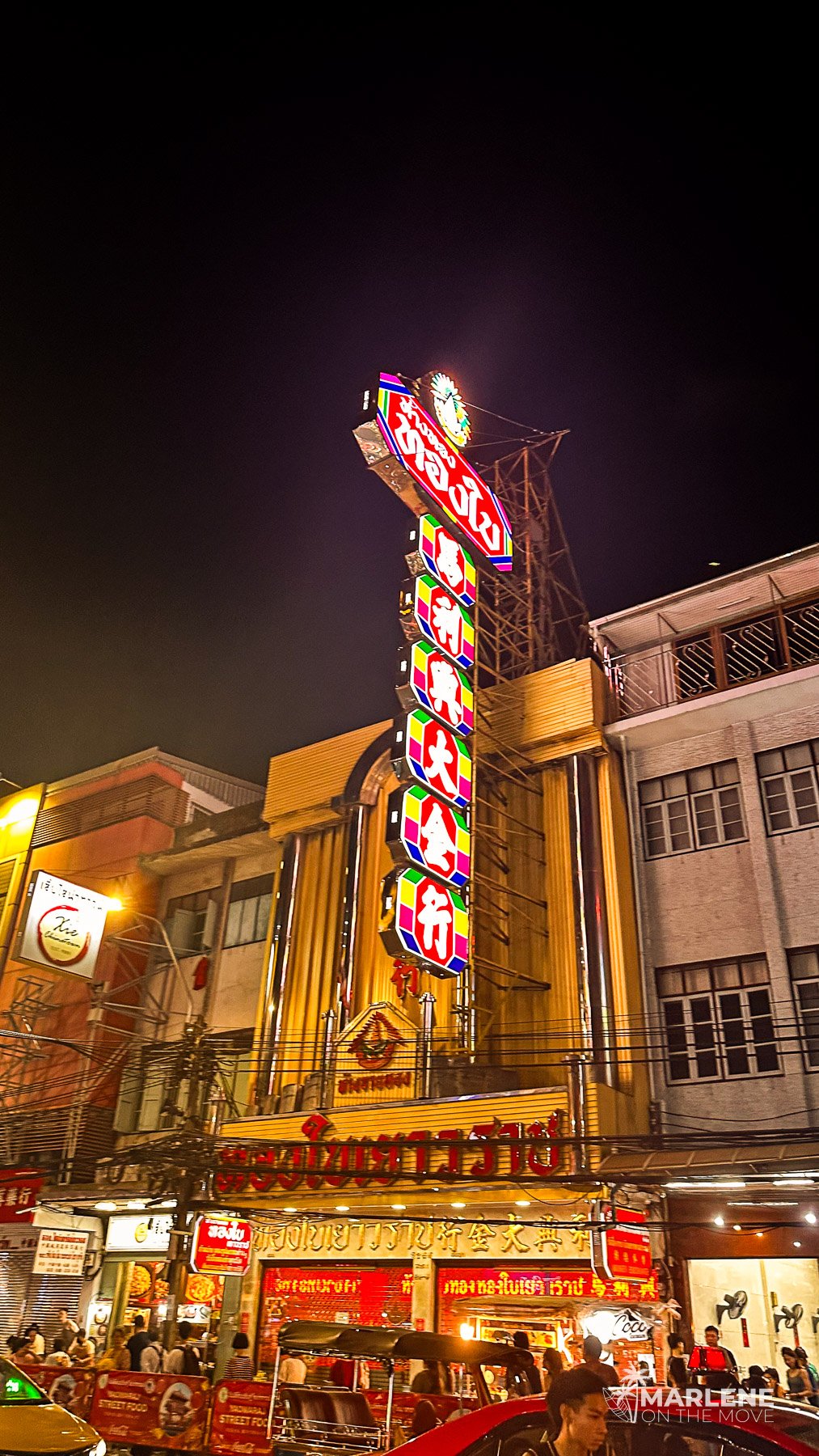
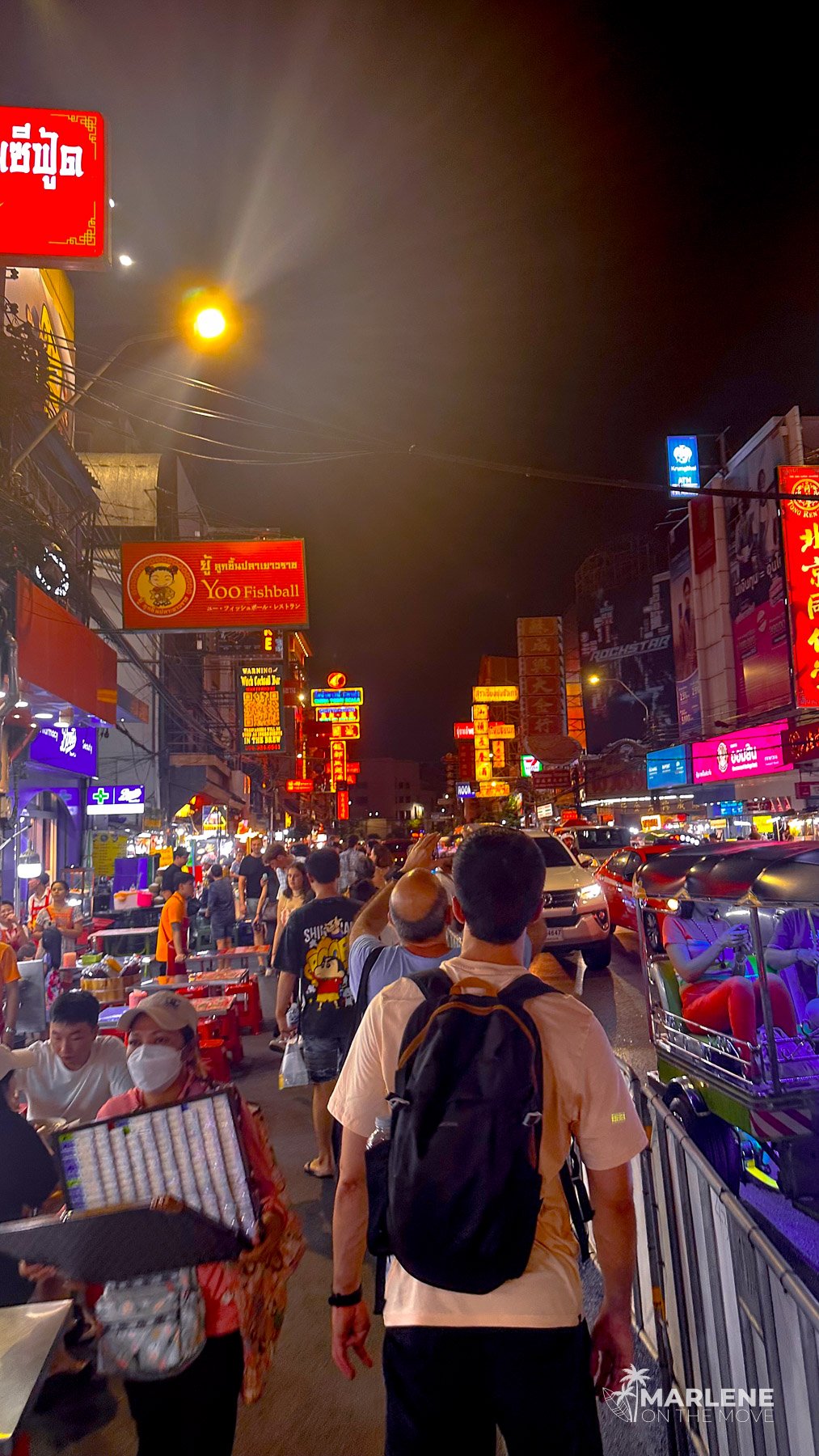
This is where I suggest ending the day. After temples, markets, rooftops, and chaotic streets, you will understand that Bangkok is a city that doesn’t ask for permission to exist… it just is.
Surf in Bangkok?…
Yes… Well, almost. Bangkok has no ocean, but you can still get your board fix at Flow House Bangkok, with its artificial wave machine. There are also wake parks in the city, like the Zanook Wake Park.
Where to Stay in Bangkok
The area you choose makes a real difference in a one-day visit, since you want to be close to the main stops and avoid wasting time in traffic. So, take into consideration:
Rattanakosin / Old City — the most practical base for this itinerary. You’ll be walking distance from the Grand Palace, Wat Ratchabophit, and the river. Quieter than Khao San Road at night, but central enough.
Khao San Road area — ideal if you want to be in the middle of the action. Plenty of budget and mid-range options, lively atmosphere, easy access to everything on this route.
Silom / Sathorn — better for a slightly more comfortable stay. Well connected by BTS and closer to the Mahanakhon. A good choice if you’re combining Bangkok with a business trip or want a quieter base.
For budget stays, check Hostelworld. For mid-range and up, Booking.com usually has the best options.
Bangkok in One Day: Quick Answers
Is one day in Bangkok enough?
It depends on what you want. One full day is enough to get a real feel for the city — temples, the river, a rooftop, and street food at night. It won’t be exhaustive, but it will be memorable. If you have two days, you can slow down and go deeper.
Is Bangkok safe for solo travellers?
Generally yes. The areas on this itinerary — Old City, Chao Phraya, Chinatown — are well-travelled and safe during the day and evening. The usual precautions apply: keep an eye on your belongings in crowded areas, use official taxis or Grab, and avoid unlicensed tour operators near the Grand Palace.
Do I need to book the Grand Palace in advance?
You don’t have to, but lines can be long, especially in high season. Booking online saves time and lets you skip the queue, which is worth it if you’re on a tight one-day schedule.
Travel Notes
Distances and transports
Bangkok is big, and the heat is intense. Combine walking with transport options:
– Walking, for short distances and local exploration
– Chao Phraya River boat, fast and refreshing
– BTS and MRT for longer connections
– Grab when time or energy runs low
Average travel time between areas: 15 to 40 minutes, depending on traffic and time of day.
How to get there
Bangkok has two international airports: Suvarnabhumi (BKK), the main hub for long-haul flights, and Don Mueang (DMK), used mostly by low-cost carriers. From Suvarnabhumi, the Airport Rail Link gets you to the city centre in around 30 minutes for 45 THB. A taxi takes 45–60 minutes depending on traffic and costs around 300–400 THB with the meter. Always insist on the meter.
Estimated daily budget (per person)
Grand Palace entrance: 500 THB (≈ 14€).
Mahanakhon SkyWalk: 880 THB standard / 1,080 THB with open bar (≈ 25–31€).
Flower market: free entry.
Climate and best season
Hot and humid year-round.
Best months: November to February, with milder temperatures. April is extremely hot.
The rainy season runs from May to October, but rain rarely lasts all day.
Food
Street food is safe and delicious. Choose busy stalls.
Carry small cash and always drink bottled water.
Best time to follow this itinerary
Early morning for Khao San Road and the Grand Palace;
Afternoon for the river and flower market;
Late afternoon for Mahanakhon;
Night for Chinatown, when the area truly comes alive;
Avoid starting late; otherwise, you will only manage half the itinerary.
What to wear and bring
– Light, breathable clothing
– Comfortable walking shoes
– Clothes covering the shoulders and knees for temples
– Sunscreen
– Reusable water bottle
– Small backpack or lightweight tote bag
Connectivity
Wi-Fi is widely available in cafés and hotels. An eSIM makes navigation and Grab rides much easier.
Final tip from someone who has been there
Don’t try to do everything. This itinerary works because it respects the city’s rhythm and yours. In Bangkok, seeing less but observing more makes all the difference.
Last updated: March 2026

Travel Tool Box
These are my go-to tools to make my trips more complete at the best prices. Enjoy some of the perks of being one of my readers.
By using these links you’re also contributing for the maintenance of this blog and for that I thank you so much!
Heymondo
Book your travel insurance with a 5% discount.
Holafly
Get your unlimited eSIM with a 5% discount.
Booking.com
The best stays worldwide at the best prices.
GetYourGuide
Enjoy the best tours and entertainment each destination offers.
Skyscanner
Find the best flight at the best price for your next trip.
Hostelworld
Enjoy the best hotels around the world for a fun experience.
DiscoverCars
Book your car at the best prices and go explore.
Compensair
Don’t let your canceled flight ruin your vacation.