

Drop in: João Valente, motorhome enthusiast, Portuguese Camping and Mountaineering Federation
Much has been written about motorhome tourism or the so-called van life. During the COVID pandemic and in the period that followed, this form of tourism on wheels gained new momentum, but with growth came a series of challenges. A new community of travelers—often inexperienced and ill-prepared—put pressure on the environment and local communities, generating criticism and reservations.
Caravanning quickly went from being a symbol of freedom to a source of discord. But is it fair to point the finger?
João Valente is a motorhome enthusiast and leads a pioneering project at the Portuguese Camping and Mountaineering Federation: the National Network of Service Areas for Motorhomes.
In this interview, he talks about the state of motorhome tourism in Portugal — with parallels that apply to many other countries —, debunks some of the most common preconceptions, and offers advice to those thinking about taking their first steps… or driving their first miles behind the wheel of a motorhome.
In the end, his experience on the road offers a fresh perspective on this way of traveling and discovering new places.

1. How did your connection to motorhome tourism begin?
Like many motorhome enthusiasts, I started out camping in a tent and later in a caravan, adapting to different destinations and conditions. This experience allowed me to meet people who saw motorhomes not only as a way of camping, but as a means of itinerant tourism, providing the freedom to travel without the limitations of hotels or other fixed forms of accommodation, avoiding all the logistics of check-in and check-out.
My interest arose from this discovery, fueled by the imagination of great routes and the desire to explore the world as a family, in comfort and autonomy. In our case, my wife, our two young daughters and I have a habit of renting a motorhome abroad every year to get to know the region better, making each trip a unique adventure.
2. Does your work influence the way you travel? Or, on the contrary, do your travels influence your work?
Both are true. Working in this sector makes me look at motorhome facilities with a more critical and informed eye. On each trip, I collect good examples that I try to adapt to the Portuguese reality, but I also experience difficulties that many motorhome owners face, which gives me a more realistic and informed perspective.
So, traveling directly influences my work. At the end of each adventure, I feel that I have learned a little more—not only as a professional who operates and promotes the sector, but also as a user on the road, who experiences firsthand the challenges and opportunities of this way of traveling.
3. Has motorhome tourism grown in Portugal? What factors do you think have contributed to this?
Motorhome tourism in Portugal has seen remarkable growth in recent years, although it is challenging to quantify its size accurately due to several factors. One of the challenges is related to approved vehicles. According to data provided by the Institute for Mobility and Transport (IMT), as of November 2024, there were 26,562 motorhomes registered in Portugal. However, this number may not reflect all vehicles used for this purpose, as there are an increasing number of vehicles converted or adapted for motorhomes that are not officially approved. In addition, free movement within the Schengen area makes it difficult to accurately count foreign motorhomes entering and circulating in Portugal, making it complex to monitor the tourist flow associated with this mode of travel. Another factor that complicates the measurement of the sector is the diversity of overnight locations. Although motorhomes can stay overnight in campsites, specific service areas, or other permitted locations, the absence of a mandatory registration system makes it difficult to collect accurate data on the use and length of stay of these vehicles.
Despite these difficulties, there are clear indicators of growth in the sector. The motorhome rental market has been one of the most evident signs of this expansion. This growth is driven by several factors, starting with the growing interest of foreign tourists in exploring Portugal independently and flexibly. The appreciation of inland destinations has also played a key role, with a growing trend towards less crowded and more authentic locations, which are often more accessible by motorhome. In addition, the more affordable cost of this type of tourism, when compared to other forms, makes it an attractive option for families and groups, as it allows savings on accommodation and food by enabling meals to be prepared on board.
Another determining factor is the freedom and flexibility that this mode of travel offers, allowing for personalized itineraries and the discovery of lesser-known places. The influence of social media has also contributed to this phenomenon, with the sharing of experiences and inspiring images motivating a growing number of enthusiasts to try motorhome tourism.
In short, although accurately measuring the growth of motorhome tourism remains a challenge, the available indicators point to sustained growth in the sector, driven by Portugal’s growing attractiveness as a tourist destination and the numerous advantages associated with this form of travel.
4. Motorhome tourism has been the subject of much debate, particularly its relationship with local areas and communities. Do you think the sector has already found a balance between travelers’ freedom and the need for regulation?
The direct answer to this question is no. Territorial inequalities between the coast and the interior are also reflected in motorhome tourism. On the coast, high demand results in significant pressure, accompanied by restrictions and a shortage of suitable accommodation. This overcrowding often leads to inappropriate practices and significant environmental and social impacts.
Although deseasonalization is desirable, welcoming motorhomes during periods of lower tourist numbers, during the high season motorhome tourism is often seen as undesirable by local authorities and residents. This is an ongoing challenge that requires medium- and long-term solutions, including:
- Expansion of Hosting Infrastructure:
- Flexibility in the Implementation of Infrastructure in Protected Areas
- Strengthening Enforcement
- Reliable and Multilingual Information
- Promotion of Emerging Destinations in the Interior.

5. Are there many myths and prejudices about motorhome tourism? What do you think is the biggest misconception that people still have about this form of travel?
One of the biggest misconceptions about motorhome tourism is the perception that it offers total freedom, without restrictions, especially when it comes to overnight stops. For a long time, the lack of regulation allowed the occupation of scenically attractive but environmentally and socially sensitive areas, such as cliffs, urban centers, and riverside areas. This behavior has resulted in negative impacts, which has led to the need to implement specific areas for overnight stays.
It is essential that decision-makers understand that motorhomes are vehicles, often light, with the ability to move freely on the road network. Therefore, restrictions must be balanced, respecting both the mobility of motorhome owners and the protection of public spaces.
Another common misconception is the idea that motorhome travel is a completely uncomplicated and unchallenging form of travel. The experience is often romanticized, especially on social media, with idyllic images of motorhomes parked in stunning locations. However, the reality can be quite different. In addition to logistical difficulties, such as the constant need to find places to refuel or deal with limited infrastructure along the route, living in a small space can compromise privacy and comfort, especially when compared to other forms of accommodation. Many newcomers to motorhome travel are unaware of the implications of this lifestyle, and the lack of adequate infrastructure in certain locations can make the experience more difficult than initially expected.
For local communities, it is crucial to debunk the myth that all motorhome travelers are lawbreakers who leave behind an unsightly mess. On the contrary, many contribute positively to the local economy. Studies indicate that motorhome owners tend to stay longer at destinations and consume local products and services, boosting the economies of the regions they visit.
In short, for motorhome travel to be a positive and responsible experience, a balance must be found between the freedom to travel and respect for the rules and the environment.
6. In terms of infrastructure, do you feel that Portugal is well prepared to welcome motorhome owners?
Portugal has been improving its infrastructure to welcome motorhome owners, but still faces challenges in fully meeting the growing demand. The country has a network of campsites that are open all year round, benefiting from the favorable climate. However, many motorhome owners are looking for alternatives to staying overnight outside these campsites.
Portuguese legislation provides for the existence of Motorhome Service Areas (ASA), which serve as an intermediate solution between parking lots and campsites. These areas are regulated, but their implementation has not always been consistent. Currently, there is a joint effort between the central administration and local authorities to install properly qualified ASAs. This is a challenge that requires significant investment and ongoing commitment, the results of which are gradually emerging.
Although there are already quality ASAs in Portugal, the number available is still insufficient to meet the growing demand. Good examples can be found in the Algarve, Alentejo, and Ribatejo regions.
7. How can motorhome travelers contribute to better coexistence with local communities and to the preservation of the environment?
Harmonious coexistence between motorhome travelers and local communities, as well as the preservation of the environment, depends greatly on the responsible behavior of those who practice this form of travel. In inland destinations, for example, there are already cases of travelers who felt so welcome that they decided to move to these locations, contributing to the revitalization of these regions. There are also many motorhome travelers who regularly return to the same destinations, creating ties with local communities and integrating into their daily cultural life.
However, for this coexistence to remain positive, it is essential that motorhome owners respect some basic rules. Avoiding prolonged parking in the same place is one of the fundamental aspects, as excessive occupation of certain areas can be seen as misappropriation of public space. In addition, the choice of overnight locations should be made responsibly, giving preference to facilities equipped to accommodate motorhomes, such as campsites and Motorhome Service Areas (ASA).
One practice to be avoided at all costs is the improper disposal of solid waste or effluents, which should only be done in appropriate locations. Furthermore, it is important to abolish the tendency to expand the perimeter of the motorhome in unauthorized places by setting up awnings, tables, and chairs that take up space unduly. Small gestures such as keeping the area clean, respecting silence, and not interfering with the daily life of local populations make all the difference.
On the other hand, motorhome owners can also contribute to local economies, and this is one of the great advantages of this form of tourism. Whenever possible, they should favor local consumption by shopping at regional markets, choosing small restaurants, or purchasing products directly from local producers. This not only boosts the economies of the regions visited but also promotes more sustainable and authentic tourism.
8. Are there any good practices that Portugal could adopt from other countries where motorhome tourism is more developed?
In addition to what has already been mentioned, one of the main measures to be adopted in Portugal is the expansion of the network of qualified sites for motorhome parking. In countries such as France, Germany, and Spain, there are Motorhome Service Areas (ASA) or rest areas equipped with automatic reception and access control systems, ensuring an autonomous, efficient, and safe service. In addition, it is essential that the existence of these sites is communicated clearly and accessibly, distinguishing properly qualified infrastructure from those that appear without official validation on collaborative digital platforms.
But that’s not all. In countries such as Switzerland and Denmark, in addition to those already mentioned, it is common to find services such as supermarkets, museums, and other points of interest equipped with appropriate parking spaces or reserved for motorhomes. This recognition of the specific nature of motorhome tourism facilitates mobility and improves the traveler’s experience. We must not forget that motorhome travelers are, above all, tourists and that they seek the same resources and amenities as any other visitor.

9. You are currently traveling through the Alps with your family. How has the experience been?
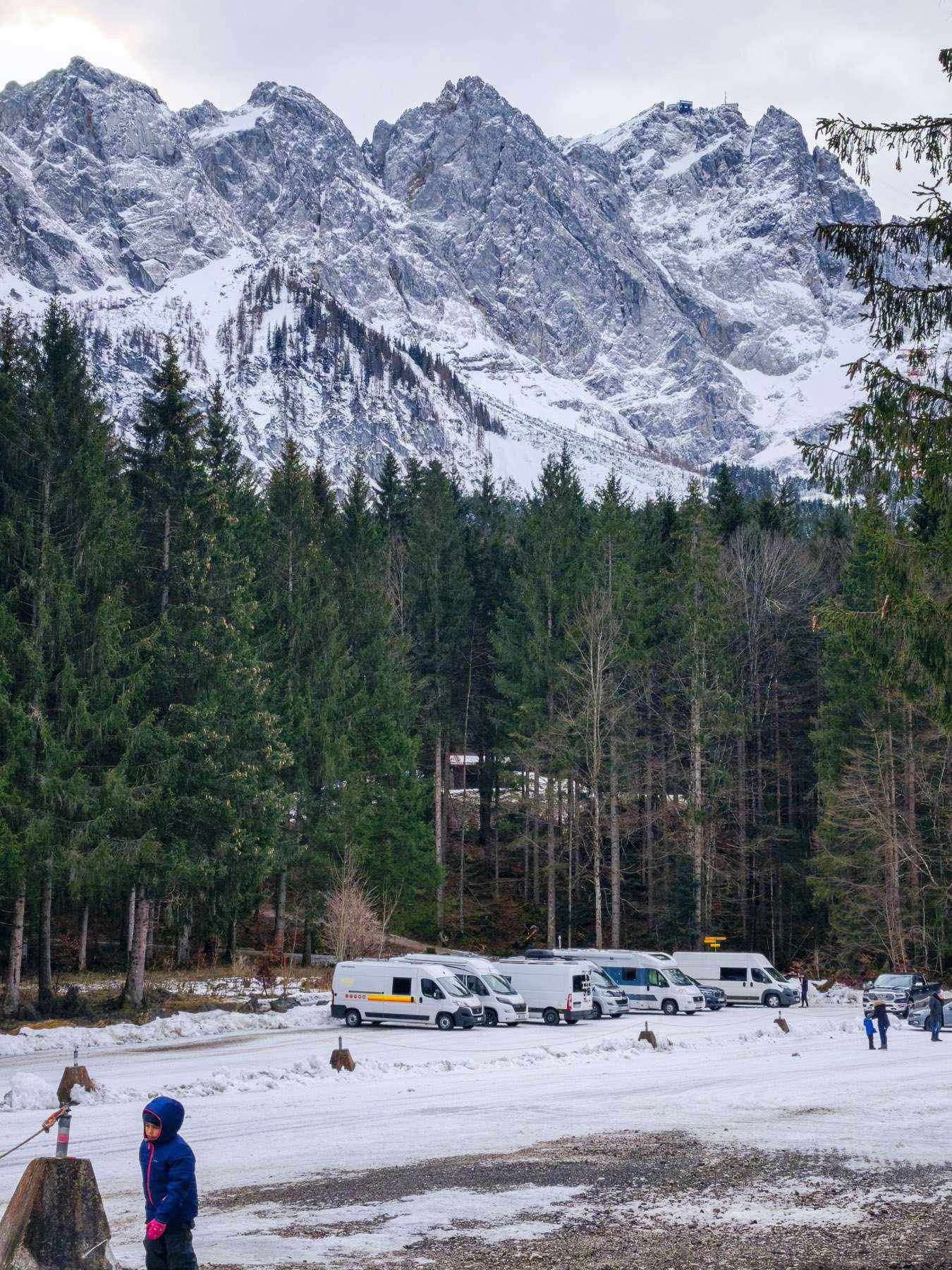
Traveling through the Alps in a motorhome has been a fascinating experience and, at the same time, a real logistical challenge for our family. The vastness of the landscapes, the diversity of scenery, and the opportunity to wake up to breathtaking views are some of the great privileges of this way of traveling. However, there are also challenges, especially when traveling with children. Planning needs to be rigorous to ensure accessible routes, suitable places to stay overnight, and efficient management of needs such as water supply, electricity, and waste disposal.
One of the difficulties we encountered was that we were traveling “out of season,” that is, outside the traditional season for motorhome tourism in the region. This means that many service areas are closed or, in the case of those that remain open, the water supply is cut off due to the risk of freezing pipes. This situation proved particularly challenging because, despite consulting the usual platforms, we often found information indicating that areas were open, but when we arrived at the location, we found that they were not operational. This factor required greater flexibility and adaptation throughout the trip.
The experience has been enriching, not only because of the discovery of less touristy and more authentic places, but also because of the contact with other motorhome families of different nationalities who share the same itinerant lifestyle. The Alps offer a wide variety of accommodation options, from well-equipped campsites to well-structured service areas, which makes traveling much easier. However, there are notable differences between countries, with some regions more suited to motorhome travel than others.
Ultimately, this trip has reinforced the idea that motorhome travel is not just a means of transportation, but a way of living and experiencing destinations in a more intimate and flexible way. For those seeking adventure and freedom, there is no better way to travel.
10. What was the motorhome trip that most impressed you and why?
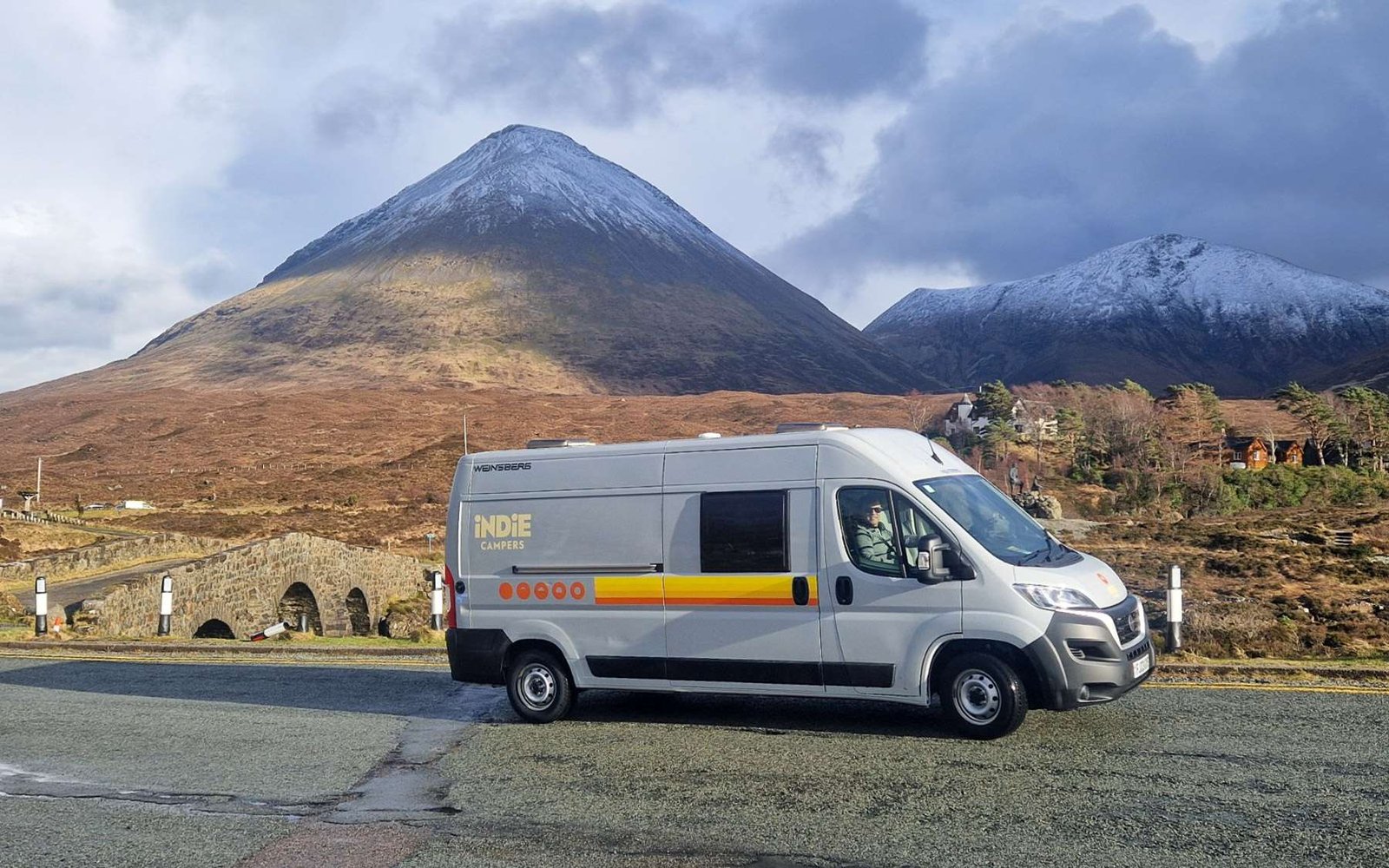
Without a doubt, the trip to Scotland was the most memorable. Besides being our first big motorhome trip, and therefore the most impactful, it was also a unique experience due to the natural wealth and intensity of the landscapes. But it wasn’t just the destination—it was the experience itself. The road became part of the journey, with breathtaking landscapes at every turn: on one side, steep cliffs dropping down to the sea; on the other, rivers and lakes stretching as far as the eye could see, nestled between snow-capped mountains.
One of the images that stuck with me the most was crossing Glencoe on a full moon night. The snow glistened in the dark, the road seemed to stretch forever between imposing mountains, and the silence was absolute—until dozens of deer appeared crossing the road. A journey that should have taken an hour ended up taking almost three, because it was simply impossible to ignore that scenery.
In addition to the landscapes, Scotland surprised us with its road safety and overnight accommodation, as well as the hospitality of the locals. In just a few days, we crossed the country and saw an impressive diversity, where each stop had something new to offer. It was a trip that will remain etched in our memories.
11. Have you ever had a mishap or an unexpected story on a trip that stuck in your memory?
Several. Some of them, inevitably, were the result of inexperience in using a motorhome. There were times when we had to interrupt or divert our route because the gas cylinder ran out at the worst possible moment, because the black water was about to overflow from the cassette, or because, after long walks, we realized that we hadn’t had a proper shower for 36 hours and there wasn’t enough drinking water on board.
All these episodes taught us that route planning is essential, always taking into account the motorhome’s range and the location of refueling and disposal points. Over time, we have learned to anticipate these needs and avoid last-minute situations. But it’s all part of the process—it’s these adventures that make trips memorable and ensure that, with each new adventure, we are always a little better prepared.
12. How do you see the future of camping and motorhome travel in Portugal?
Camping and motorhome travel, although they share common roots, have evolved into two distinct activities with their own characteristics. Motorhome travel, in particular, has seen significant growth in Portugal, driven by several factors.
There has been an increase in the purchase of motorhomes by couples approaching retirement age, who see this option as a way to revitalize this new phase of their lives. At the same time, there is growing demand from young people and adults under 50 who, through motorhome rental, are looking for occasional experiences in direct contact with nature. This phenomenon is reinforced by the emergence of motorhome rental platforms, such as Yescapa, which facilitate access to this type of tourism.
In addition, there has been growth in a niche market dedicated to shared motorhome rentals, allowing owners to monetize their vehicles when they are not in use. This business model, similar to “rent-sharing,” has gained popularity and contributed to the diversification of the available offer.
This scenario presents challenges that require clear answers, especially with regard to the role of tourist entertainment and car rental companies, where it is crucial to distinguish where the product ends and the service begins. However, these developments are encouraging, as this tourism segment contributes to attracting foreign tourists to Portugal and can be an important factor in promoting seasonality and combating desertification in the interior of the country.
As for camping, that would be a topic for a whole other interview.
13. What advice would you give to someone who wants to try traveling by motorhome for the first time?
The first piece of advice I would give to anyone who wants to try traveling by motorhome is to plan the trip well. Choosing the right vehicle for your specific needs makes all the difference, especially when it comes to details such as the bathroom and kitchen. It is essential to be well informed about how the motorhome works before setting off, from the management of resources such as electricity, water, gas, and waste, to the vehicle’s range.
Another key aspect is to adjust your route according to your refueling and waste disposal needs. As a general rule, it is advisable to stop at a service station, campsite, or motorhome service area every other day to ensure that everything is working properly. It is also important to take into account the opening hours of these places, to avoid arriving too late and being left without access to essential services.
For those who use collaborative platforms to find places to stay overnight, it is essential to check recent comments and reviews. The information provided does not always reflect the current situation, and blindly trusting this data can lead to unpleasant surprises.
Despite these points to consider, traveling by motorhome is a highly recommended experience.
In addition to the freedom it offers, it represents a significant saving by combining transportation, accommodation, and cooking in one. Being able to cook on board significantly reduces restaurant costs, and the flexibility of schedules allows you to optimize arrival and departure times at your destinations. Ultimately, it is a way of traveling that combines comfort, autonomy, and the possibility of exploring each destination at your own pace.