

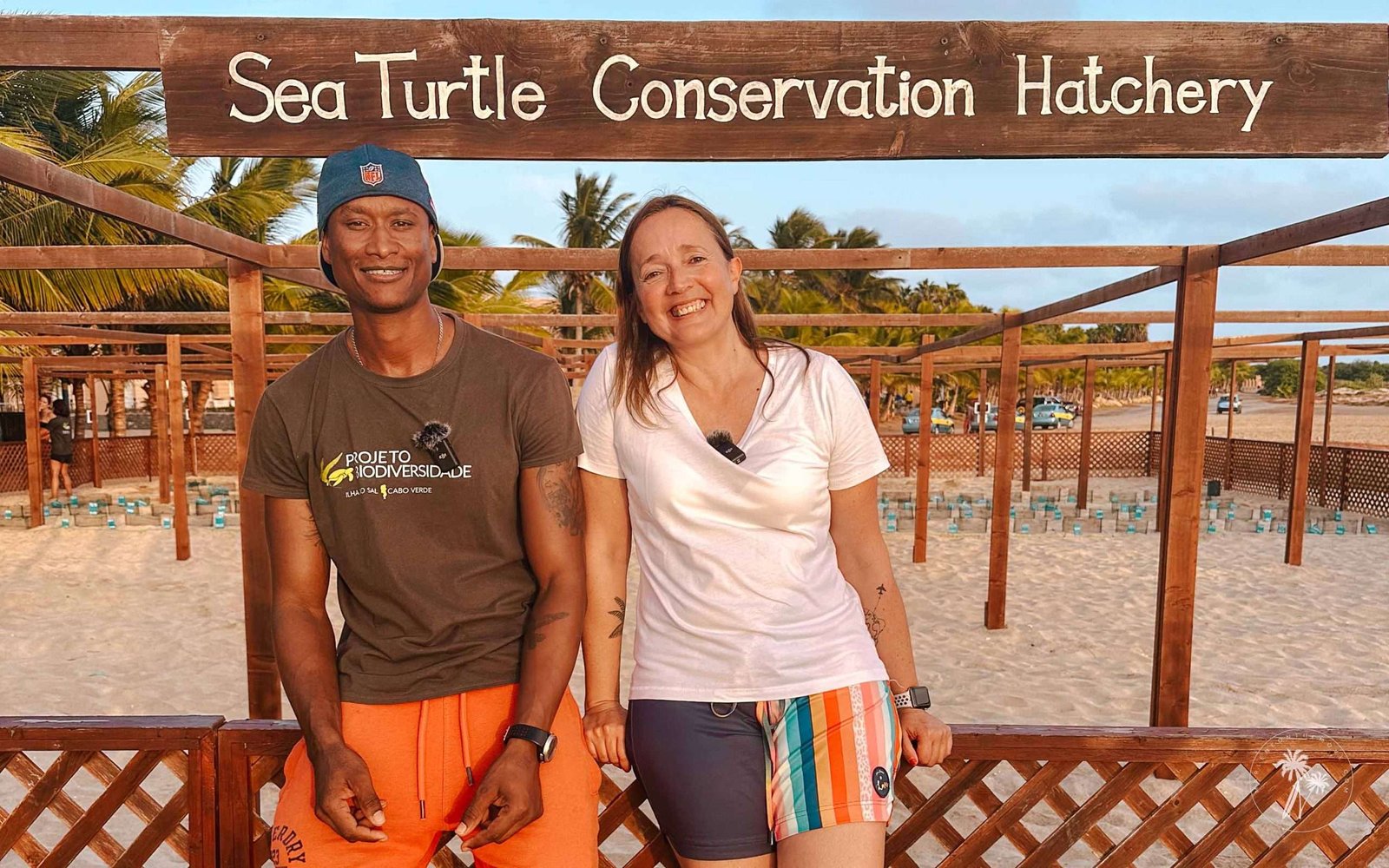
Artur Lopes isn’t a traveler per se, but if you count the kilometers he’s covered on Sal Island, there’s no greater traveler.
For over three years, he has worked at Project Biodiversity, an NGO he co-founded with other environmental conservation professionals. It works to preserve Sal’s marine ecosystems.
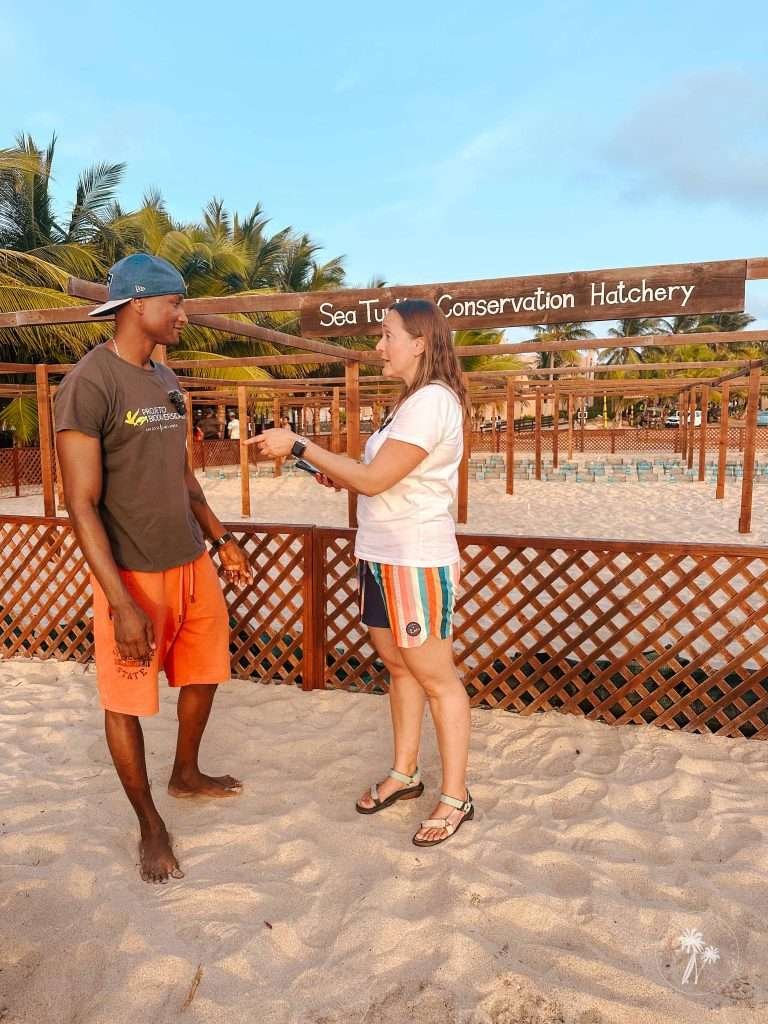
My last visit to this Cape Verdean island was to see the sea turtles hatching. As part of the video I made for YouTube, I spoke to Artur Lopes to learn more about this animal species and the work that Project Biodiversity has been doing over the years.
This blog segment aims to interview travelers and share their travel tips. However, I wanted to leave the full conversation I had with Artur because it takes us on a journey through the incredible life of sea turtles and leaves conservation tips for those traveling and visiting destinations such as Sal Island.
Interview with Artur Lopes, co-founder of Project Biodiversity and responsible for the sea turtle program

How many types of sea turtles are there, and which ones can we see here on Sal Island?
There are seven different types of sea turtles in the world. On Sal Island, we’ve had a few green turtle nests, but not many, like three or four. But, in general, you can find the common turtle, which goes by various names: common turtle, brown turtle, loggerhead turtle, whose scientific name is careta-careta.
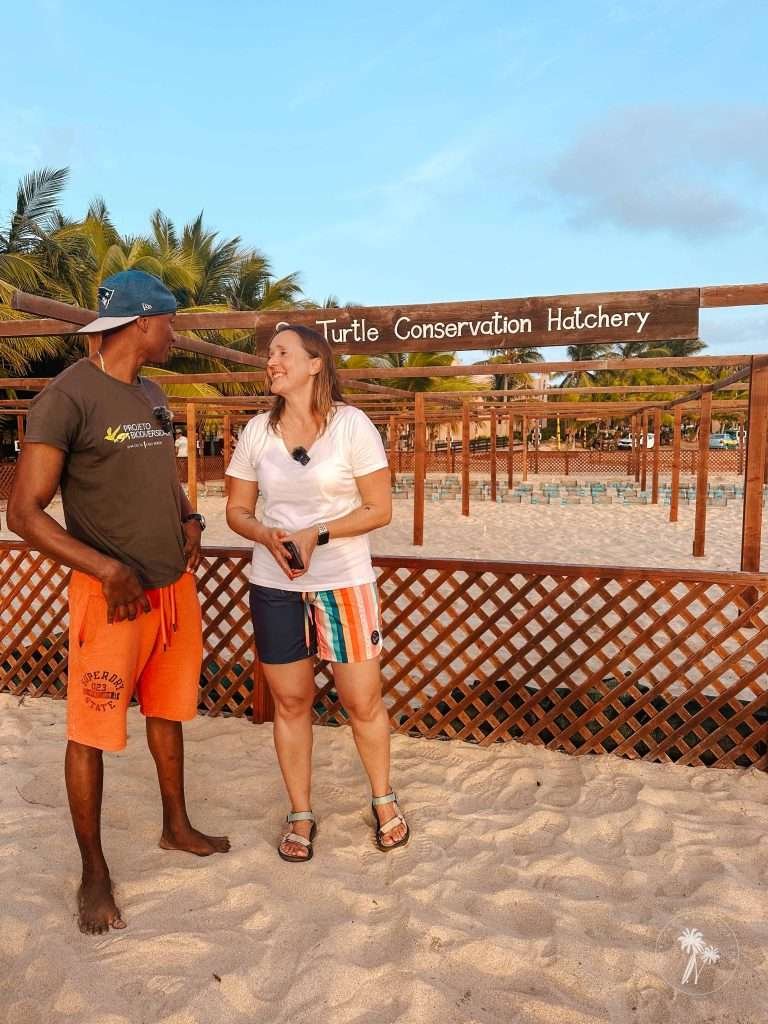
Tell us a bit about the history of the Project Biodiversity hatchery. Why is it here [in Santa Maria, next to the RIU Hotel]?
The hatchery exists here because the beach has a lot of light pollution due to coastal development. So, in order to protect the [sea turtle] nests, we have to move them off the beach and put them here. In this whole area, if you count 5 km up and down, we have to bring all the nests to this area because there’s no place on the beach where we can put them. So we have to protect them in incubation ponds.
How many times a year do sea turtles come to this coast to lay their eggs, and what’s the approximate number of eggs we can count in this hatchery?
Uh, a lot of eggs! The nesting season is between June and October. Turtles can lay five nests in one season, with an average of 15 days between nests.
On average, we have between 1,000 and 1,200 nests. If you count around 80 eggs, the average number of eggs per turtle nest, we’re talking about 8,000 eggs.
And how many of those can we expect to survive to come back here to the Sal coast again?
Success here is very good, better than on the beach. It’s between 80% and 85%. So out of 100 eggs, 85 or so will hatch.
Tell us a bit about the role of Project Biodiversity on Sal Island.
On Sal Island, we are the only NGO that does conservation. We work with various ecosystems. We have a marine program, which works with sharks and the seabed; we have sustainable fishing, where we work with fishermen and fishmongers; we have a sea turtle conservation program; we have a seabird program; we work with plants, too, so we do almost everything on Sal Island.
And these are monitoring projects? In other words, do you monitor the number of species that exist here or cease to exist? What’s your fieldwork?
Yes, we monitor and control the ecosystems and also restore and protect them.
What do you think is the greatest achievement you have made or are making as an environmental association on Sal Island?
The greatest achievement, I would say, is community involvement. Over the years, we’ve struggled to achieve community involvement, which hasn’t been easy because the island is always changing people. It grows, it shrinks, without a lot of local people. So, community involvement is one of the achievements.
Then there’s the increase in patrol effort, which has increased over the years. This means we’re protecting more beaches every year and a decrease in hunting.
Now that you mention it, this project also exists because of the dangers, which, in this case, have been increasing for sea turtles. What do you consider to be the greatest dangers this species faces?
The biggest danger is hunting. People go to the beach and catch the turtles to sell or take the meat to eat. So, it’s the most impactful. If you consider that only one turtle in a thousand will survive and come back in 25 / 30 years, the impact can be significant when you catch a lot of turtles.
Then there’s coastal development, which is damaging part of the ecosystems. The island is small, and the hotels are close to the beach. So every time a hotel is built, it has a big impact on the ecosystem.
We hear a lot about climate change today. Do you notice that? Do you notice that the effects of recent climate change are already being felt?
Yes, you can see it in the dynamics of some beaches. I’ve been doing conservation for three years now, and I can see that the dynamics of the beach have changed. The tides are changing, coming in higher and taking up more of the beach.
It’s also impacting spawning because when the tide comes in, it takes up a lot of the beach and damages some of the nests.
How has plastic evolved on the island in terms of pollution? This has affected many things, particularly the ecosystems on islands.
Cape Verde’s problem, in general, is that it doesn’t have a waste recycling system. Most of the garbage you find on the beach comes from the sea current; it’s not garbage produced here. We don’t recycle, but we also don’t produce so much that we pollute the beaches.
However, most of the north coast, where the currents come from, is full of plastic.
What would you say are three things those who come to Sal can do to help, particularly sea turtles? If you’re here on vacation, what can you do to help?
To help us, you can make a donation, which can be in the form of money or materials. We also have a nice thing we do for sea turtle donations: You get a certificate that you’ve adopted a turtle. It’s all symbolic. Of course, you can’t take the turtle home.
In terms of attitudes, you can also go with a certified and environmentally conscious guide when you visit places. Or when you use plastic, use as little as possible because, as I said, we don’t have recycling, and everything you consume stays here.
You mentioned having been in this job for three years. Can you recall any stories or moments that have marked you?
For me, every time you’re on the beach and you save a turtle, it’s a motivation. I remember they caught a turtle one day, but we didn’t have a car to check it out. We couldn’t find the trail when we got one and went there. Then we noticed that the hunter had a dog, and we followed the dog’s tracks and found the turtle hidden in a rock 3 km away.
Finally, what are the objectives of Project Biodiversity for the future?
The aim is to increase monitoring efforts and community involvement and reduce hunting.
See the Sea Turtles of Sal Island video