
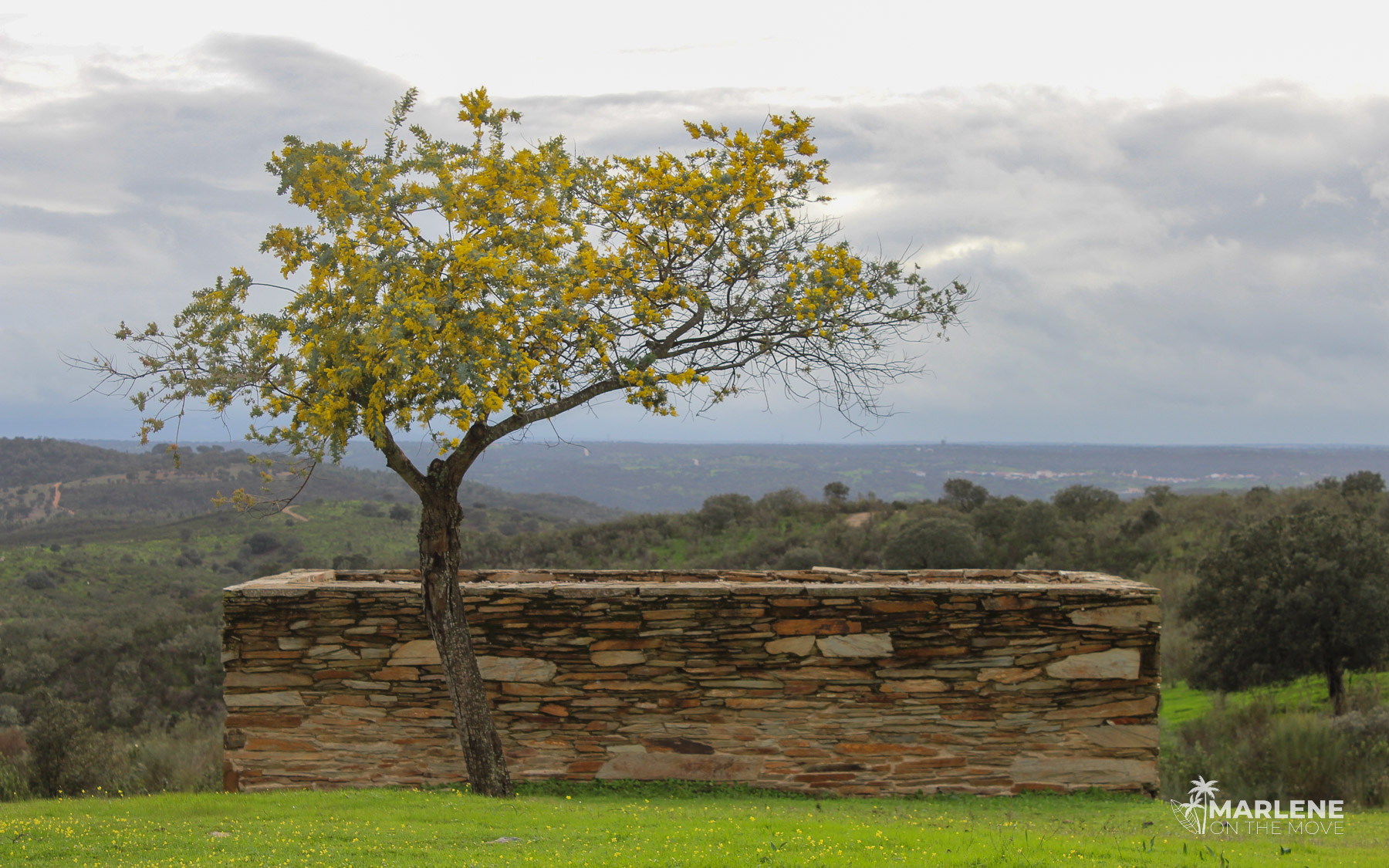
Most people know the Tagus as Lisbon’s river, a wide estuary that empties into the Atlantic after crossing half the Iberian Peninsula. Few think about where it enters Portugal. I didn’t, until I traced a route toward the Spanish border one winter and ended up on a road that was almost entirely mine.
That’s how I found the Tejo Internacional Natural Park.
Spread across the municipalities of Castelo Branco, Idanha-a-Nova, and Vila Velha de Ródão in central Portugal, the park follows the Tagus for roughly 40 kilometers as it forms the natural border with Spain. Over 26,000 hectares of cork and holm oak woodland, open scrubland, and carved river valleys. It’s one of the least-touched landscapes in the country, and I moved through it too fast on that first visit. I wouldn’t make that mistake again.
Tejo Internacional Natural Park: Why this park is different
Tejo Internacional isn’t the kind of destination that hits you immediately. It doesn’t have the drama of the Serra da Estrela or the tourist infrastructure of the Douro Valley. The landscape is understated: gentle hills covered in montado, the river moving without urgency, schist villages where time has slowed but not completely stopped.
What makes it remarkable takes a moment to understand. The park was established in 2000 largely because it’s one of Europe’s most important nesting sites for birds, including species protected under international conservation conventions, such as the black stork. It now forms part of a UNESCO-recognized Transboundary Biosphere Reserve shared with Spain’s Parque Natural del Tajo Internacional across the river.
The Iberian imperial eagle — found nowhere outside the Iberian Peninsula — has been classified as Vulnerable since 2021 and is one of the park’s most significant species. Bonelli’s eagle, golden eagle, griffon vulture, and Egyptian vulture are also present. If you’ve never considered birdwatching as a reason to travel, this might be the place that changes that.
What to see in Tejo Internacional Natural Park
Malpica do Tejo
This is where I entered the park, and it’s a good place to start. Malpica do Tejo is the largest parish in the Castelo Branco municipality and sits at the point where the Tagus first crosses into Portugal.
The Ermida de Nossa Senhora das Neves is worth the detour — or what’s left of it. The chapel was destroyed during the conflicts over Portuguese independence from Spain, and what remains tells the story more honestly than any information board could. Nearby, you can walk parts of the old towpath, once used to haul boats along the river. Most of it was submerged after the construction of the Cedillo dam, but some sections remain accessible.
The village also has the old and new fountains, the Church of S. Domingos, the Chapel of S. Bento, a lime kiln at Monte dos Cancelos, and medieval rock-cut tombs. It’s the kind of place where every crumbling wall has a date.
Portas de Ródão
Near Vila Velha de Ródão, the Portas de Ródão are classified as a Natural Monument for their geological, landscape, archaeological, historical, and biological significance. The Tagus cuts through quartzite ridges here, forming a natural corridor that has always drawn large birds. One of the best spots in the park to watch vultures in flight.
Rota dos Abutres (Route of the Vultures)
The park’s best-marked hiking trail — 10.5km — descends from the village of Salvaterra do Extremo, around 60km east of Castelo Branco, into the dramatic canyon of the Erges river. The route follows the river throughout, past old watermills and through a tight, steep-walled valley. It’s the right trail for a first visit — manageable, rewarding, and well worth the drive to the trailhead.
One honest note: visits to the park should ideally be made with someone who knows the area, since many trails are poorly marked or not marked at all. Pick up the Quercus Trails Guide before you go, or book a guided walk.
Ruins of Alares
Less visited, but one of the most atmospheric spots in the park. The path to the ruins is itself a highlight, with good chances of spotting wildlife along the way, and the ruins make an ideal sheltered spot for a picnic. A birdwatching hide is integrated into the GR 29 (Rota dos Veados) trail nearby. Getting there without local knowledge or a guide is harder than it looks on paper.
The Ponsul Bridge
Between Castelo Branco and Malpica, the Ponsul (one of the Tagus tributaries) crosses under a stone bridge that’s worth stopping for even without a specific reason. The valley opens unexpectedly, the sound of the water comes before the view, and for a few minutes, there’s genuinely nothing else going on.
Environmental Interpretation Centre
If it’s your first visit to the park, start here before you leave Castelo Branco. The Centro de Interpretação Ambiental is on Rua da Bela Vista, entry is free, and it’s open on weekdays from 9am to 5.30pm. Fourteen interactive stations that help you understand what you’re looking at once you’re out in the park — and recognise what you’d otherwise miss.
Birdwatching in Tejo Internacional
This is the park’s strongest card, and it deserves its own section. There are two dedicated birdwatching hides: one at Alares, on the GR 29 trail, and one at Salvaterra do Extremo, on the PR1 trail. Species to look out for include the black stork, griffon and Egyptian vultures, Iberian imperial eagle, Bonelli’s eagle, golden eagle, and the calandra lark.
Spring is the best time to visit for birdwatching: nesting species are most active, and the vegetation is alive with colour and scent: wild rosemary, lentisk, white broom. Summer temperatures regularly exceed 40°C, making long walks genuinely difficult and reducing wildlife activity. Autumn is quieter but has its own appeal.
Travel Notes
How long to spend: At minimum a full day; two days if you want to include a proper hike without rushing.
Best time to visit: Spring (March to June) for birdwatching and wildflowers; autumn for mild temperatures and landscape colour. Summer is very hot, winter can bring frost.
Getting there: By car from Castelo Branco, around 2h40 from Lisbon via the A23. There’s no regular public transport to most of the park — a car is effectively essential.
Where to stay: Castelo Branco is the most practical base, with the widest range of accommodation.
Entry: Free.
Before you go: Confirm trail conditions with the ICNF office in Castelo Branco or the park’s website.
What to bring: Trail shoes, sun protection, plenty of water (resupply points inside the park are scarce), and binoculars if you’re going for the birds.
One last thing: slow down. This is the kind of landscape that doesn’t give everything away at once.
Have you been to Tejo Internacional Natural Park? Tell me what you’d add or what surprised you most. Comments are open below.
Travel Tool Box
These are my go-to tools to make my trips more complete at the best prices. Enjoy some of the perks of being one of my readers.
By using these links you’re also contributing for the maintenance of this blog and for that I thank you so much!
Heymondo
Book your travel insurance with a 5% discount.
Holafly
Get your unlimited eSIM with a 5% discount.
Booking.com
The best stays worldwide at the best prices.
GetYourGuide
Enjoy the best tours and entertainment each destination offers.
Skyscanner
Find the best flight at the best price for your next trip.
Hostelworld
Enjoy the best hotels around the world for a fun experience.
DiscoverCars
Book your car at the best prices and go explore.
Compensair
Don’t let your canceled flight ruin your vacation.