
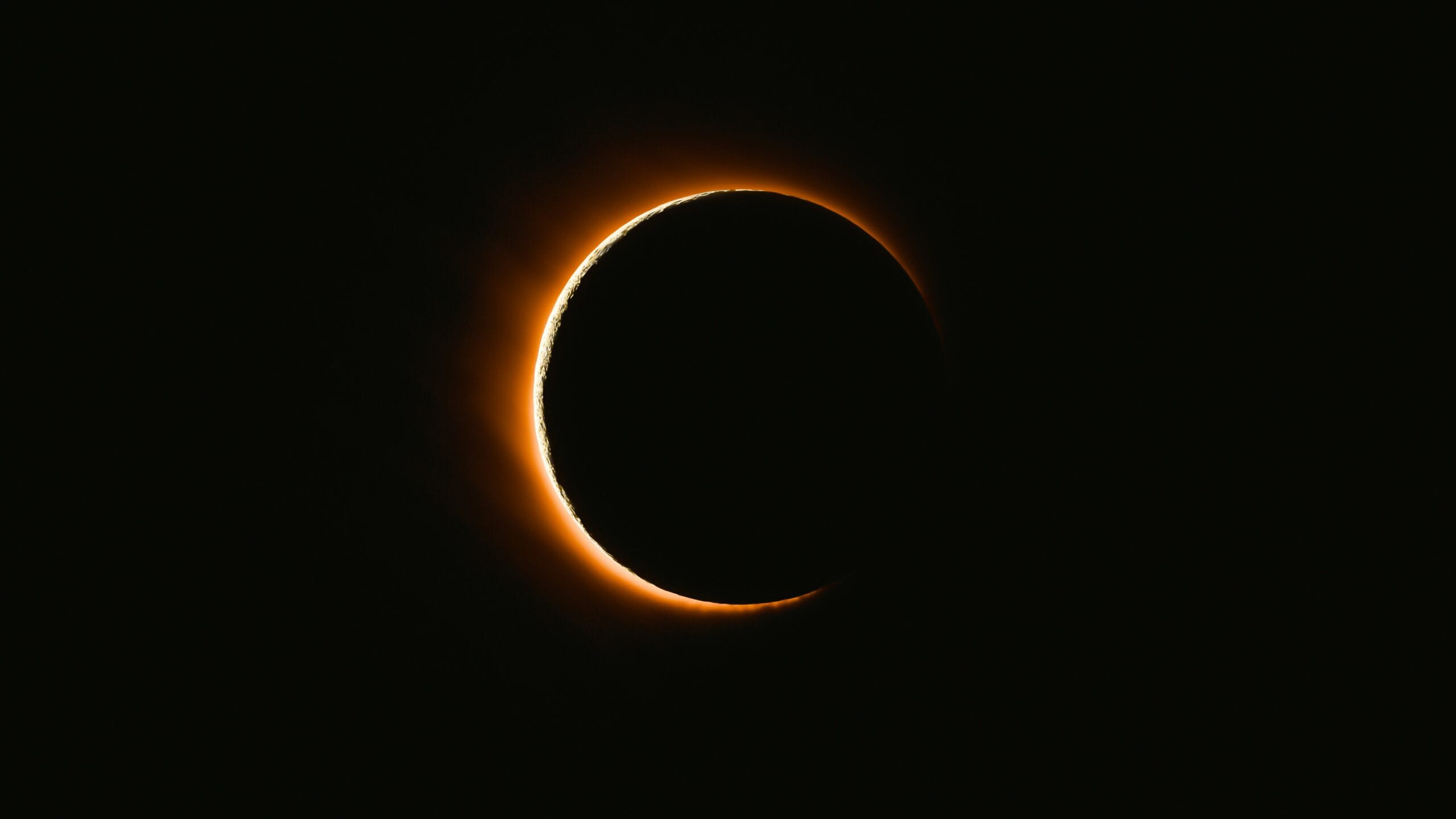
Here’s something the ocean taught me: light changes first. It shifts half an hour before the wind does, long before the water changes color. On August 12, at the end of the day, we get the extreme version of that, except this time it isn’t the weather. It’s the Moon crossing in front of the Sun.
I usually write about places you can visit in the future, but this one comes with an urgency sticker. There are days left for the sun eclipse, the best accommodation is either sold out or priced accordingly, and if you are in Portugal and you miss this one, the next total solar eclipse visible from Portuguese soil is in 2144.
So let’s get straight to it: when it happens, where to watch the 2026 solar eclipse, what each country actually gets, and what you can still do if you have nothing booked.
Solar eclipse: what happens on August 12, 2026
It’s a Wednesday. The Moon’s shadow begins in the Arctic, sweeps down over Greenland and Iceland, crosses the North Atlantic and reaches the Iberian Peninsula in the late afternoon before exiting over the Mediterranean and the Balearic Islands.
This will be the first total solar eclipse visible from mainland Europe since 1999.
The difference between what’s happening in Spain and what’s happening in almost all of Portugal is the difference between a total eclipse and a deep partial eclipse.
In a partial eclipse, even at 98% coverage, there’s still enough light that your brain doesn’t register anything unusual. The landscape takes on a strange metallic dusk, but there’s no corona, no stars, and you can’t take your eclipse glasses off at any point.
In a total eclipse, that last one percent vanishes all at once. The day drops. The temperature falls. Birds go quiet. And the solar corona, the Sun’s outer atmosphere, becomes visible to the naked eye, which happens under no other circumstances on Earth.
That’s why people cross continents for a two-minute experience.
When it last happened, and when it happens next
Mainland Europe last saw totality in 1999. Portugal last saw it on April 17, 1912, and will not see it again until July 27, 2144. Spain had waited more than a century.
The Iberian Peninsula is now entering an unusually dense run. On August 2, 2027 another total eclipse crosses southern Spain, Gibraltar and North Africa. On January 26, 2028 an annular eclipse, the ring of fire, crosses southern Portugal and southern Spain at sunset.
If you miss August, those are your realistic next chances in Europe.
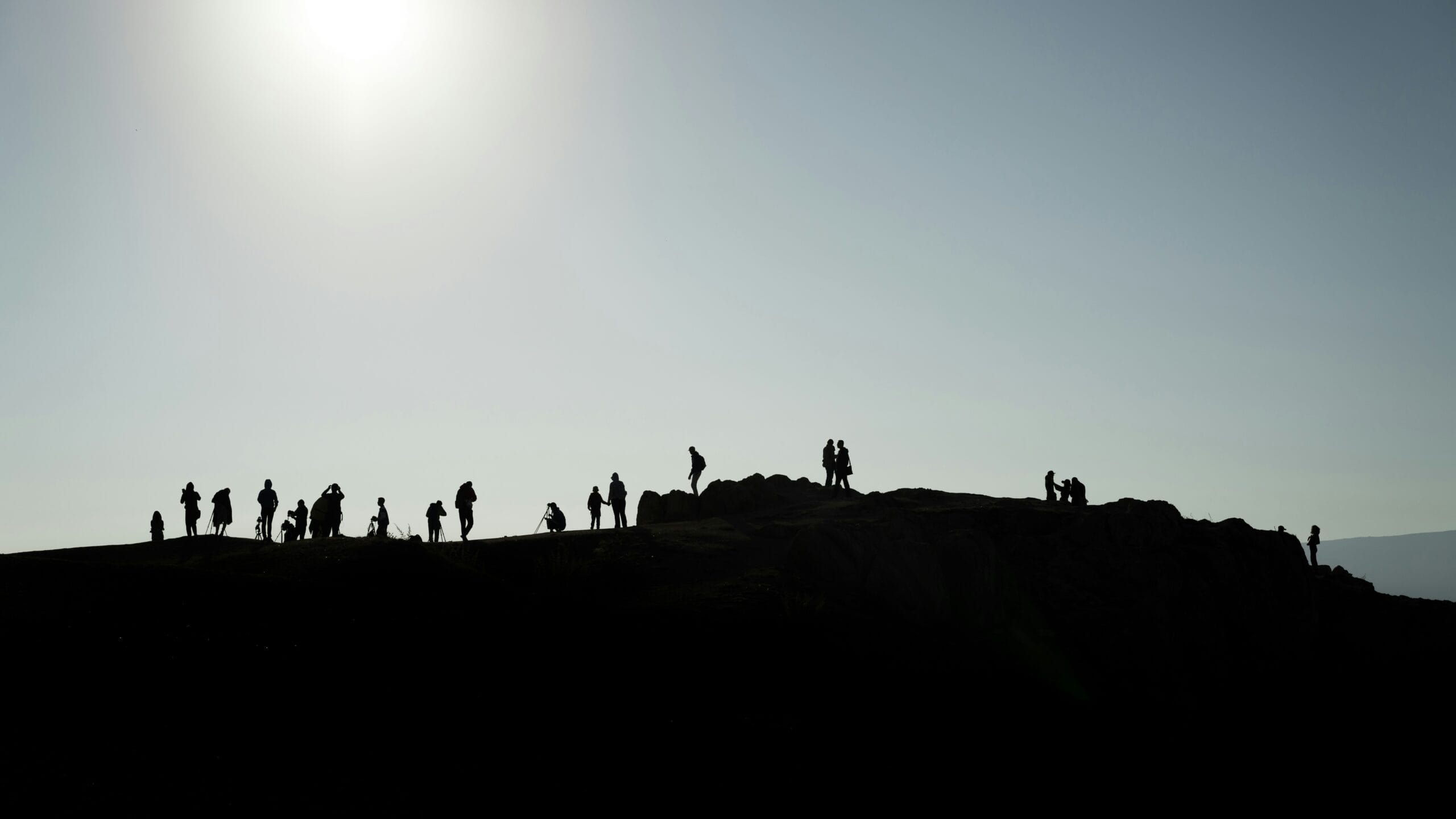
Where the solar eclipse is total: the countries that matter
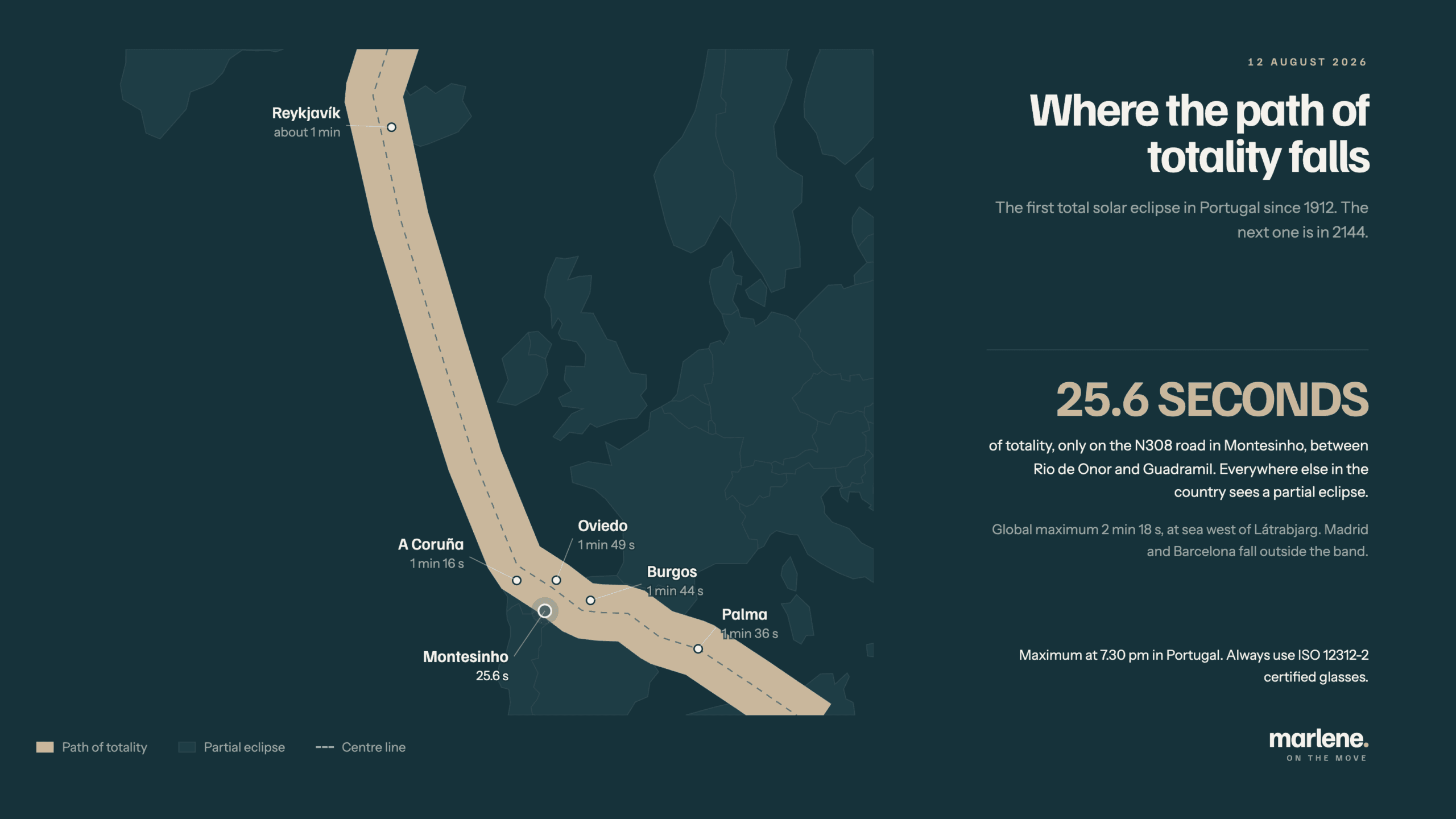
The path of totality is roughly 290 km (180 miles) wide by the time it reaches Spain, and it touches four places worth traveling for: Greenland, Iceland, Spain, and a tiny sliver of Portugal.
Iceland: the best combination of duration and Sun height
If cost were no object, this is where I would be.
The longest totality of the entire eclipse, about 2 minutes and 18 seconds, falls at sea west of Látrabjarg in the Westfjords. On land, the western side of the island sits inside the path.
Best areas:
- Breiðafjörður Bay, between the Westfjords and the Snæfellsnes peninsula. Long duration and enormous open horizons.
- Snæfellsnes peninsula. Volcanoes, a glacier, black sand beaches, and reasonable access from Reykjavík.
- The Westfjords. More remote, fewer people, slower roads.
- Reykjavík. Around a minute of totality, with the huge advantage that the Sun sits about 25 degrees above the horizon, far higher than anywhere in Iberia.
That is Iceland’s edge. With the Sun high, a hill, a building or a low bank of fog will not ruin your view. The risk is cloud. August in Iceland is unpredictable and overcast skies are the single biggest threat to the trip.
Greenland: the most extreme setting
The path enters the northeast, and Scoresby Sund, the largest fjord system in the world, gets up to about 2 minutes and 16 seconds.
The problem is logistics. These are effectively uninhabited areas, which makes expedition cruises the only realistic route. It is the most expensive option here and the hardest to improvise at short notice.
One practical note if you go: Greenland sits outside EU roaming. A Holafly eSIM solves that, and travel insurance stops being optional. I use Heymondo and remote destinations aren’t where I cut corners.
Spain: the realistic option for most of Europe
The path enters through Galicia and crosses the country west to east, all the way to the Balearics. Here’s the detail most people miss: in Spain, the eclipse happens with the Sun very low, close to setting. In many places, it sits between 2 and 10 degrees above the horizon.
That changes everything. Being inside the path isn’t enough. You need a clear horizon to the west and northwest, with no hills, no buildings, no trees. A west-facing viewpoint is worth more than thirty extra seconds of totality.
The maximum eclipse in Spain falls between 8:27 and 8:33 pm local time, depending on the city.
| Location | Approximate totality |
|---|---|
| Oviedo | 1 min 49 s |
| Gijón | 1 min 45 s |
| Burgos | 1 min 44 s |
| Palma de Mallorca | 1 min 36 s |
| A Coruña | 1 min 16 s |
| Segovia | 57 s |
| Cuenca | 53 s |
| Bilbao | 31 s |
The centerline, where totality lasts longest, runs close to Avilés, Oviedo, Aranda de Duero, Soria, Peñíscola and Palma de Mallorca.
Madrid and Barcelona are outside the path. They get a very deep partial, which isn’t the same thing. From Madrid you need to drive 50 to 80 km north, to Segovia or Guadalajara, to reach totality.
Where I would go, weighing duration, clear skies and horizon:
- Asturias (Oviedo, Gijón, the coast from Colunga to Ribadesella). The longest totality on the peninsula and a coastline that works as a natural viewing platform. The main risk here is clouds, and it is real. This is my first choice.
- The Balearics (inland Mallorca, Ibiza). The Sun is only about 2 degrees above the horizon in Palma, so your exact spot is quite literally everything.
- Galicia (A Coruña, the Ferrol area). Good duration and a sea horizon.
- Castile and León (Burgos, Palencia, Soria, Zamora, Valladolid). On paper the best balance of duration, clear skies and space. Check conditions in the specific area before booking, because the Spanish interior burns often in August.
- Aragón and inland Valencia (Zaragoza, Teruel). Frequently cloudless in August and less competition than the north.
Portugal: 26 seconds, and a lot of misunderstanding
This is the part where I have to be blunt, because much of the coverage implies Portugal gets a total eclipse. It does not. A very small piece of it does.
Where it’s total
In mainland Portugal, totality is confined to a stretch of the N308 road inside Montesinho Natural Park, between the villages of Rio de Onor and Guadramil, in the Bragança district. It lasts 25.6 seconds, beginning at 7:30:17 pm.
The city of Bragança, a few kilometers away, reaches about 99.9% obscuration and still doesn’t get totality. That final fraction is the whole story.
Important: access to the observation area is restricted and controlled. Portugal’s national park authority capped it at 2,500 people, registration ran through the national Ciência Viva eclipse program with an identifying wristband and a shuttle plan from Bragança airfield, and registration has already closed. If you didn’t sign up, don’t plan on getting in.
What the rest of the country sees
| Location | Sun obscured |
|---|---|
| Bragança city | about 99.9% |
| Porto | 98.2% |
| Lisbon | 94.5% |
| Faro | 92.7% |
| Madeira | 77.5% |
| Azores | 76.9% |
The further north you are, the higher the percentage.
Best places in Portugal to watch the solar eclipse
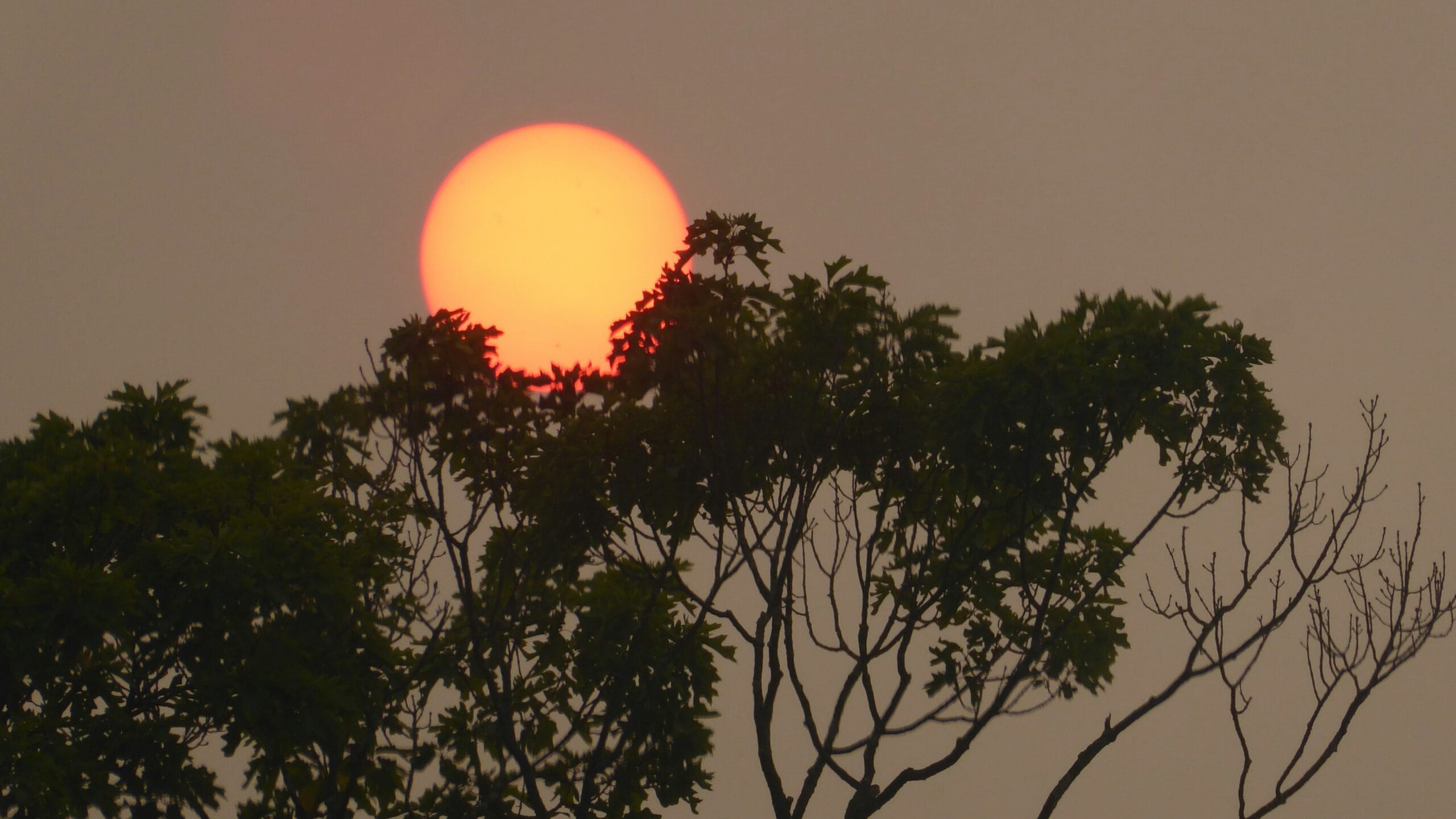
The rule is simple and never changes: a completely clear western horizon, because the Sun will be low and setting. Coverage percentage only matters after that.
- The northern coast, between Caminha and Espinho. This is where the two factors meet: the highest coverage in the country outside the northeast, and an Atlantic horizon with nothing in the way. Monte de Santa Luzia in Viana do Castelo gives you height and ocean at once.
- Northeastern Portugal, outside the restricted zone. Aveleda, Varge, Vinhais and the surrounding plateau. No totality, but 99% and genuinely beautiful country.
- The Lisbon and Sintra coast. Cabo da Roca, Guincho, Cabo Espichel. Excellent horizons, but expect crowds, and check in advance for access restrictions.
- Any high viewpoint facing west. Worth more than a beach with a hill behind it.
- The Azores and Madeira. Lower percentages, but spectacular horizons and far fewer people.
One warning nobody gives you: watch out for coastal fog. On an August evening, low cloud rolls into the western Portuguese coast very easily. A spot slightly inland and slightly higher can save your entire evening.

a trip
How I plan a trip, from impulse to itinerary
12 pages with my method: how I choose the time of year, how long I give each place, how I budget — with one whole trip costed out — and the six questions I ask before booking a bed.
Check your inbox to confirm, and the PDF is yours. After that, my letter every two weeks — leave whenever you like.
Where to stay when everything is booked
If you’re reading this now, you are late, and the market already knows it. Many accommodations are already fully booked or are charging exorbitant rates. What you can still do, in order of effort:
1. Don’t sleep there. The most underrated option. Drive out in the morning, watch, drive back. Porto to Zamora is about three hours. Expect heavy traffic on the return and dark secondary roads.
2. Stay outside the path and drive in. Availability tends to survive where totality doesn’t reach. Base yourself to the north, closer to Asturias and Galicia, rather than in the centre of the country.
3. Get out of the provincial capitals. There are villages, rural guesthouses and campsites that never make the news. Filter by small town rather than city. Check availability on Booking.com
4. Accept 98% and stay put. It is free, it is beautiful, it happens at sunset and you’ll not spend four hours in traffic. It isn’t totality and I’m not going to pretend it is.
5. Rent the car now. Without one you can’t reach the good viewing spots, because almost none are served by public transport, and prices are climbing daily. Compare on DiscoverCars
Two notes. First, always book free cancellation, because the forecast may force you to move regions at the last minute and one hour of driving can be the difference between clear sky and cloud. Second, if you’re considering last-minute flights to Iceland or Asturias, check Skyscanner but don’t expect kind prices.
If you would rather not organize anything, there are guided observations and astronomy sessions along most of the path. See what’s available on GetYourGuide.
Checked in July 2026.
Watching the solar eclipse from Paredes de Coura
Vodafone Paredes de Coura runs August 12 to 15 at the Taboão river beach in Portugal’s far north, and it draws a large international crowd. The eclipse falls on opening day, peaking around 7:30 pm, right as the first night begins.
If you are going, like me, this matters more than anything else you will read on the subject.
The good news: you’re in one of the highest-coverage regions in the country. The Braga science center calculates 98.82% for Braga, and Paredes de Coura sits considerably further north, so expect a little more.
The bad news: the site is a natural amphitheater sunk into a valley, ringed by slopes and tall trees. The Sun will be 8 to 11 degrees above the western horizon. Translated: from inside the festival grounds, there’s a very real chance the best part of the eclipse is hidden behind a pine-covered hillside.
My plan, and my suggestion:
- Don’t watch from inside the grounds. However good the music is at 7:30 pm, it comes back every year and this does not.
- Go up. The Corno do Bico area and the hills around Paredes de Coura give you altitude and an open western horizon minutes from the site.
- Scout it the day before or that morning, at the same hour if you can. With the Sun this low, a hill that looks harmless at noon will block everything at half past seven.
- Don’t try to reach the coast. Moledo, Vila Praia de Âncora and Afife are tempting and about thirty minutes away, but you’re adding two risks: late-afternoon low cloud, which is real on this coast, and heavy traffic on the way back.
- Bring your glasses from home. Don’t count on buying them locally three days out.
- Agree on a meeting point with your group beforehand, because the network will be saturated and you’ll want to be with someone when it happens.
Then you come back down, walk in, and still get most of the night. It’s a good trade: you lose an hour of the festival and gain something Portugal doesn’t see again until 2144.
A word before you pick your hilltop
August is the highest fire-risk month in the Iberian Peninsula, and this eclipse will send a lot of people up hills, onto rural tracks and onto dry verges at the end of a hot afternoon. Worth keeping in mind.
- Check the day’s risk level before you leave. IPMA publishes it for Portugal; in Spain it is the civil protection service of the region you are in.
- Don’t park on dry vegetation. A hot exhaust is enough. On August 12 tens of thousands of cars will pull onto rural verges at the same hour.
- On maximum-risk days, access to forest areas can be legally restricted, including protected areas with the best viewpoints. Confirm before counting on a specific spot.
- No fires of any kind, and take your litter and glass with you.
- Have a plan B an hour away. It’s good for cloudy weather, but also for clouds of smoke.
And one thing specific to this eclipse: the Sun will be a few degrees above the horizon, so you’re looking through the lowest and dirtiest layer of the atmosphere. Smoke from a fire two hundred kilometers away can spoil the view somewhere nothing burned. One more reason to favor a sea horizon or altitude.
How to watch safely
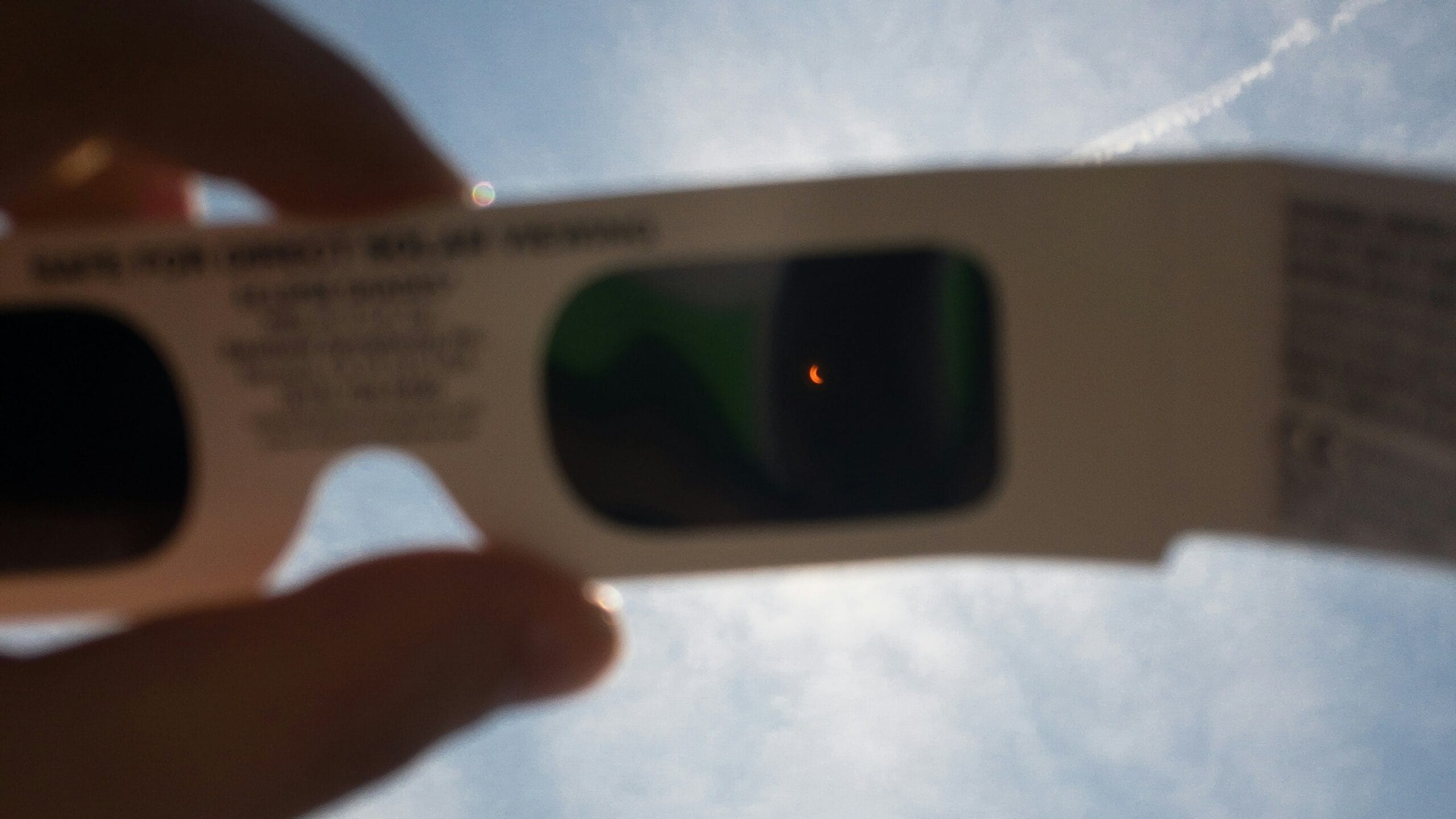
This section isn’t optional. At 92% to 99% coverage there is still more than enough radiation to burn your retina in seconds, painlessly, and the damage can be permanent.
What works:
- Eclipse glasses certified to ISO 12312-2, bought from opticians, pharmacies or science centers.
- Checking the certification and the condition of the lenses every time. Scratched, punctured or creased glasses go in the bin.
- A proper solar filter mounted in front of the lens if you are using a camera, telescope or binoculars.
- Pinhole projection, which is the safest method of all and the best one for children.
What doesn’t work:
- Sunglasses, however good, however many you stack.
- Smoked glass, X-ray film, negatives, CDs.
- Your phone camera as a filter. It doesn’t protect your eyes and it can damage the sensor.
- Looking for “just a second.”
The rule most people will get wrong: glasses only come off during totality. Outside the path, they never come off at all.
If you are bringing children, settle this before you leave, not in the last thirty seconds when everyone is shouting.
If you surf
Checked in July 2026.
Twenty-six seconds. That’s what Portugal waited 114 years for, and it happens on a narrow road between two villages in the northeast, with 2,500 people looking at the same point in the sky.
If you are not there, it doesn’t matter. You will be on a beach, or at a viewpoint, or outside your front door with a pair of cardboard glasses in your hand, watching the light change in a way you will never quite be able to explain to anyone who wasn’t standing next to you.
What about you? Tell me in the comments where you are watching from.
Travel Notes
Ideal length · 3 to 4 days, August 10 to 13. Arriving the day before is risky because of traffic.
Best base · Castile and León for the best balance of duration, clear skies and space. Asturias for the longest totality if you accept the cloud risk. Inland Aragón if clear sky is the priority.
Getting there · a car is close to mandatory. From Porto, the path is two to three hours away via Bragança or Zamora. From Lisbon, count on five to six hours to Castile and León. Trains only take you to the larger cities and then you are stuck.
Costs · with prices up as much as 85% in some areas, budget at least double the usual rate for accommodation on the night of the 12th, plus fuel and tolls. Staying put in Portugal costs nothing.
What to wear · layers. Temperature drops several degrees quickly during totality, and it is noticeable even in a deep partial. Bring a light jacket even if it was 28°C (82°F) that afternoon.
What to pack · ISO 12312-2 glasses plus a spare pair, water, food, a power bank and patience for the traffic.
Connectivity · EU roaming covers both Spain and Iceland normally. Greenland it doesn’t, and that is where a Holafly eSIM earns its keep. Expect saturated networks at viewing sites, because everyone will be filming at once. Agree on a meeting point before you leave the car.
Insurance · within the EU an EHIC card covers the basics, but I always travel with Heymondo when I’m driving long distances and ending up somewhere remote.
Final tip · choose your viewing spot a day early and go stand in it at the same hour. With the Sun this low, you will immediately see whether that harmless-looking hill blocks exactly what you came for.
Checked in July 2026.
The tools I use on my own trips, with the conditions I managed to get for my readers. If you book through them, the blog pays for itself — and it costs you nothing extra.
The eSIM I am an ambassador for, powered by NOS. 10% off with the code at checkout.
Affiliate links and my own codes. Only tools I actually use.