
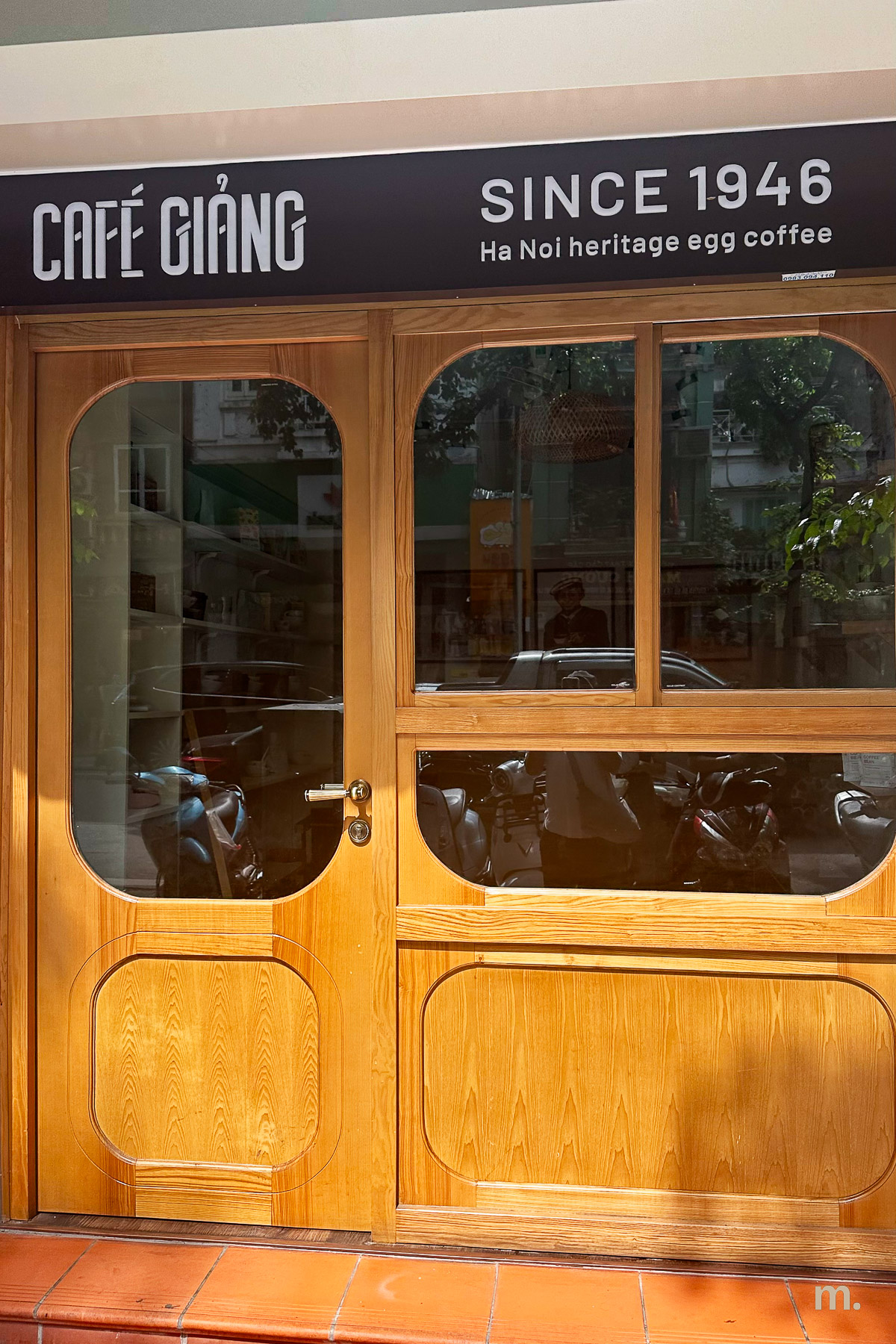
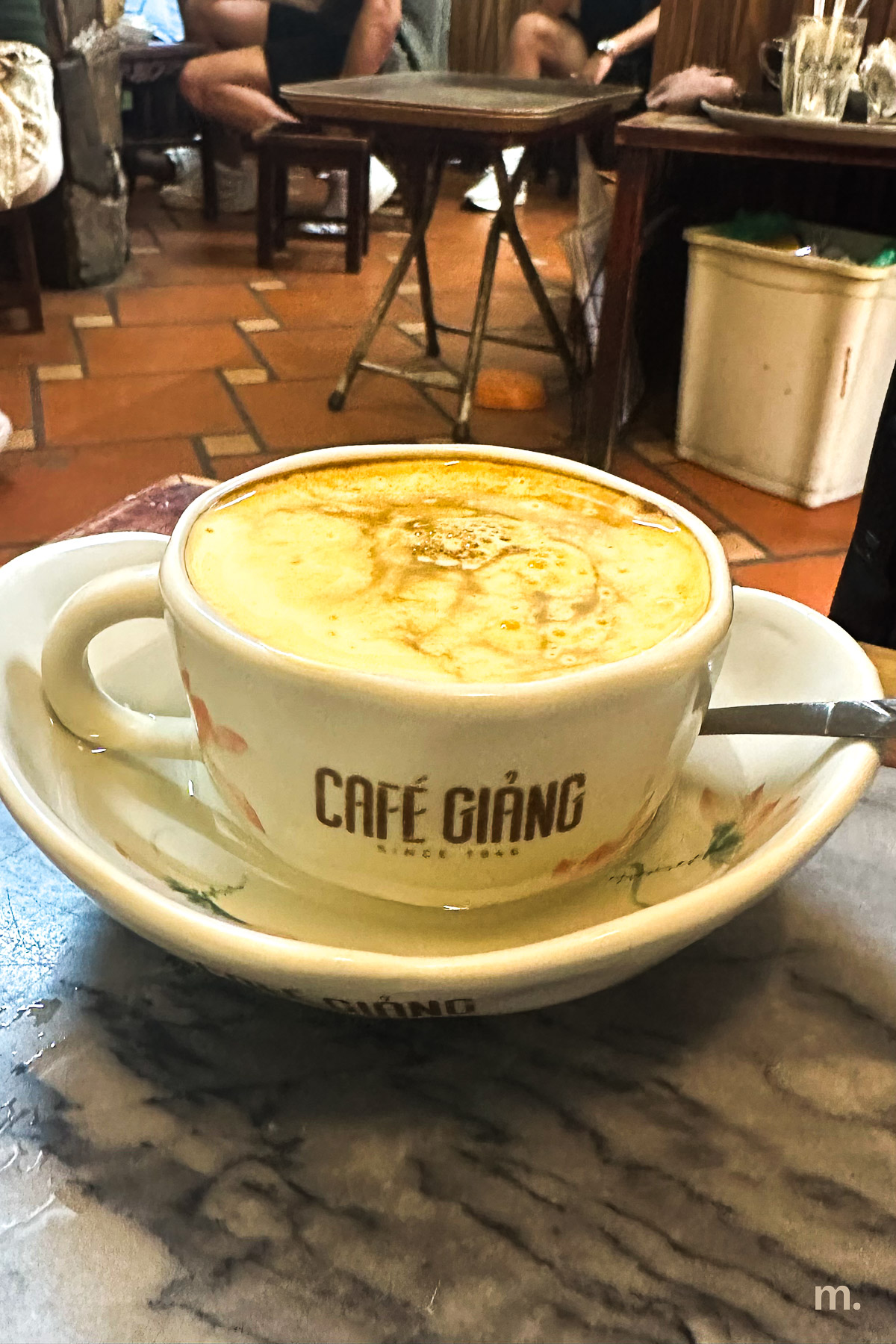
The cup says “since 1946”. Café Giảng sits at the tip of a narrow corridor in Hanoi’s Old Quarter. Inside, they’ve been serving the same coffee since the 1940s, when a bartender at the Metropole hotel ran out of milk and whisked egg yolks with sugar to put on top instead. It’s thick and sweet, and you drink it slowly. It’s also a fair summary of the country I kept finding from north to south. A lot of things here start of necessity and end up as ritual.
This 2-week Vietnam itinerary follows the order I traveled in, from north to south, over 14 days. By far, it covers everything this country has to offer. But one thing runs through this whole trip: my version of Vietnam is almost always seen from the water. Halong Bay, the river at Trang An, the Perfume River in Hue, the Thu Bồn in Hoi An and, at the very end, the Mekong.
The itinerary at a glance:
- Hanoi (arrival)
- Halong Bay (1 night on board)
- Ninh Binh (1 night)
- Hanoi (1 day), then a flight to Hue
- Hue (1 night)
- Hai Van Pass (on the way to Hoi An)
- Hoi An (4 nights)
- Saigon (3 nights), with day trips to Cu Chi and the Mekong Delta
The order may look odd, with Hanoi split in two. But Halong and Ninh Binh lie southeast and south of the capital, so the route makes a loop. You head straight for the bay, drop down to Ninh Binh and only see Hanoi properly on the way back, with your flight to central Vietnam already booked.
Halong Bay: the postcard I didn’t get
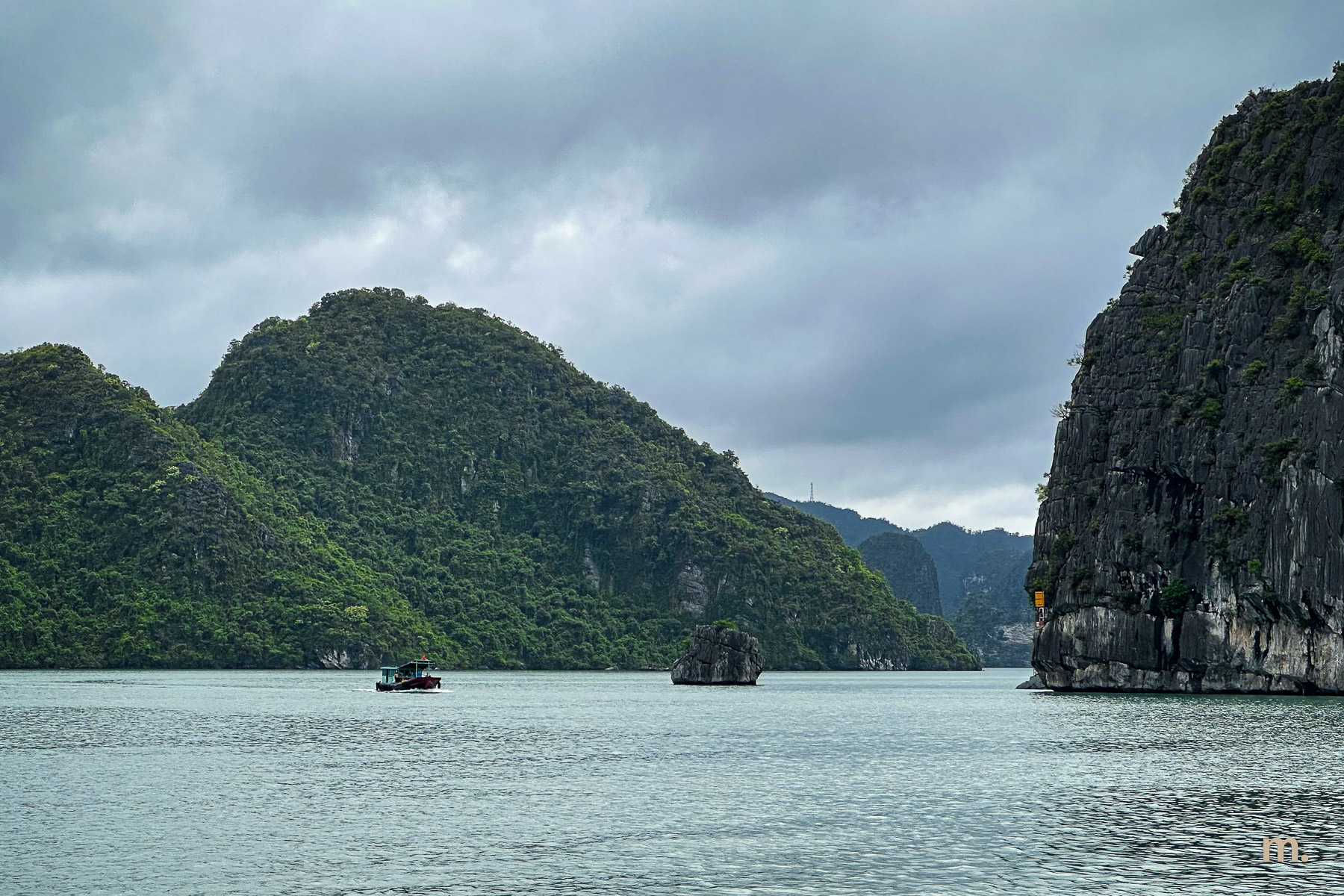
Look up Halong before you go, and you’ll end up with one picture in your head: emerald water, clear sky, junks with red sails. Unfortunately, I got a sky the color of lead.
But this is what happens when you travel: not always what you see in the postcards or the magazines or social media is what you get.
In May, northern Vietnam heads into the rainy season, and the weather changes by the hour. But under low clouds, the bay’s almost two thousand limestone islands gain depth, each one the shade of grey paler than the one in front, until they melt up to the horizon. Sure, it wasn’t the postcard bay, but instead a different one, a quieter one.
Boats leave from Tuan Chau, 2h30 from Hanoi on the expressway, and the cruise program is nearly always the same. There’s a stop at a pearl farm, a cave full of stalactites lit up in different colors, and a viewpoint high enough to show you just how many boats are doing exactly the same as you. It’s touristy, and there’s no point pretending it isn’t.
What changes things is sleeping on board. Once the day boats head back to port, the bay empties, and early in the morning, between 6:00 and 8:00, the silence is a different type of silence. That’s when you want to be on deck.
One-night cruises in Halong Bay cost between 100 and 250 US dollars per person, depending on the boat, and drinks are rarely included.


Ninh Binh: Halong without the sea
People often call Ninh Binh “Halong Bay on land”, and it’s a fair comparison. Same limestone peaks, only rising out of rice fields and lotus ponds instead of the sea.
Hoa Lư was Vietnam’s capital in the 10th century, long before Hanoi, and of what’s left, the temple of King Đinh Tiên Hoàng is the one most worth your time, especially early, when the brick courtyard is still empty.
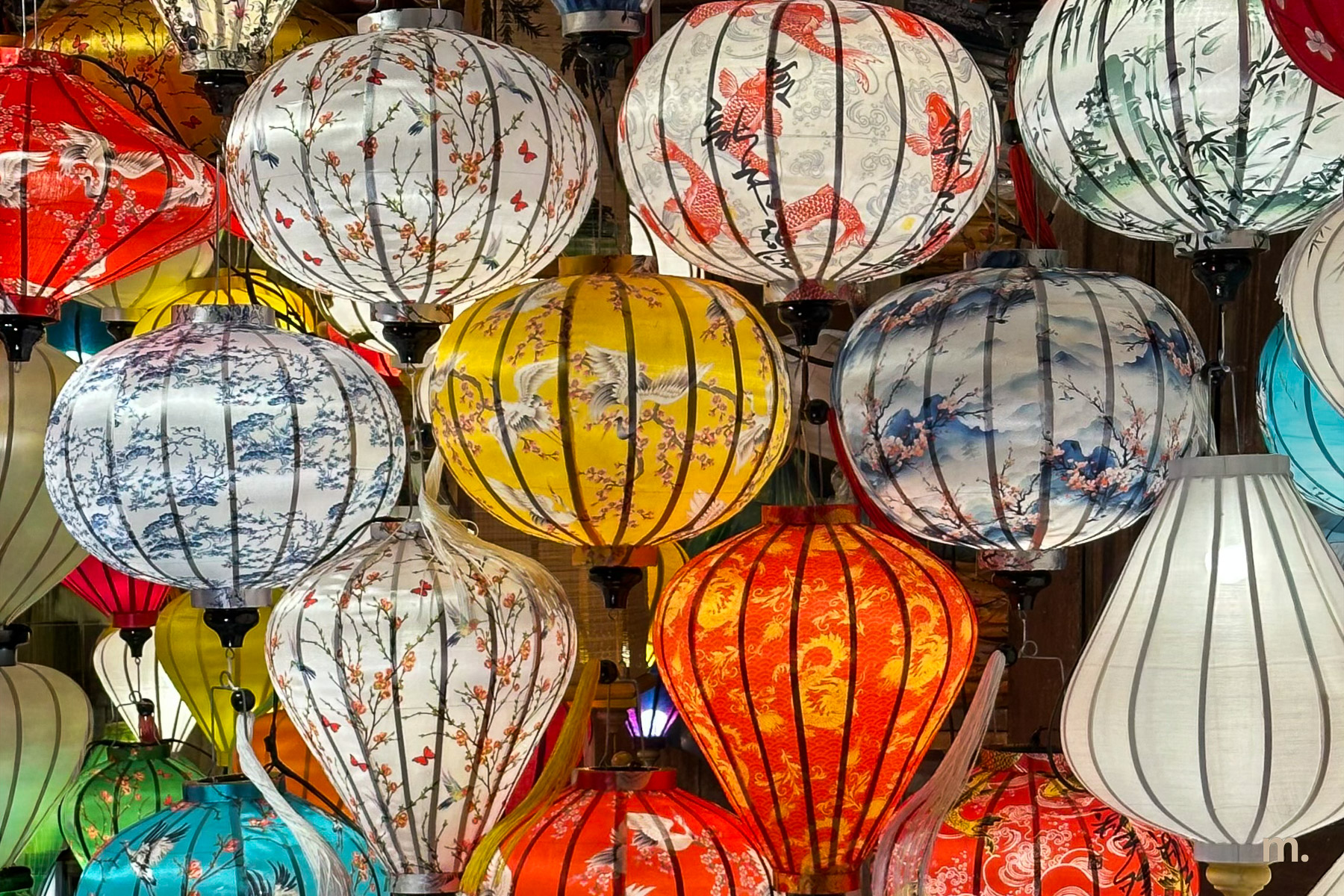
At night, attention turns to Phố Cổ Hoa Lư, a pedestrian street strung with lanterns where the whole town seems to go for a walk once the heat breaks.
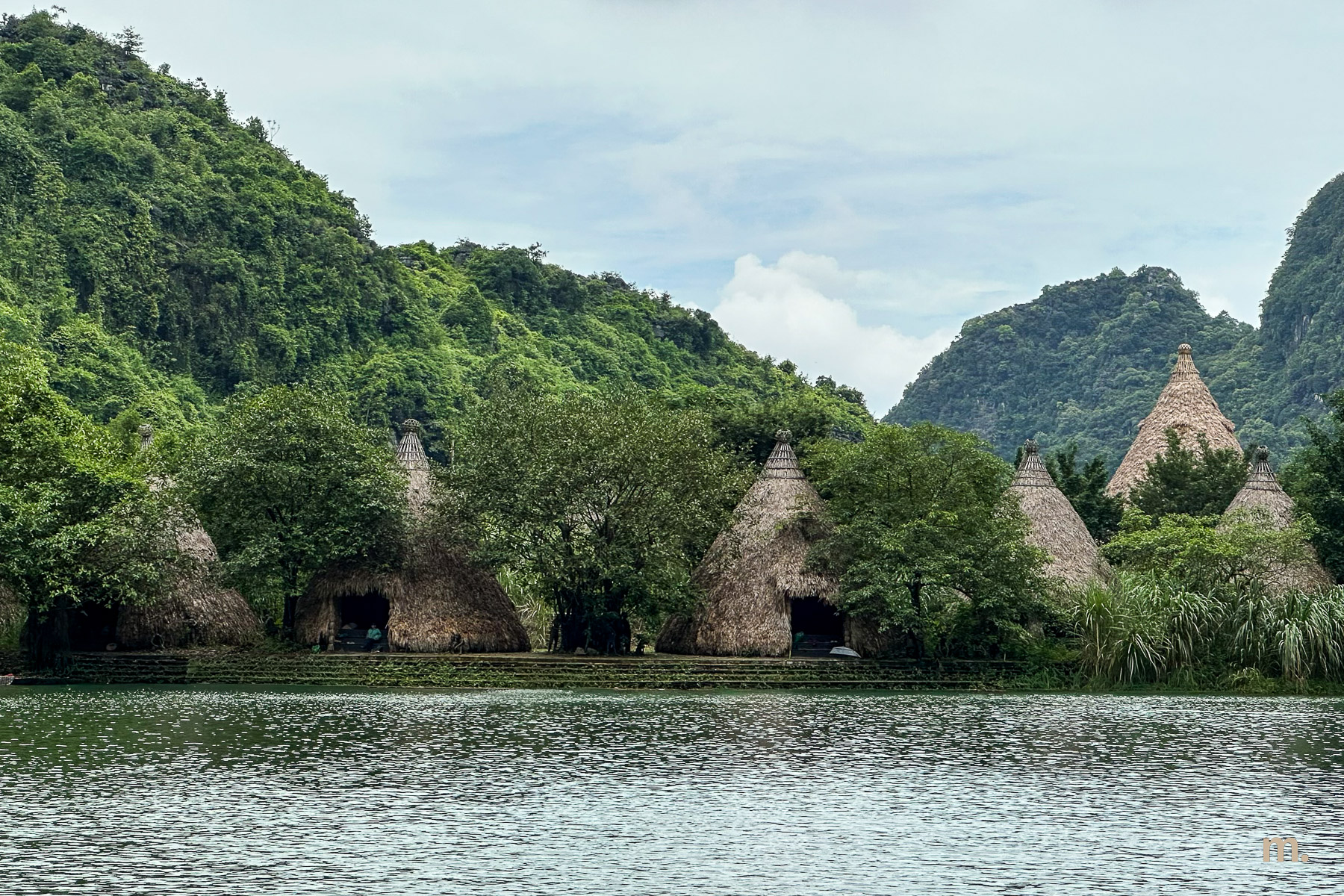
But the reason to come here is the river. In Trang An, a UNESCO World Heritage Site since 2014, you climb into a sampan, a low metal boat, and a woman rows you for close to 2 hours through channels walled in by mountains and through caves so low you have to duck.
Nobody talks much, and there’s something about the rhythm of the oars that makes you slow down.

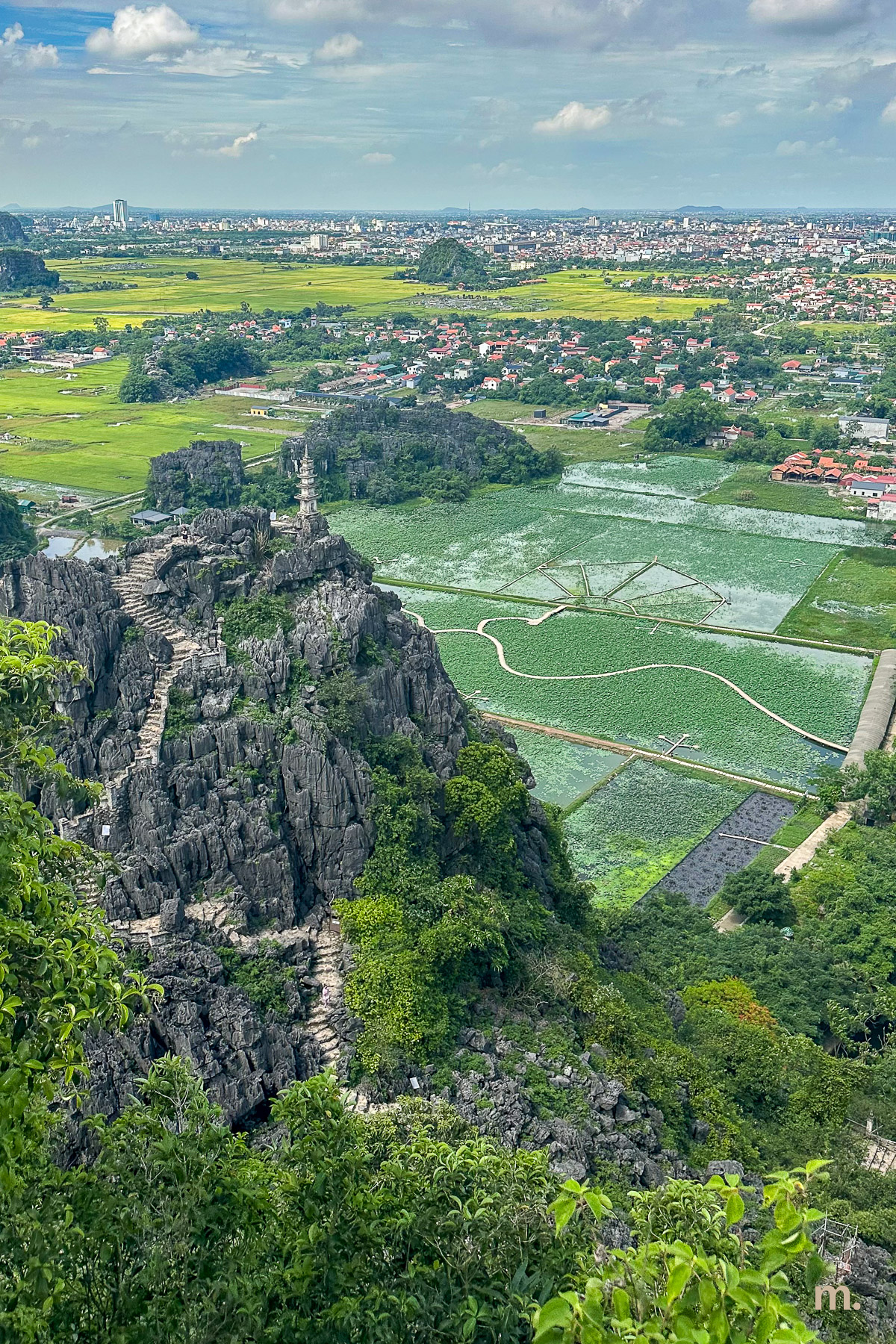
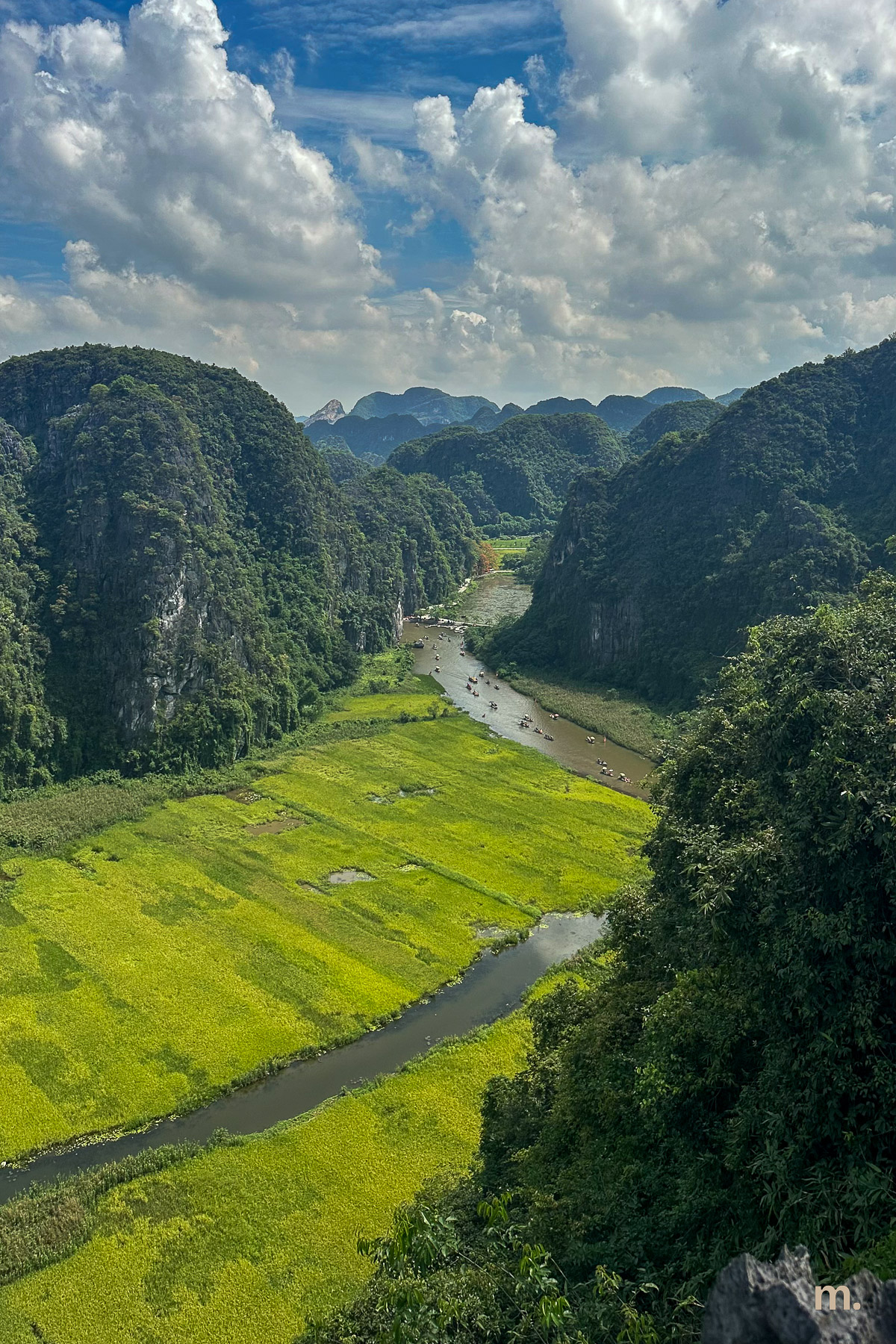
To see it all from above, there’s Hang Múa, the Mua Cave viewpoint. It isn’t an easy climb: around 500 stone steps up to a lookout over the valley. I went mid-afternoon, with the sun straight overhead, which is exactly the time to avoid. Like we say in Portugal: do what I tell you, not what I do. So go early in the morning or late in the day.
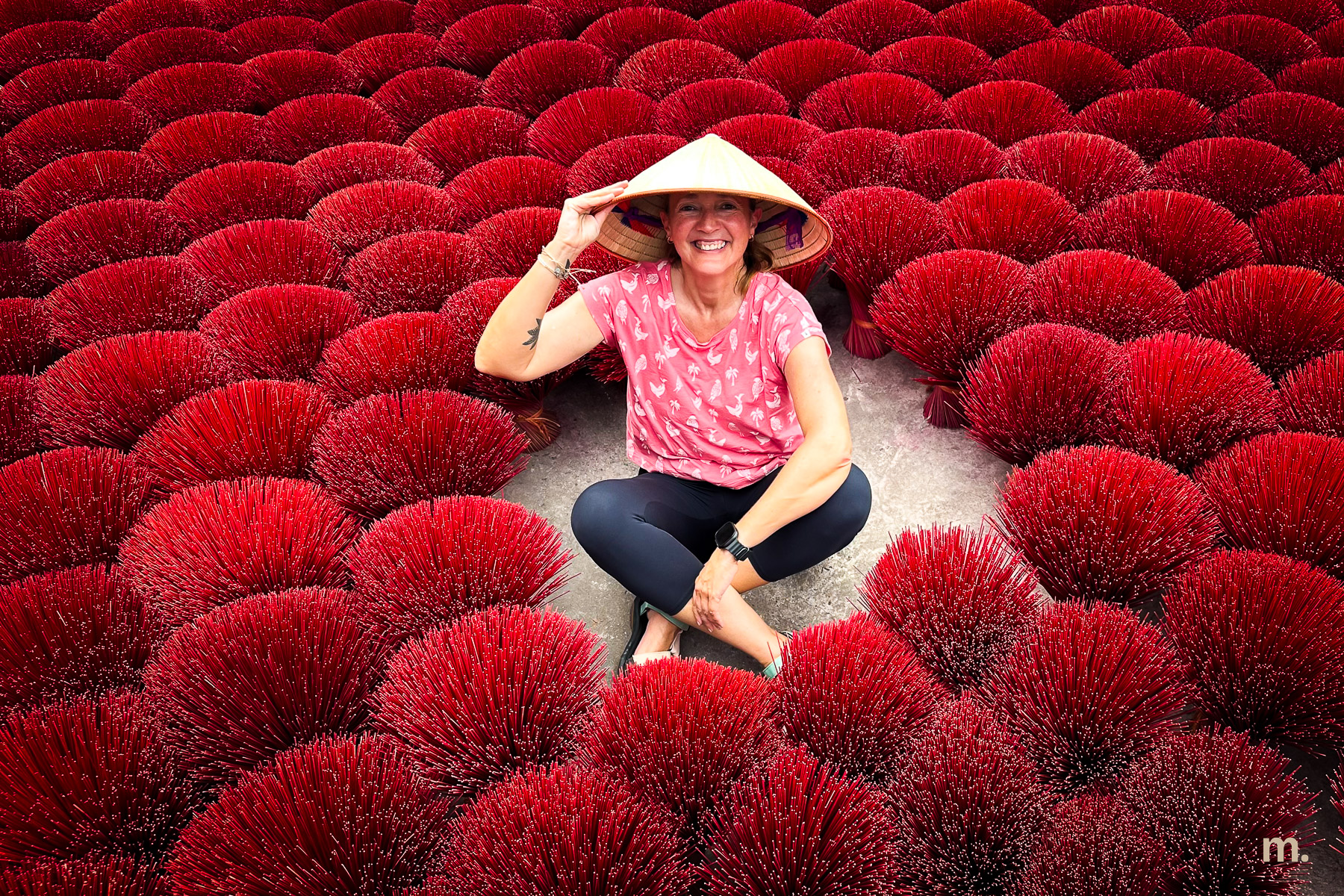
On the way back to Hanoi, stop at Quang Phu Cau, the village where incense is made and colored sticks dry in the sun in bundles fanned open like flowers—one of the most famous pictures you can take in Vietnam.
Back in Hanoi
Back in the capital, Hanoi is best explored on foot, without rushing, ideally in the morning.
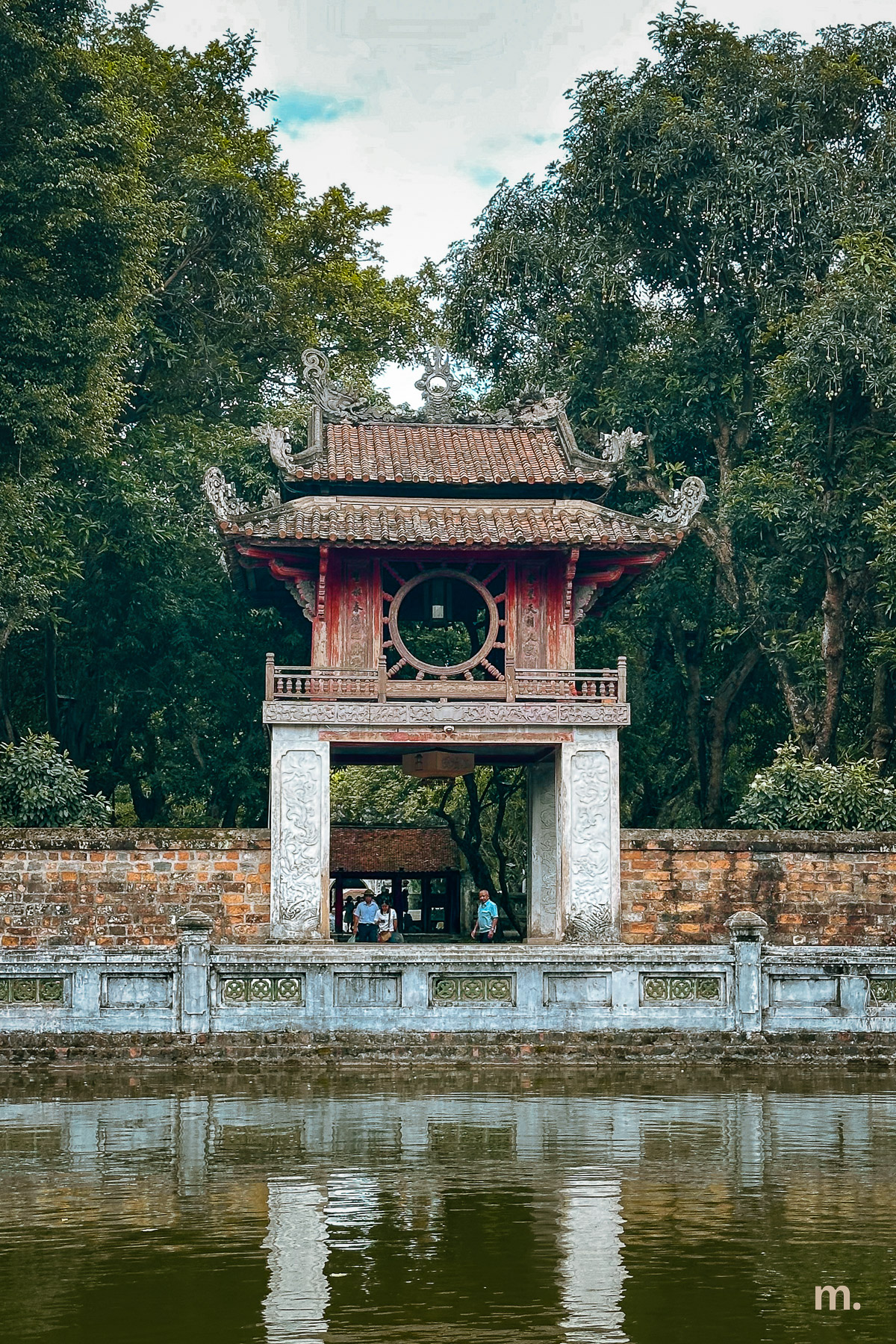
The Temple of Literature was the country’s first university, founded in 1076, and graduating students still come to have their photos taken in the courtyards in caps and gowns.
It’s a pocket of quiet amid the noise: a row of gateways, a rectangular pond, and trees older than most of the buildings around them.


Ten minutes away is the Ho Chi Minh Mausoleum complex, where the mood shifts completely. Here, guards march in uniform, you have a dress code at the entrance, and nobody raises their voice.
The One Pillar Pagoda, right next door, dates to 1049 and is much smaller than the photos make it seem.
The rest of the day belongs to the Old Quarter, where each street was once given over to a single trade, and some still are.
Power cables hang from the poles in tangles nobody seems to know how to undo, scooters take over the pavements, and you learn to cross the road as fast as you can. Walk slowly, in a straight line, and don’t stop. The traffic goes around you.
Hue and the Hai Van Pass
After Hanoi, I flew to Hue… and it was something else. Hotter, slower, and still carrying itself like a place that used to matter.
It was the capital of the Nguyễn dynasty from 1802 to 1945, and the Citadel, ringed by walls and moats, shows it: restored palaces next to huge lawns where war-destroyed buildings once stood. A morning is enough to get a feel for the place. Bring water and a hat, because there isn’t much shade.

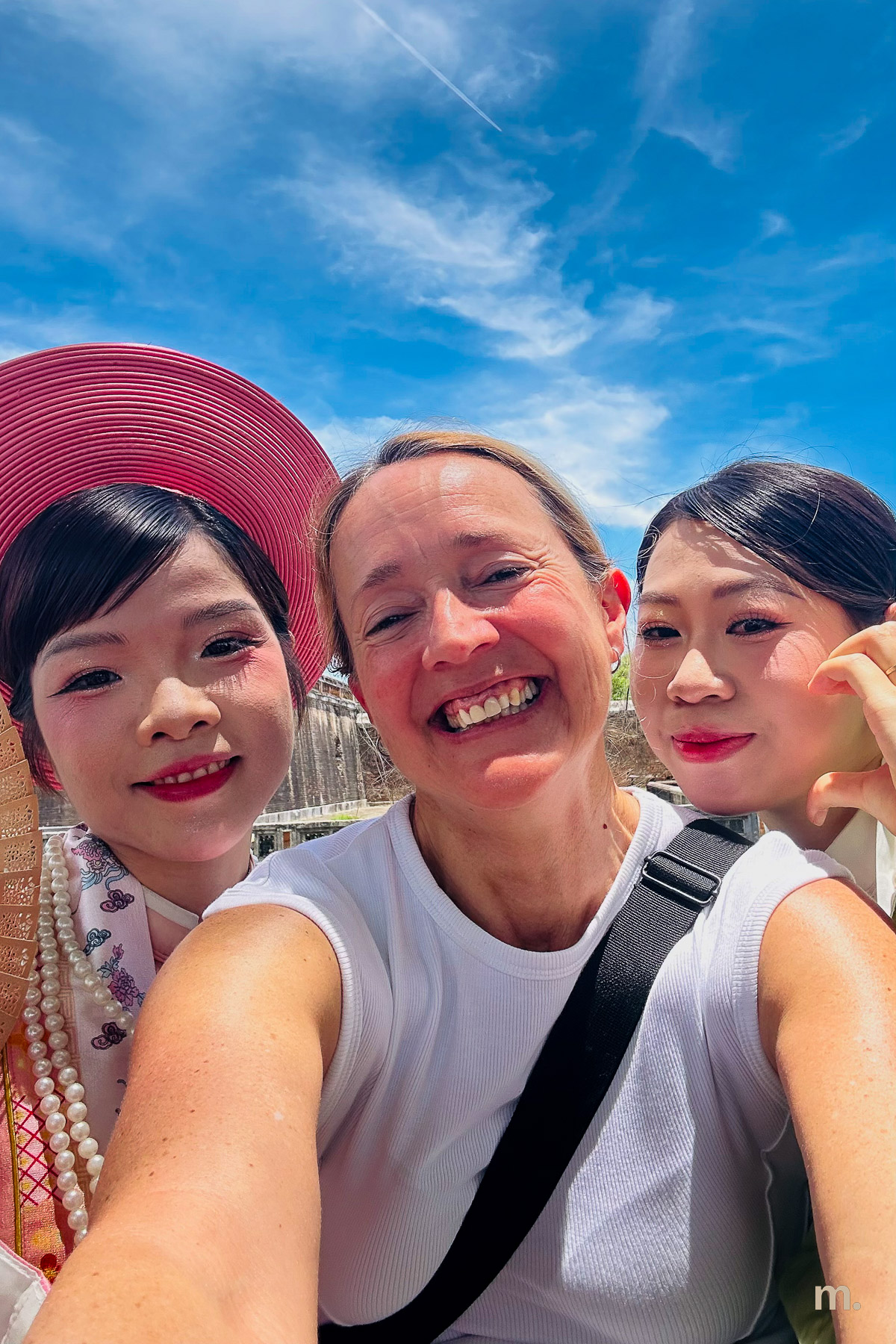
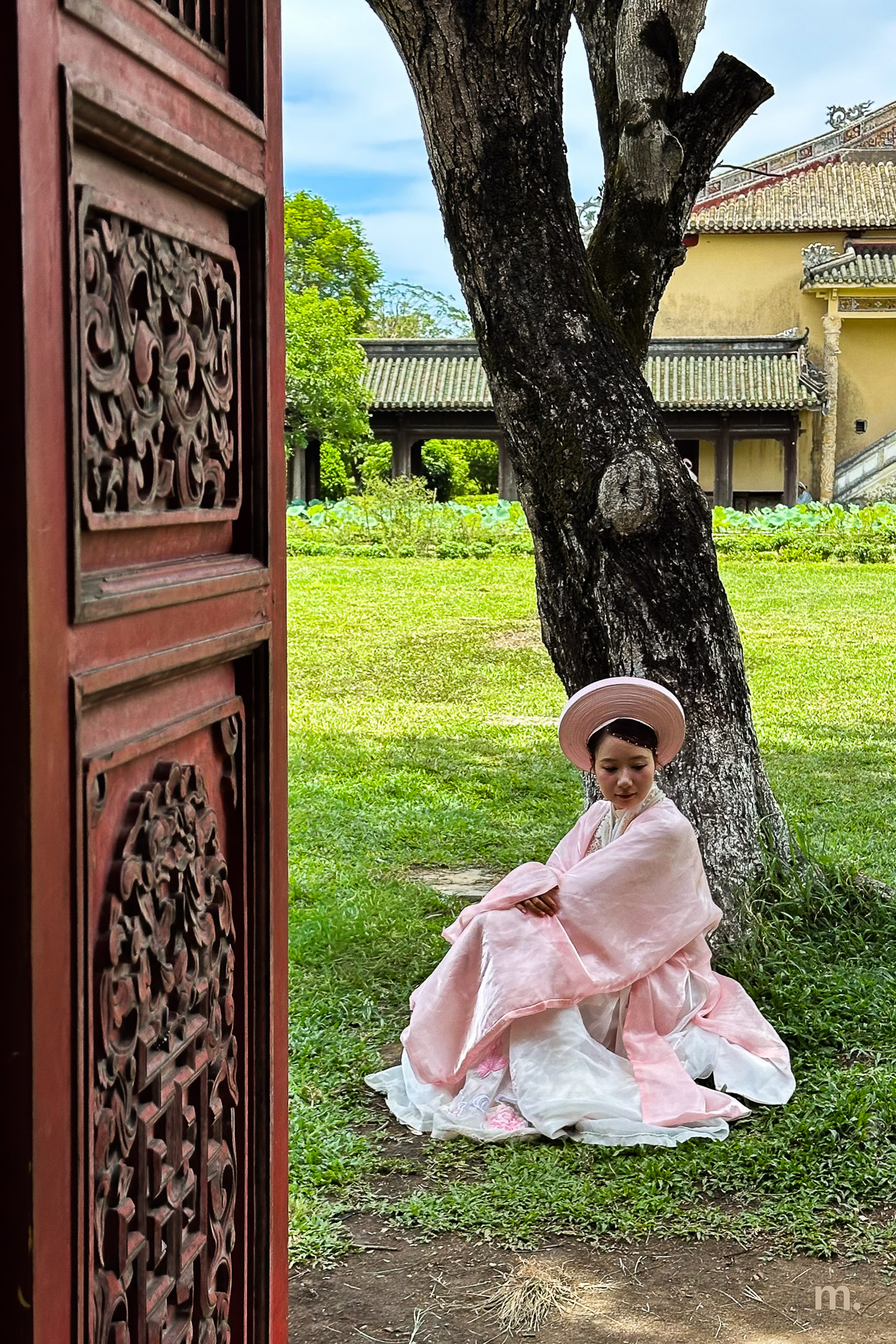

Upriver is Thien Mu Pagoda, whose seven-story octagonal tower, built in 1844, overlooks the Perfume River. And if you’ve got a free afternoon, go out to the Thanh Toan covered bridge, a wooden bridge from 1776 over a canal in the middle of the rice fields, 8 km from the center.
At the market next door, the stallholders sit on red plastic stools under conical hats, their goods laid out on the ground. It’s rural Vietnam ten minutes from an imperial city.


There are two ways on to Hoi An: the tunnel, which takes 10 minutes, and the Hai Van Pass, a mountain road with around 20 km of bends that climbs to almost 500 meters. I suggest taking the road.
Before the climb, Lang Co lagoon has a bamboo boardwalk that runs out into the shallow water, with the mountains behind it. At the top, you’ll find the Hai Van Gate, a fort rebuilt in 1826 to guard the road to Hue. It divides two landscapes and, as the Vietnamese say, two climates. Behind you is the north. Ahead, Da Nang Bay and the south.
Hoi An: the town you see at night
Hoi An got four nights on my trip, the biggest slice of time, because it’s the town that most begs you to stay without a plan.
By day, the ancient town, a UNESCO World Heritage Site since 1999, is packed. Silk lantern shops cover entire façades, tailors promise you a dress in 24 hours, and leather shops hang bags and shoes all the way to the door. It’s beautiful and touristy at once, and there’s no way to separate the two.
But at the end of the day, Hoi An makes the most sense. The Thu Bồn River fills with boats hung with lanterns; people float lit candles on the water, each with a wish attached; and the yellow walls of the old town turn even more yellow.
The week I was there, the town was getting ready for Phật Đản, the Buddha’s birthday, and a stage had gone up by the river with music and a Buddha lit from behind.

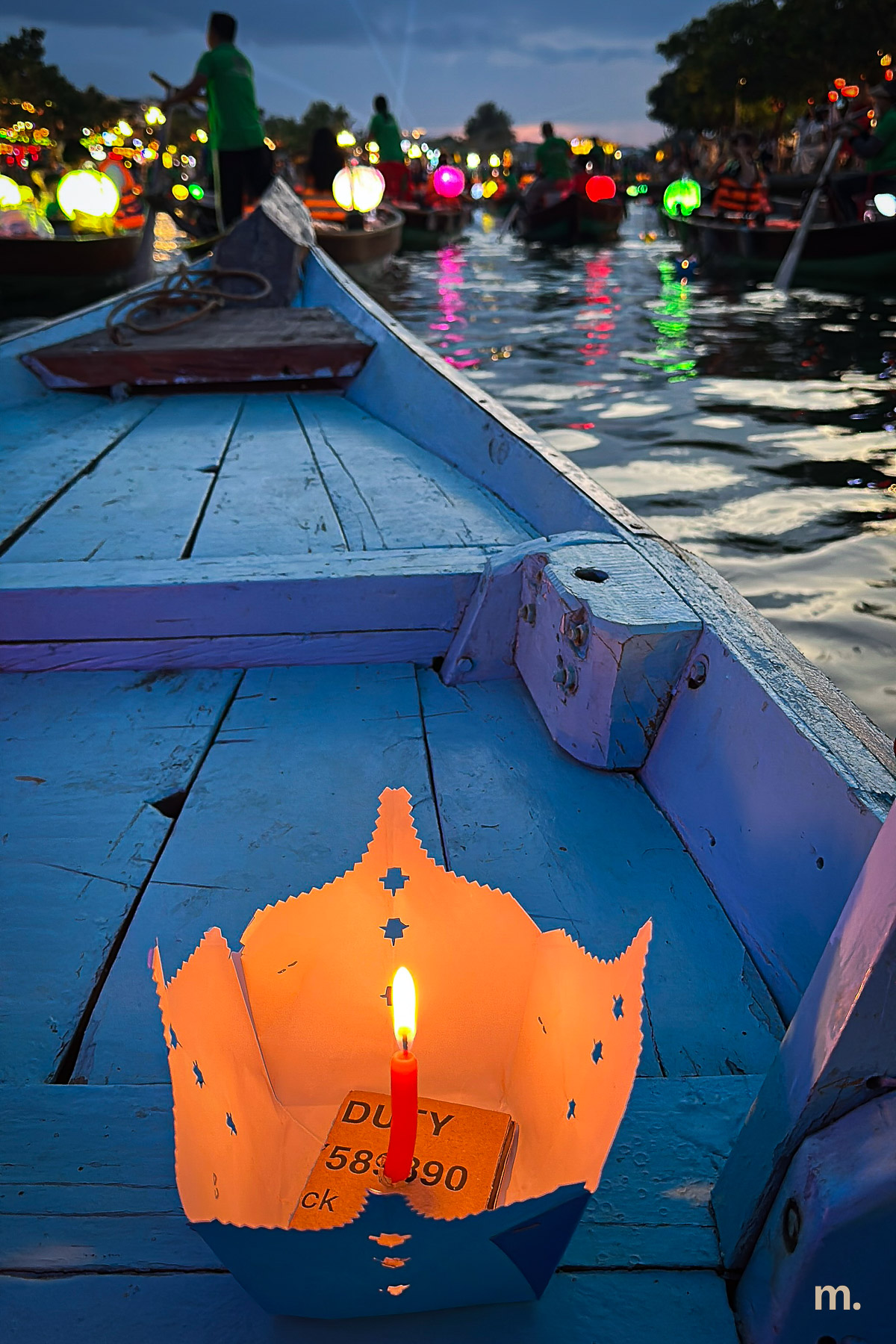


Outside town, the pace is different. In Cam Thanh, the basket boats, round and made from bamboo, slip into the channels between the water coconut palms, and the boatmen will spin you round and round (for a few notes) if you’re up for it.
Across the river, Kim Bong village has lived off wood for centuries, a place of carpenters and boatbuilders. And when you don’t feel like doing anything at all, An Bang beach is a 15-minute bike ride away.
Saigon, Cu Chi and the end of the war
The flight from Da Nang to Saigon takes just over an hour, and you land in another country. Bigger, faster, hotter. Officially it’s called Ho Chi Minh City since 1976, but hardly anyone calls it that.
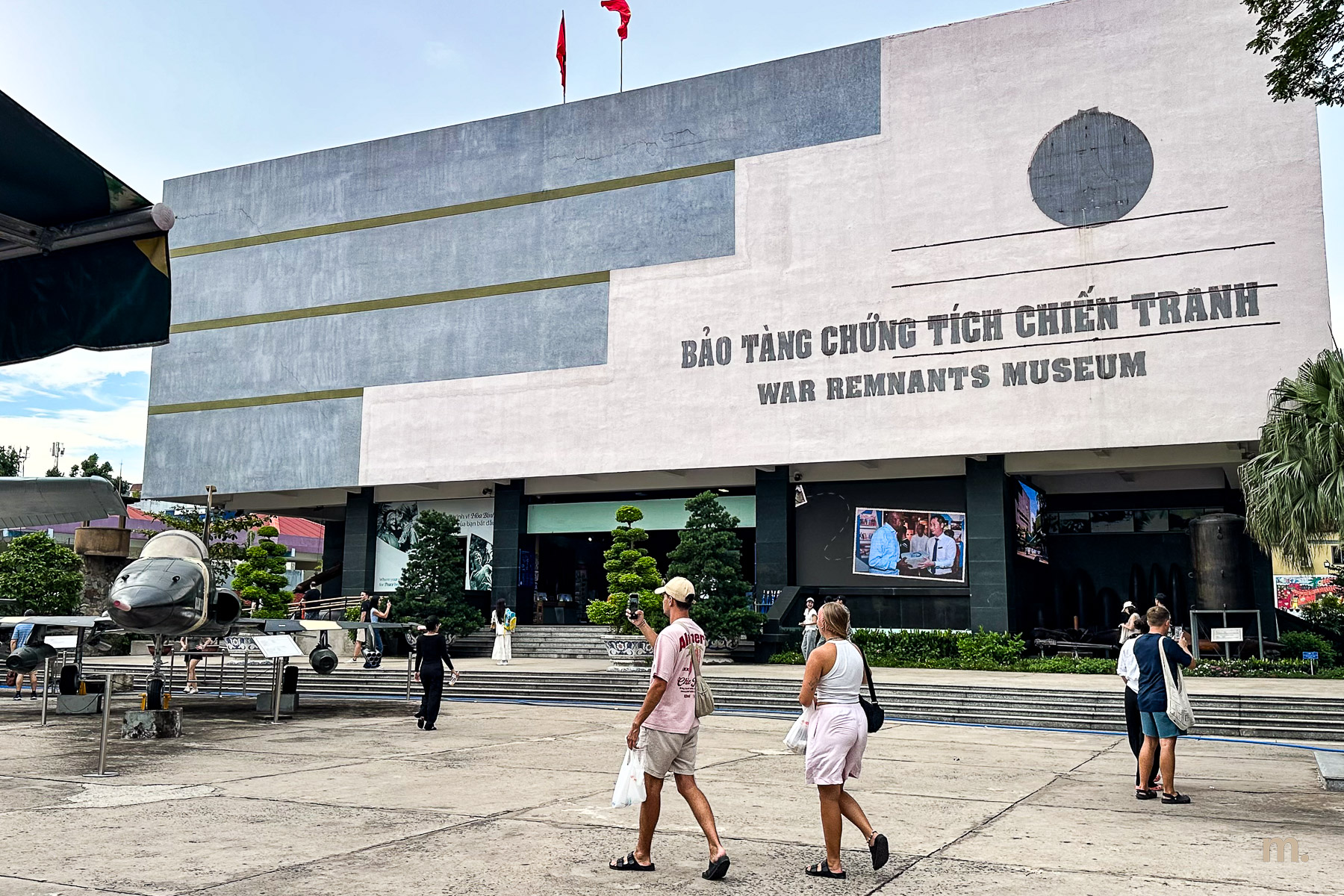
In Saigon, the war is closer to the surface than anywhere else on the trip. The War Remnants Museum starts in the courtyard with tanks and helicopters, then continues inside with photographs you won’t forget. If you’ve got young children with you, think twice before going. It’s definitely not a place for them.
A few minutes away is the Independence Palace, where the war ended in April 1975 with a tank smashing through the gate, and where the interior has stayed frozen in the 1960s, all armchairs, reception rooms and lacquer panels.
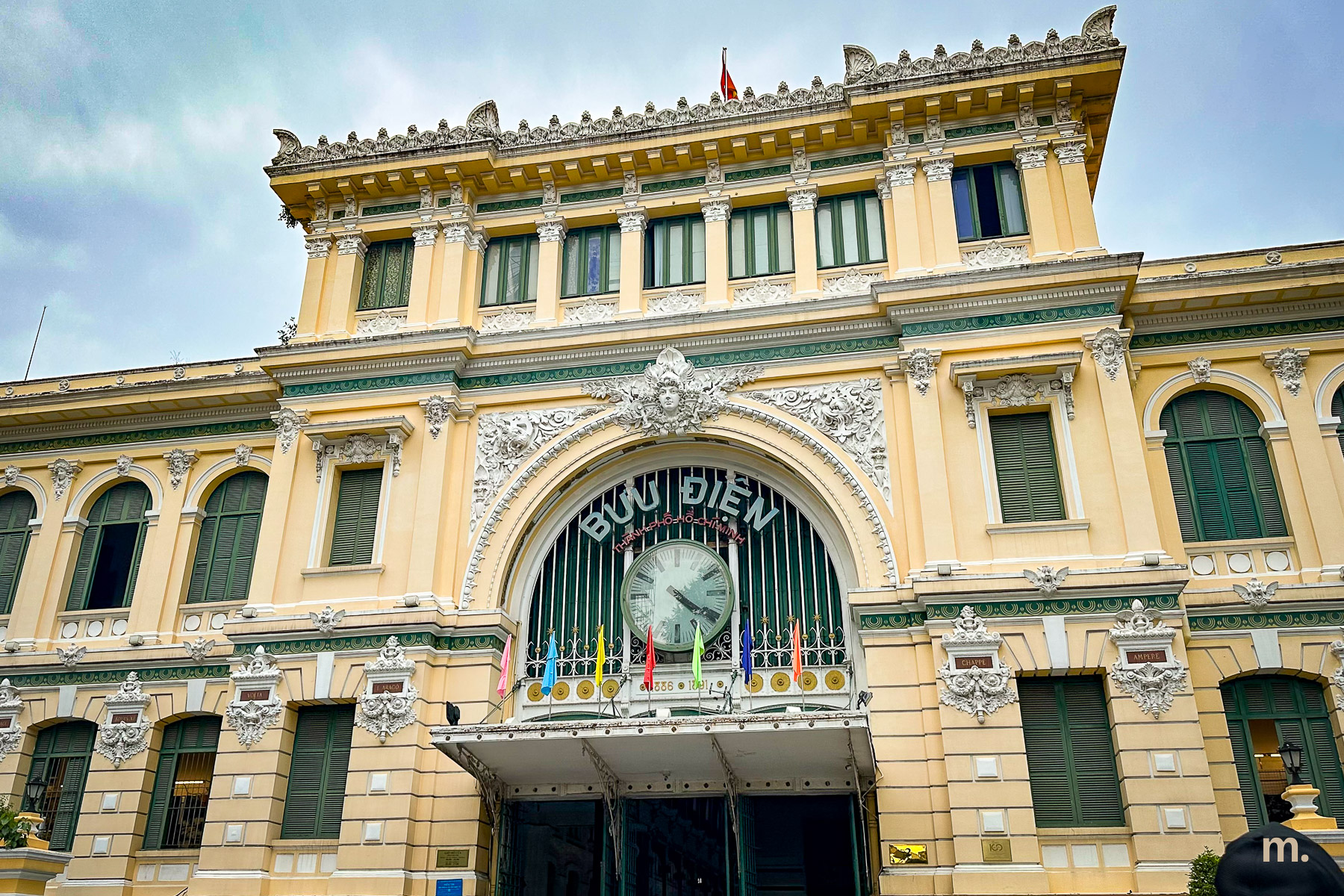
Further on, Notre-Dame Cathedral, a nod to the French original but built in red brick and under restoration for years, and, next door, the Central Post Office, also from the French era.
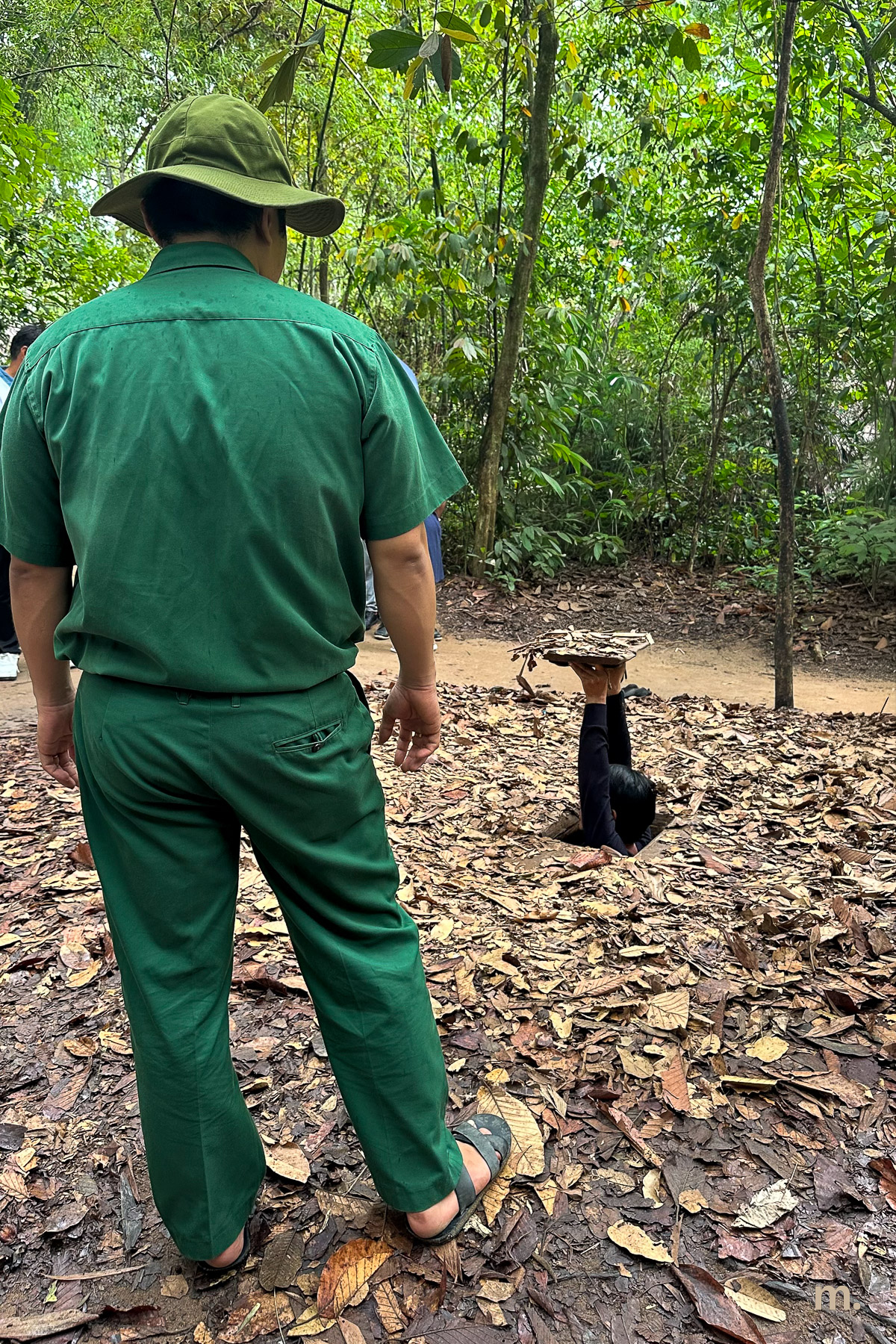
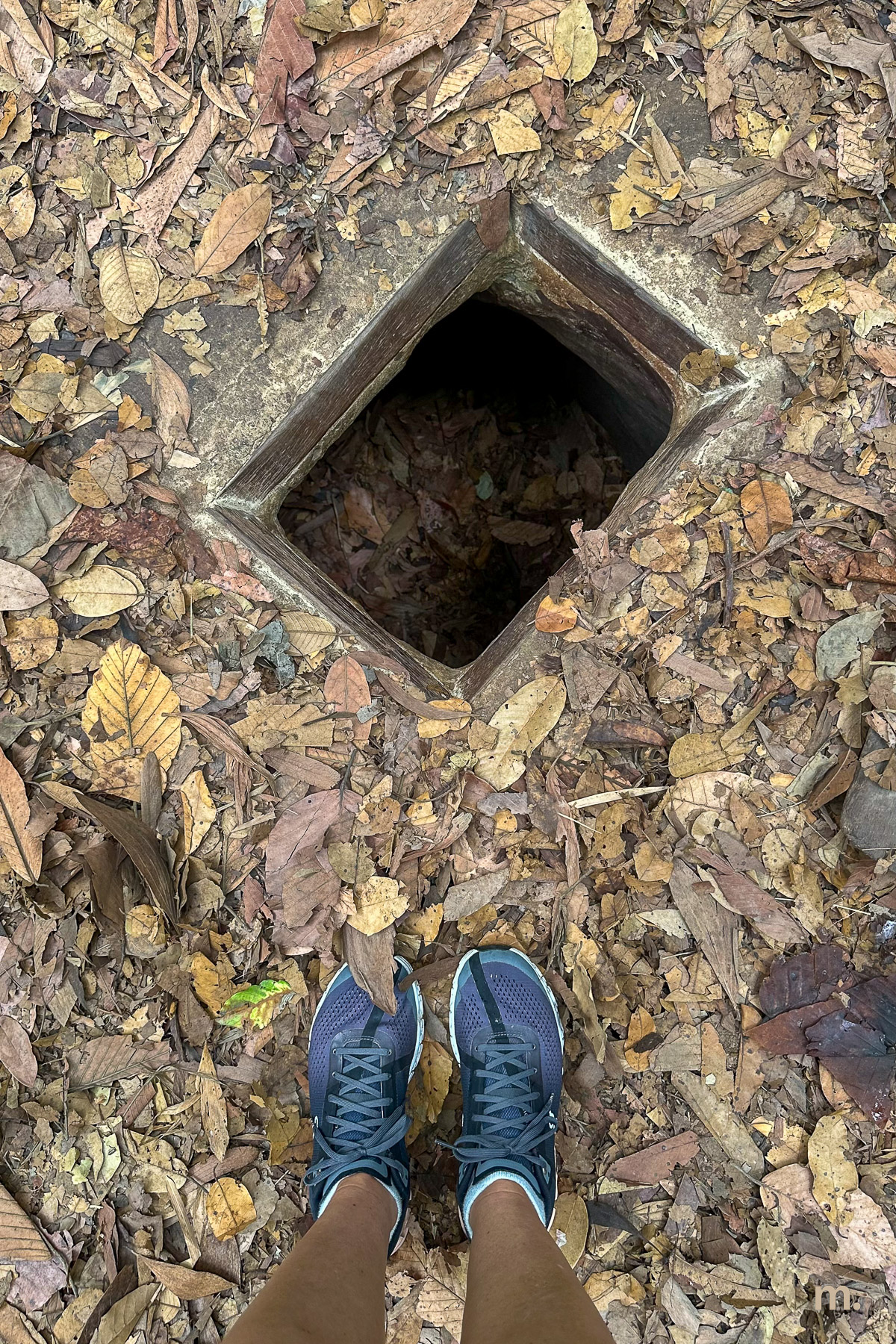
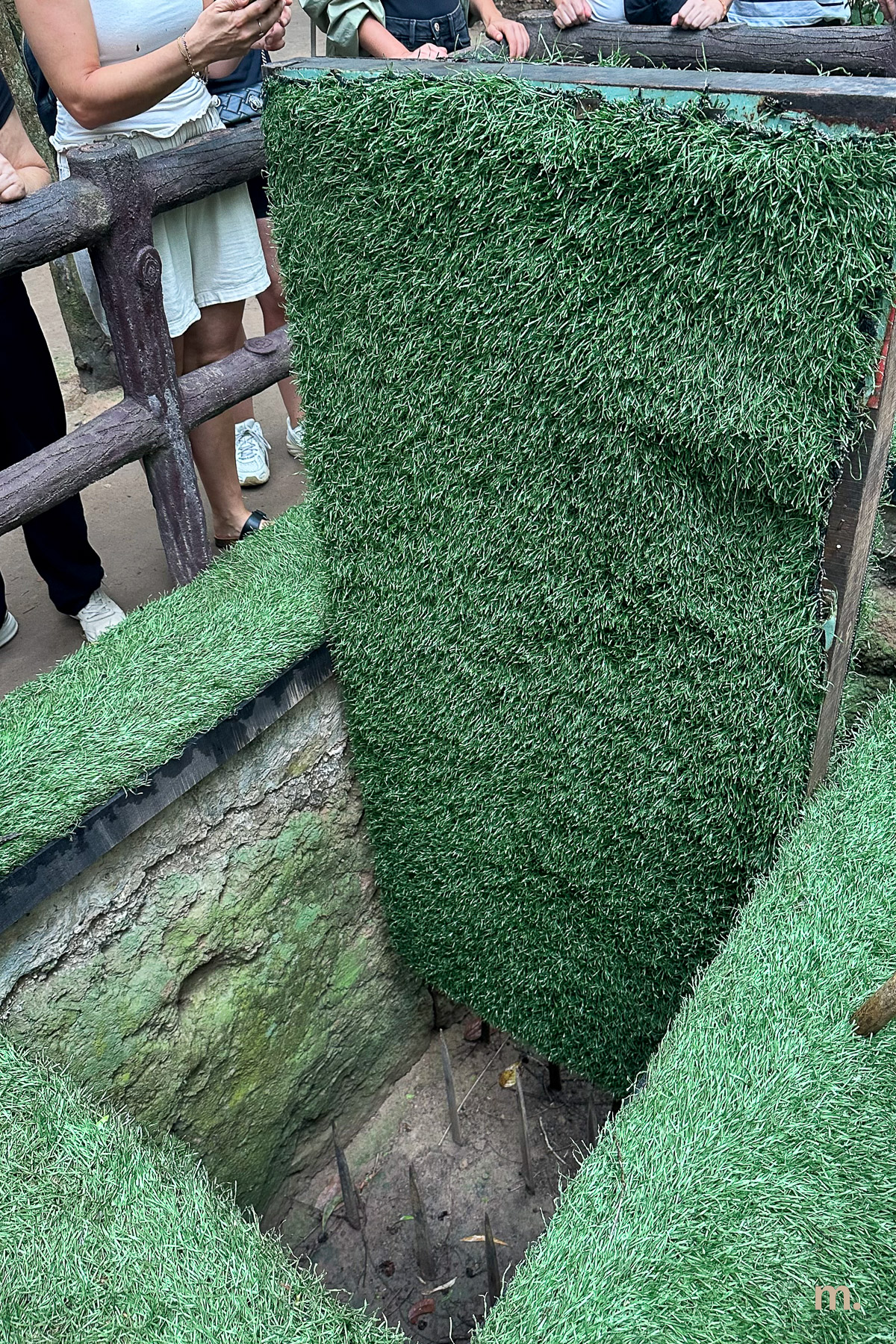
About 2 hours from Saigon, the Cu Chi Tunnels show the same war from the other side. People dug more than 200 km of passages by hand, and lived, cooked, and treated the wounded down there. At Ben Dinh, a tunnel entrance is a square hole hidden under dry leaves, so narrow it’s hard to believe an adult fits through. Some sections have been widened for visitors, and even those have you walking bent double. Skip it if you’re claustrophobic.
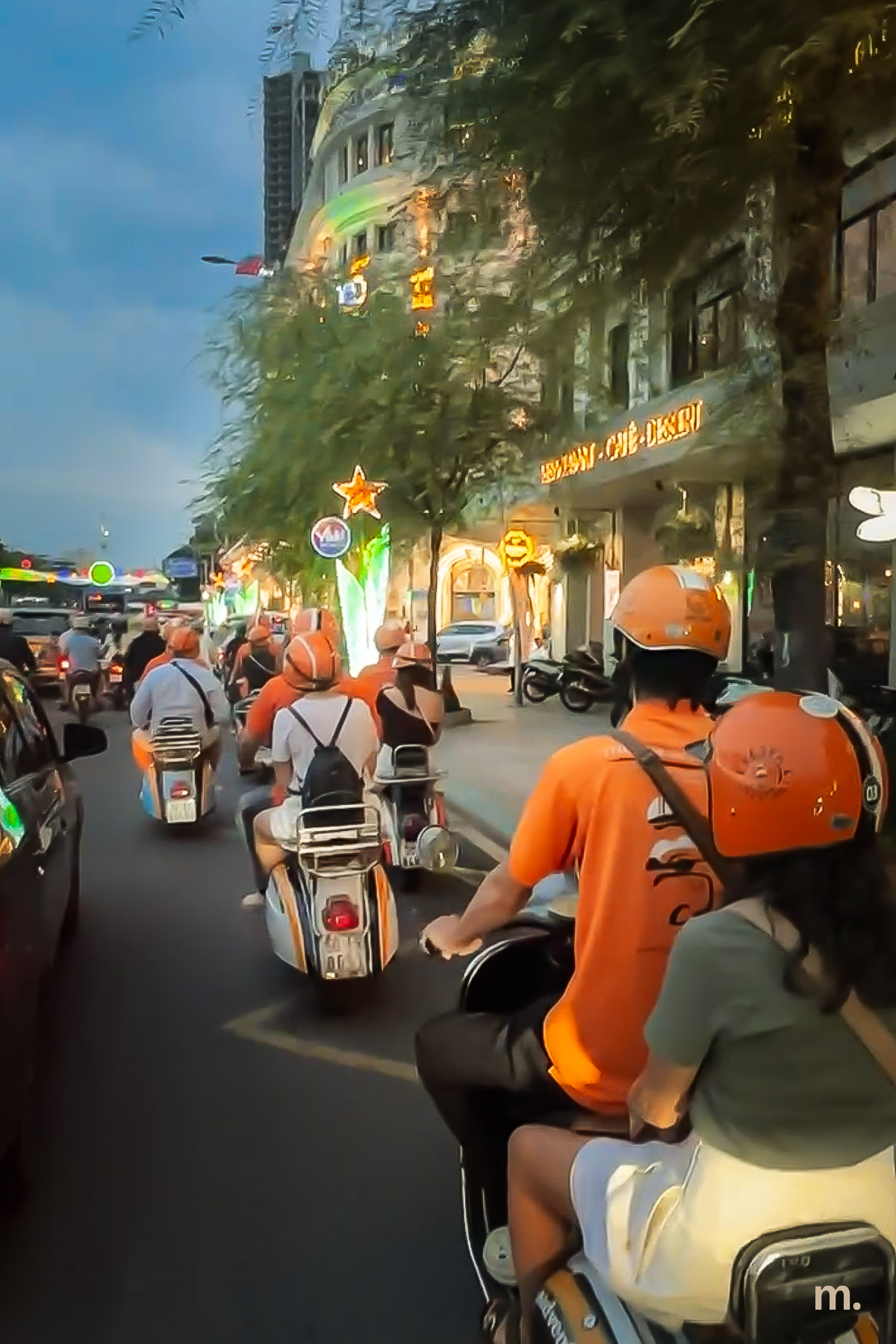
At night, the city changes skin. I did the Saigon Vespa tour through neighborhoods I never would have reached on my own, and it’s the easiest (and most fun) way to see Saigon after dark without driving through that traffic.

Mekong Delta
The trip ends where Vietnam ends, in the Mekong Delta, where the river that rises in Tibet splits into nine branches before it reaches the sea. You can do it in a day from Saigon. I went to Ben Tre, the coconut province.
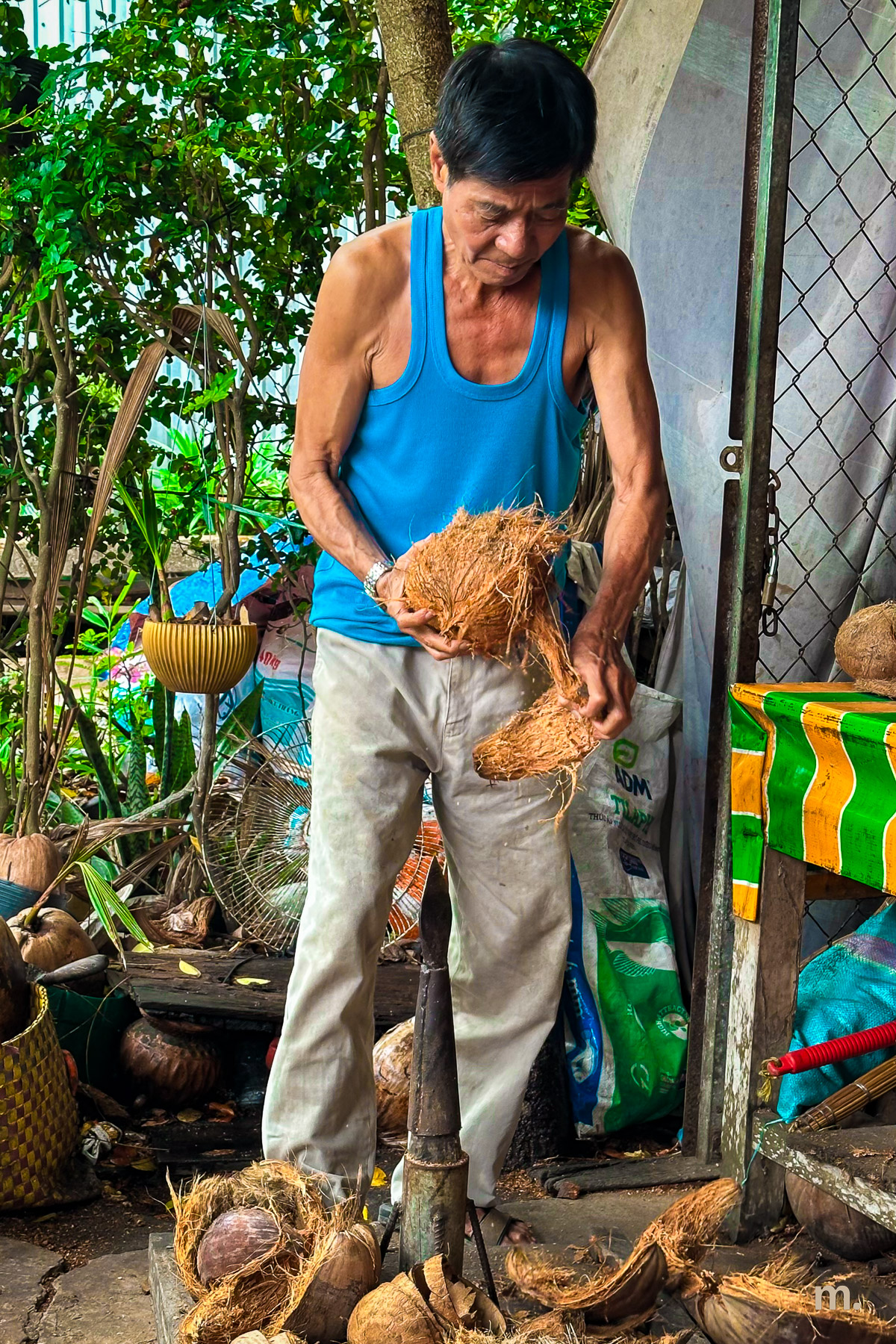
The river is wide and brown, and the wooden boats move slowly along narrow channels between water palms that almost meet overhead. On the banks, everything turns on the coconut: the water you drink straight from the shell, the sweets, the workshops in which they strip the husks. After two weeks working my way down the country, the delta has the slowest rhythm of all.
A day is enough for a first taste.

• Best season: October to March, when the northeast monsoon sends swell to the central coast.
• Level: beginner to intermediate, with small waves over sand.
• Main spots: My Khe beach in Da Nang, and An Bang near Hoi An.
I didn’t surf in Vietnam. But the country does have waves; it helps to know when.

Duration · 14 days for this north-to-south route. With 10 days, drop Ninh Binh or a night in Hoi An. With 3 weeks, add Sapa and a night in the Mekong Delta.
Visa · it depends on your passport. Citizens of the UK and of much of the EU, including Germany, France, Spain and Italy, can stay up to 45 days without a visa. Most others, including Americans, Canadians, Australians, and Portuguese nationals, need an e-visa. Apply on the official site, evisa.gov.vn, at least a week ahead.
Insurance and eSIM · travel with insurance that has good health cover. You can get it from Heymondo (use the link for a 5% discount). Wi-Fi is available almost everywhere, but for a more reliable connection, consider the get eSIM (use code MARLENEMARQUES at checkout for a 10% discount).
Getting there and around · book an open-jaw ticket, flying into Hanoi and out of Saigon, so you don’t have to backtrack. Find the best fares on Skyscanner. Once there, two domestic flights (Hanoi–Hue and Da Nang–Saigon) and the rest by road. Within cities, use the Grab app, which works like Uber.
Best time to visit · it depends on the region. The north is best in spring (March and April) and autumn (September to November). The center is dry from February to August and gets typhoons from September to November. The south is dry from December to April. May, when I went, means heat in the center and south and the start of the rains in the north.
What to wear · light, breathable clothes, a thin jacket for planes and for Halong, and shoulders and knees covered for the Mausoleum and the temples. Comfortable shoes for Hang Múa.
Group trip · I did this route as a tour leader. If you’d rather travel with company, it’s a wonderful way to see the country without handling the logistics yourself.
Last note · save your mornings for what you most want to see, and your nights for the markets and colorful lanterns.
Checked in November 2026.
Now your turn! Have you ever been to Vietnam? If so, what did you like the most? If you’re planning on going, which place would you’d like to visit first?
Share your experiences or questions in the comments. I read them all!
The tools I use on my own trips, with the conditions I managed to get for my readers. If you book through them, the blog pays for itself — and it costs you nothing extra.
The eSIM I am an ambassador for, powered by NOS. 10% off with the code at checkout.
Affiliate links and my own codes. Only tools I actually use.