
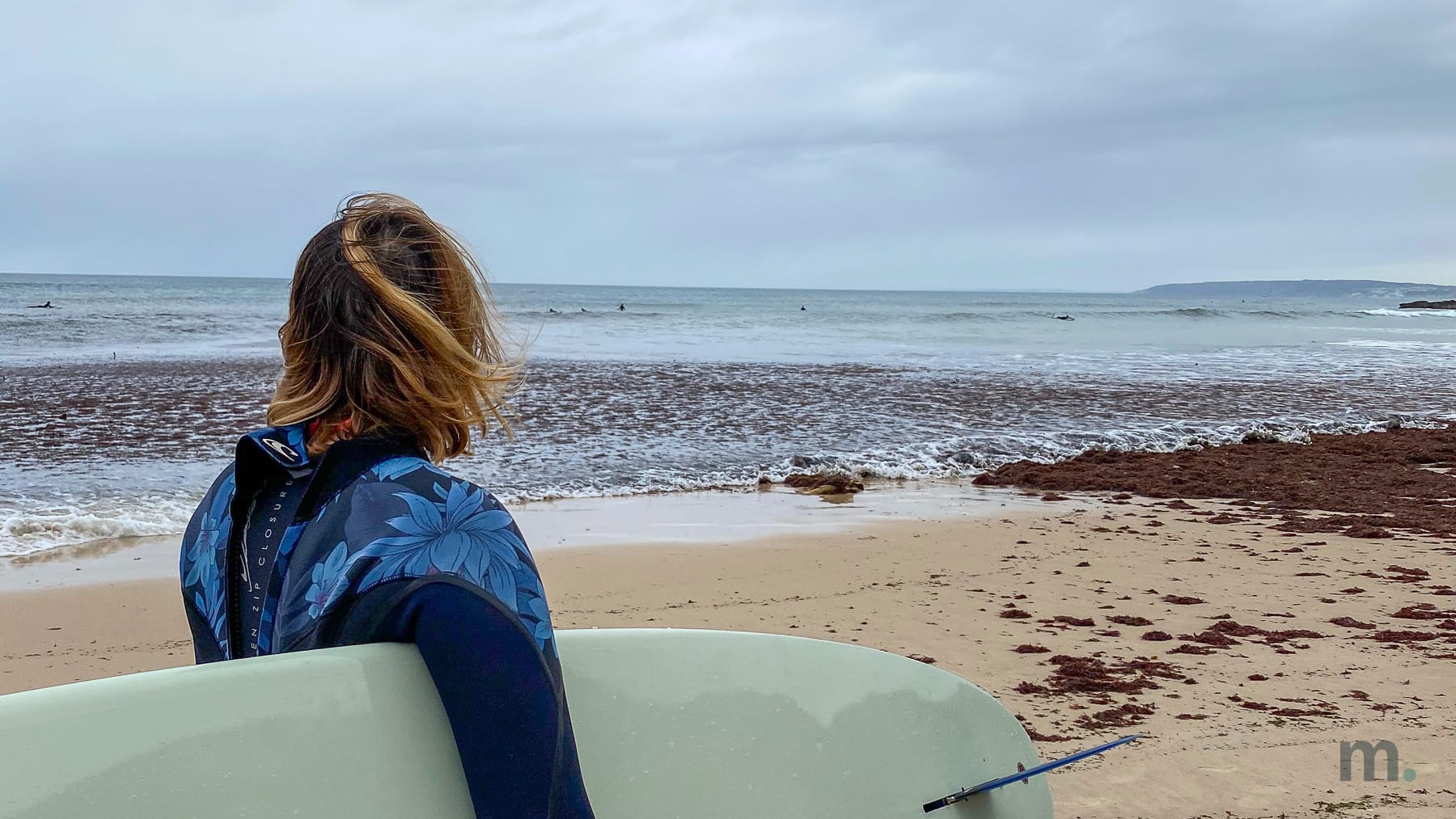
I’ve never surfed Supertubos.
I’ve been coming to Peniche for years, mostly in winter, when the ocean where I live is too big and Peniche is still working. I’ve surfed Baía in just about every configuration it offers, I’ve surfed Molhe Leste, I’ve spent entire mornings at Lagido. I’ve never paddled out at the wave that pulls the whole surfing world here once a year, when the World Surf League comes to town.
I’m not saying this out of modesty. I’m saying it because I know how to read the ocean and I have a clear sense of my own surfing. That’s why this article exists. Most of what gets written about surfing in Peniche opens with a photo of a perfect barrel at Supertubos and, three lines later, points you toward a surf school. Those two things don’t fit together, and nobody explains why.
First, where you are actually going
Peniche sits on Portugal’s west coast, roughly an hour north of Lisbon by car. It’s a working fishing town on a peninsula, not a resort, and that peninsula shape is the single most important thing to understand about it before you book anything.
Because the coast faces several directions at once, Peniche picks up swell and handles wind from angles that shut down most of the coastline between here and Lisbon. That’s what makes it Portugal’s most reliable surf town. Not the contest wave.
The 2026 Tour stop has moved
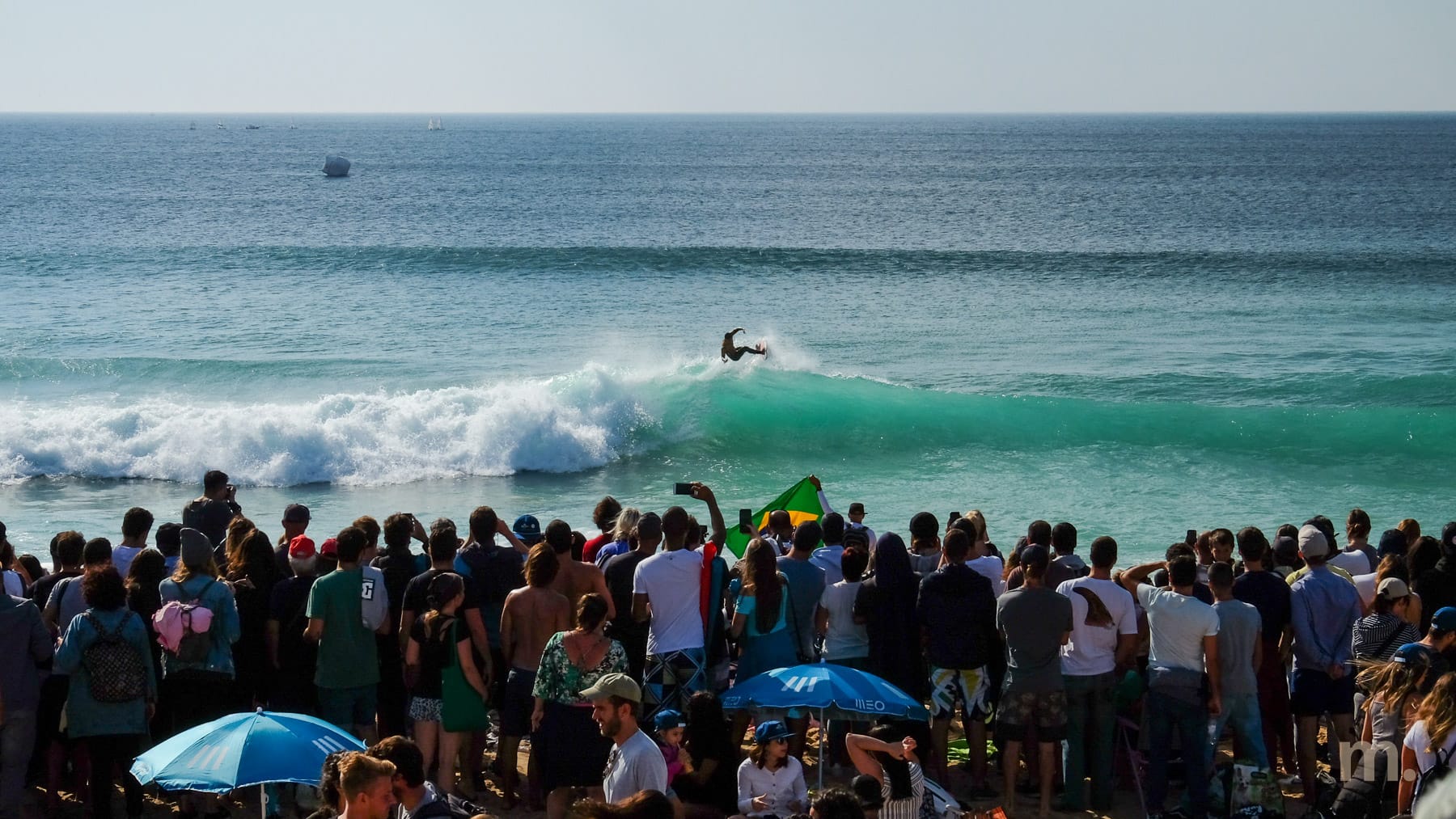
In July, the World Surf League added Cloud 9, in Siargao, the Philippines, to the Championship Tour calendar. The event was added to guarantee a minimum of 12 stops this season in case the Surf Abu Dhabi Pro can’t run, given geopolitical uncertainty in the region.
Abu Dhabi wasn’t canceled. It moved to November 25 through 29, and Cloud 9 landed on October 31 through November 10.
To open up the calendar, the Peniche event was pushed back six days. It now runs October 16 through 25, and it’s Stop 10 of 13.
With this, Peniche is still a regular season stop with the full field. The two events that follow it are postseason, with a reduced field. So every surfer on tour will be at Supertubos, and every one of them will be pushing to lock in a postseason spot and improve their title math.
If you’re coming to watch, this is the best possible version of the event. If you’re coming to surf, you’ve picked the worst week on the calendar. More on that below.
Supertubos: the wave on the broadcast and the wave you will find
Supertubos breaks over a shallow sandbar very close to shore, and it throws fast, short barrels. It does not forgive hesitation. When it’s on, the decision to paddle happens in under a second, and the alternative to getting it right is hitting the bottom in very little water.
Then there’s the lineup. On the days Supertubos is genuinely working, the water’s full of local bodyboarders and surfers well above average, people who know that sandbar better than you know your home break. It’s a clinical wave, in the sense that there’s no room to experiment. Either you know what you’re doing, or you’re taking someone’s spot and creating a problem.
That’s why I don’t paddle out there. It’s not a wave that sits inside what I can do well, and going out anyway, knowing that, is disrespectful to the place and to the people already in the water.
I say this with some conviction because it’s the most useful thing I can tell you about Peniche: the wave that sold you the destination probably isn’t for you. That does not ruin the trip. It just changes your map.
Where I actually surf in Peniche
The Bay aka Baía
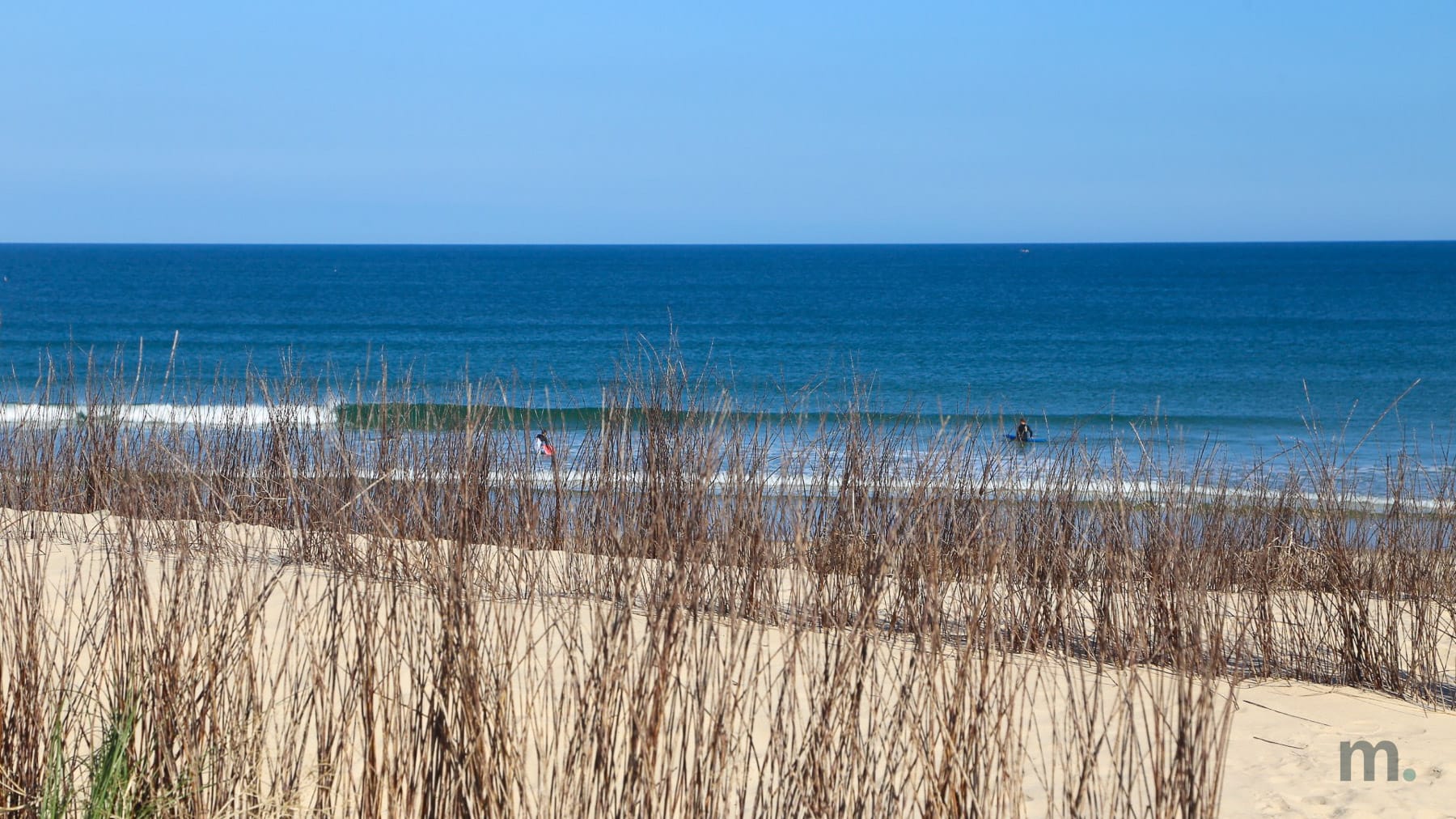
This is where I spend most of my time. The shape of the bay means there’s always somewhere surfable, and the work is choosing the right spot for that day’s swell and wind. It’s never the same peak twice.
The last time I was there, I found a peak where the wind and the swell direction were drawing an almost perfect left and right. I usually get there early to beat the schools, but I’m driving in from Ericeira, so there’s always someone who got there before me.
It wasn’t a mellow session, and it rarely is. I had to share waves with other surfers, some of whom either don’t know the priority rules or pretend not to. It happens a lot.
I keep coming back to Baía for one simple reason: even when the main peak’s too crowded to be worth fighting for, I can always find a wave off to the side and enjoy myself. Very few places in Portugal give you that alternative on the same stretch of sand.
Prainha, next to Baleal island
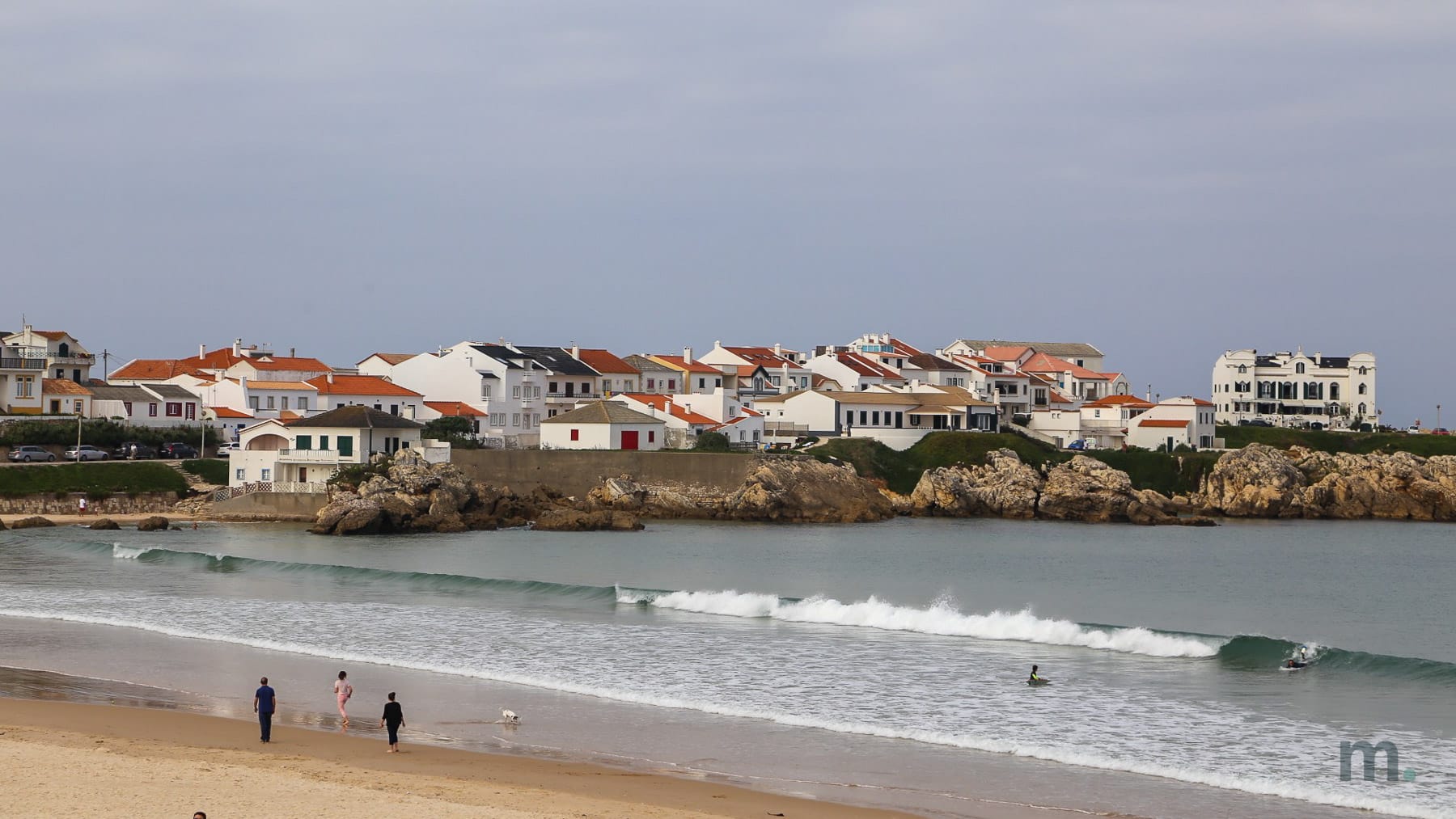
More sheltered, with less consequence. It’s where I go when I want to surf without managing risk, and it’s where I’d send someone who’s still logging hours in the water but has outgrown taking a lesson.
Lagido
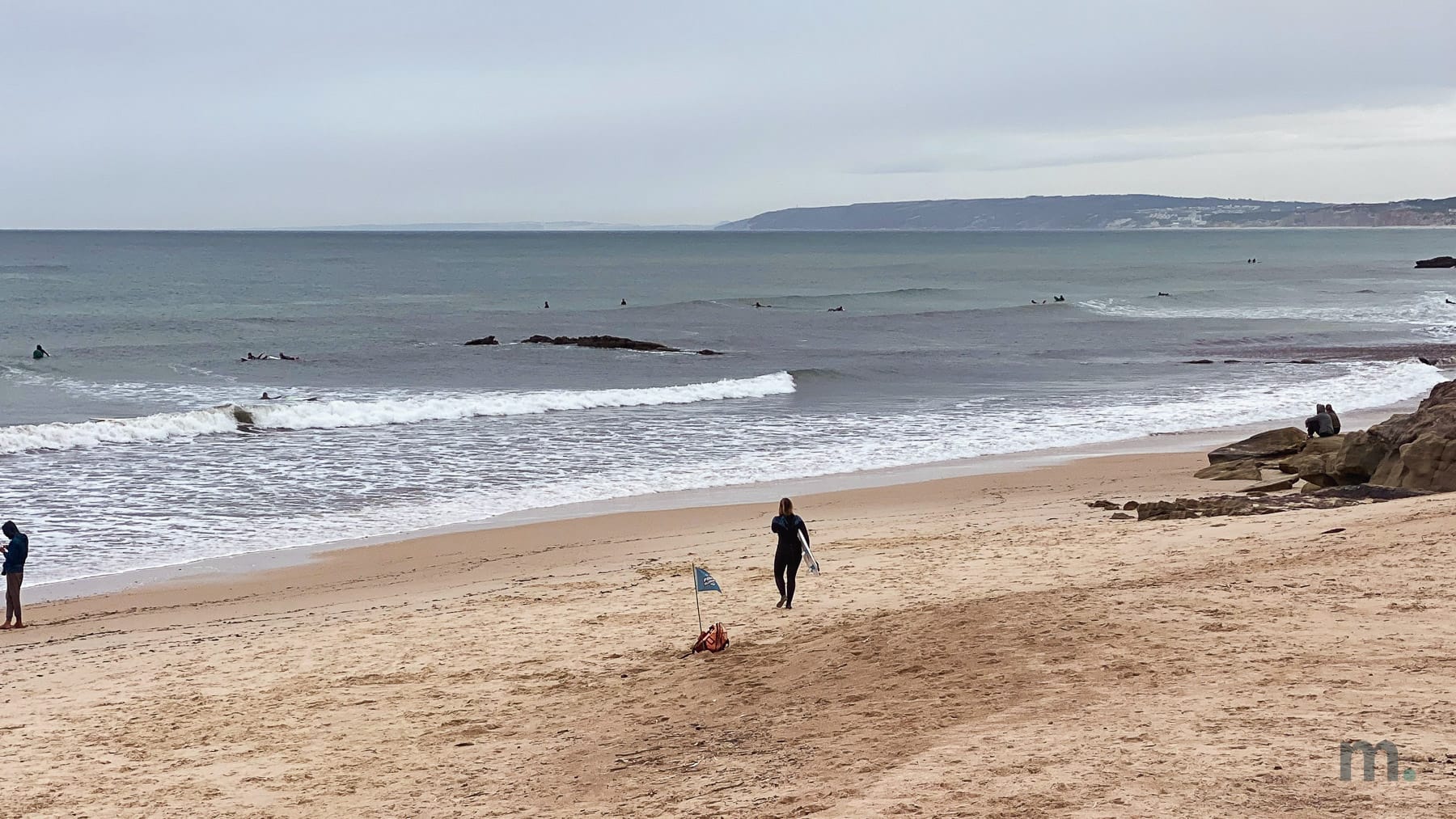
A different animal. Different bottom, more defined waves, and a lineup that’s usually more demanding than Baía.
It is not a place to learn. You need a real level before you paddle out at Lagido, and I say that bluntly because it’s the kind of spot where the gap between being ready and not being ready gets paid quickly.
Molhe Leste
It sits right next to Supertubos and it’s the closest I get to surfing that end of town. I’ve surfed it, but it’s not a beach to walk into without watching first. On top of that, the crowd is largely local surfers and bodyboarders, which makes the whole thing more demanding again.
When to go, and when not to
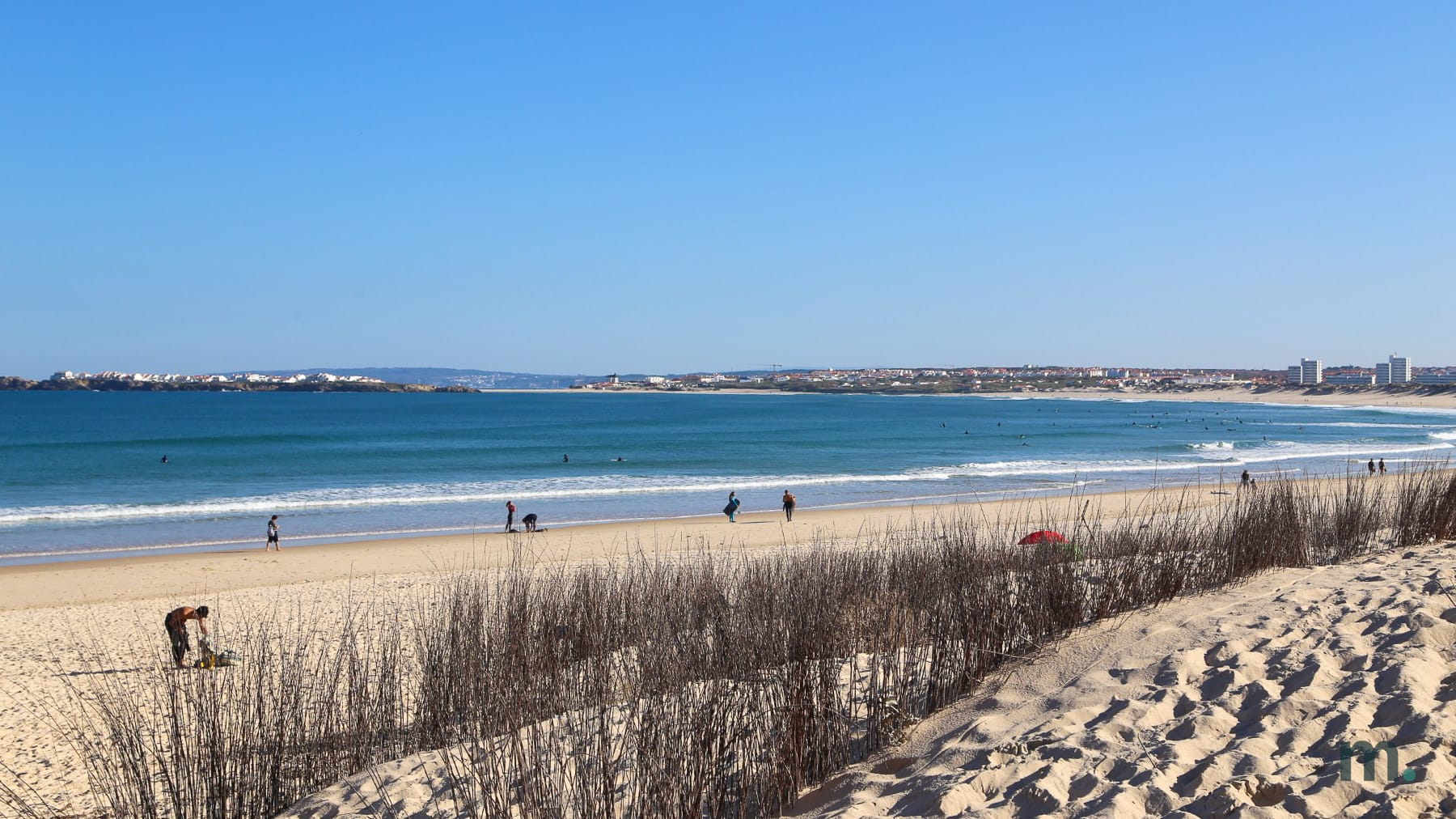
Fall and winter are the best seasons for size and consistency in Peniche. That’s when the Atlantic goes to work and when the peninsula shows its advantage, holding swell and wind combinations that leave half the coast down to Lisbon blown out.
The problem is that everyone knows this. On the winter days when Peniche is the only thing working, the crowd shows up all at once, and it isn’t a beginner crowd. It’s people who drove an hour looking for exactly the wave you’re looking for.
Spring and summer bring smaller, more predictable surf, better if you’re starting out, with the tradeoff that the beaches are packed.
The week to avoid, if your goal is surfing, is Championship Tour week. The Supertubos area is restricted, the town fills up, parking disappears, and the alternative peaks absorb everyone who can’t get into the competition zone. Go that week if you want to watch the event. If you want to surf, go before or after.
The crowd is the problem, not the wave
Peniche runs on surf year round, which means a density of surf camps and schools that fills the lineups with people taking lessons. That’s not a criticism of the schools. It’s a logistical reality you need to plan around.
Two practical consequences. First, if you already surf, avoid the peaks where the schools set up, especially mid-morning. Second, if you’re starting out, pick a school that takes you away from the cluster instead of dropping you in the middle of it, because learning surrounded by twenty foam boards teaches you to dodge, not to surf.
Then there’s priority. In a lineup where a lot of people are beginners and others pretend not to know the rules, you’ll be surfing with your head up and all your senses switched on.
And the usual rule applies, more here than almost anywhere else: paddle out at the peak that matches your level, not the one that matches your ego.

a trip
How I plan a trip, from impulse to itinerary
12 pages with my method: how I choose the time of year, how long I give each place, how I budget — with one whole trip costed out — and the six questions I ask before booking a bed.
Check your inbox to confirm, and the PDF is yours. After that, my letter every two weeks — leave whenever you like.
Where to stay
I’m not going to review a hotel in Peniche, because I’ve never slept there. I live in Ericeira and I drive over and back the same day.
If you do need a base, the two names I’d point you to are Star inn Peniche and MH Peniche. The first is on Estrada do Baleal, facing Cova de Alfarroba (Baía). The second is on Avenida Monsenhor Bastos, a few minutes from the same beach. Both have their own parking, which in Peniche isn’t a minor detail.
Their location tells you more than their star rating does. Both sit between the town and Baleal, which is the right side of things if your plan is to be in the water early at Baía. If you’d rather have the town’s restaurants at your door in the evening, stay closer to the center.
On price, expect somewhere between 60 and 90 euros a night for a double room off season, and 120 to 180 euros in July and August. During WCT week prices climb and availability disappears early.
One warning specific to those two hotels: they are typically block-booked for athletes and support teams during the event. If you’re coming for the contest, plan on staying somewhere else.
Getting there
Fly into Lisbon. It’s the only airport that makes sense for this trip, and from arrivals, you’re about an hour from Peniche on the A8.
Rent a car. This is a requirement. The spots are spread across the peninsula and the whole point of Peniche is being able to move to the corner that’s working that morning. Without a car you’re stuck with whatever’s in front of your hotel.
Two things worth knowing before you pick the car up. The A8 uses electronic tolls, so ask the rental company to include a transponder rather than trying to sort it out at the barrier. And distances in Portugal are short, which means the drive from Lisbon is genuinely nothing, but the roads inside Peniche are narrow and parking near the beaches is limited in summer.
Before you get in the water
The Atlantic here is colder than the wave quality suggests. Portugal isn’t the Mediterranean, and upwelling along this coast keeps water temperatures down even in August. Plan on a 4/3 with boots in winter and a 3/2 in summer, and bring a windbreaker for the mornings you spend standing on the sand deciding where to go.
Travel insurance is worth having here in a way it isn’t everywhere. Shallow sandbars, rock bottoms at Lagido, and a crowded lineup are a combination that produces injuries, and a Portuguese emergency room visit is easier to deal with when someone else is handling the paperwork.
Get a local data plan or an eSIM before you land. In Peniche, you make the call about where to surf on the morning itself, standing outside with the forecast on your phone, and that only works if you actually have signal and data.
Ideal length of stay · three to four days is enough to catch two or three different ocean setups. If you’re already in Portugal, one well-chosen day beats three badly timed ones.
Best area to stay · between the town and Baleal if the plan is early sessions. Central Peniche if you want restaurants at your door in the evening.
Average costs · accommodation 60 to 90 euros per night off-season, 120 to 180 euros in July and August. Parking is free at most beaches.
Getting there · about one hour by car from Lisbon airport on the A8. Rental car strongly recommended for moving between spots. Electronic tolls on the A8.
Level required · peniche works for every level as long as you pick the right peak. Prainha if you’re logging hours, the Bay if you already surf, Lagido and Molhe Leste if you’ve got a real level, Supertubos for advanced surfers only.
Best season · october to March for size. May to September for learning.
What to wear · 4/3 wetsuit with boots in winter, 3/2 in summer. Windbreaker for the mornings on the sand.
Connectivity · good coverage in town and at the main beaches. An eSIM is worth arranging before you arrive.
Final tip · check the wind forecast before you commit to a spot. In Peniche, the right call gets made the morning of, not the night before.
Checked in August 2026.
This article opens a series on the destinations of the World Championship Tour, told through what I can actually say about each one. Where I’ve surfed, I tell you what I know. Where I haven’t, I tell you what I don’t.
Your turn. Tell me in the comments if you’ve surfed Peniche, or ask me anything about this stretch of the Portuguese coast.
The tools I use on my own trips, with the conditions I managed to get for my readers. If you book through them, the blog pays for itself — and it costs you nothing extra.
The eSIM I am an ambassador for, powered by NOS. 10% off with the code at checkout.
Affiliate links and my own codes. Only tools I actually use.